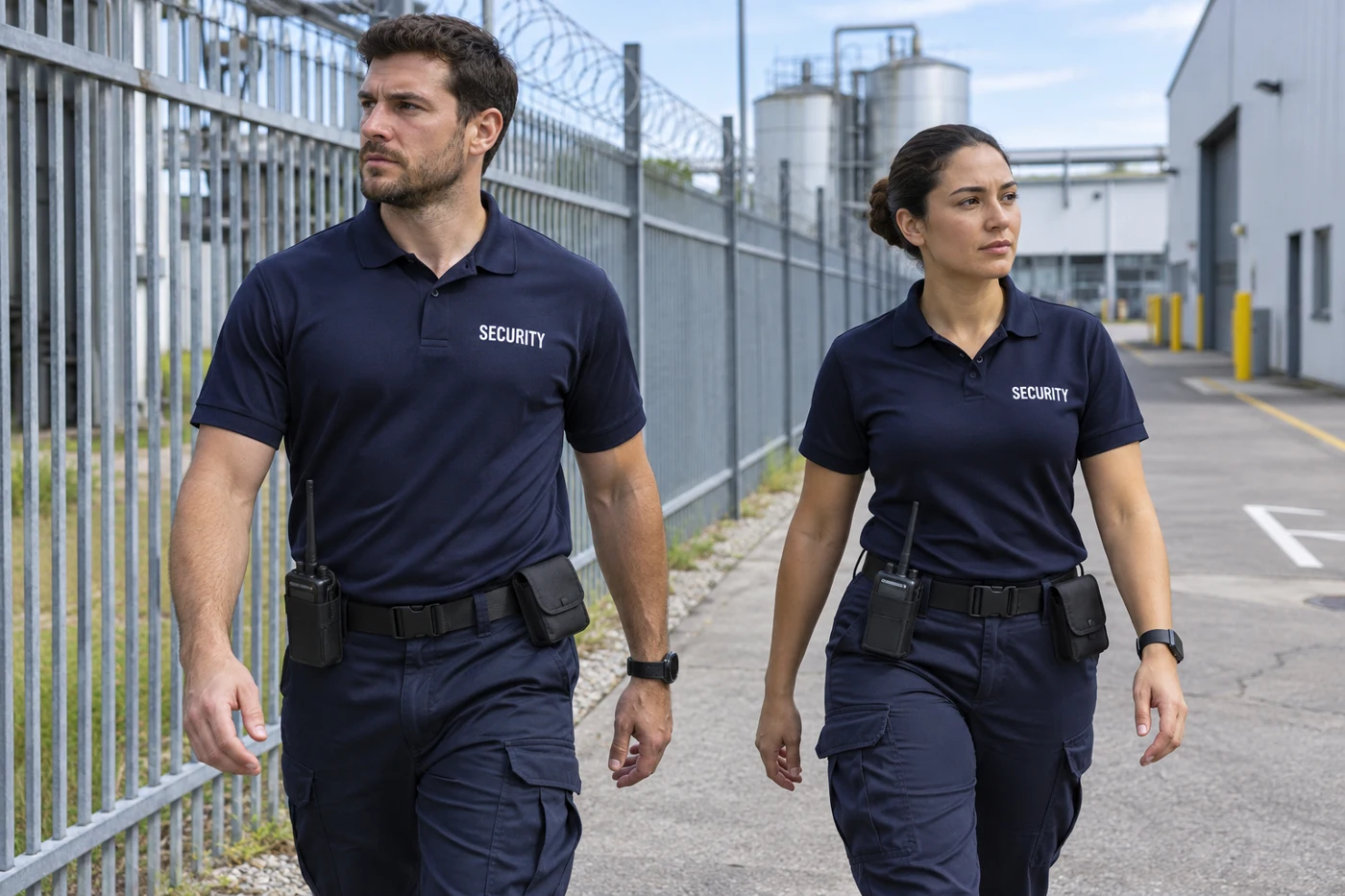
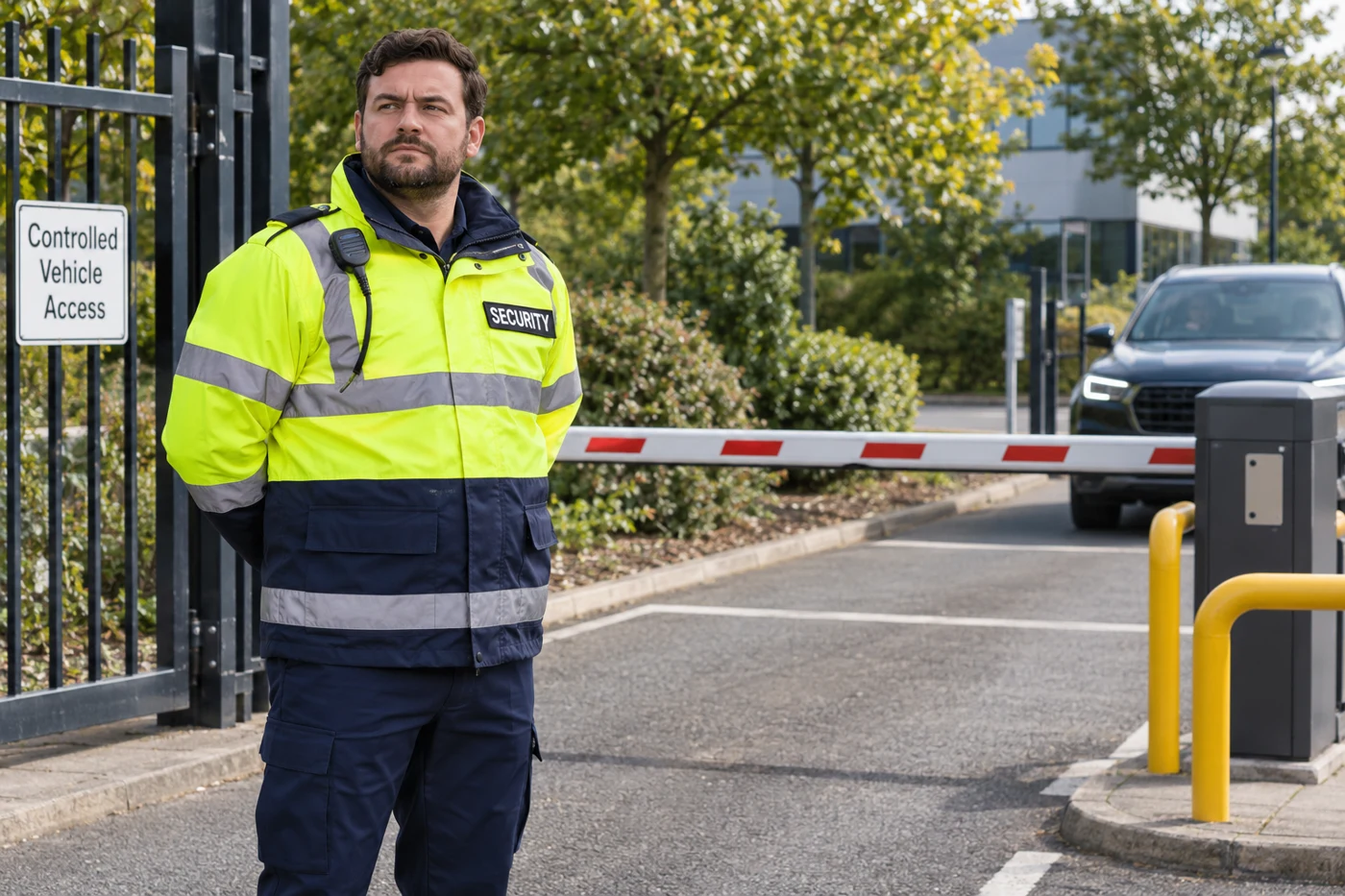
Custom Security Uniforms Manufacturers. One spec. Every guard. Every site.
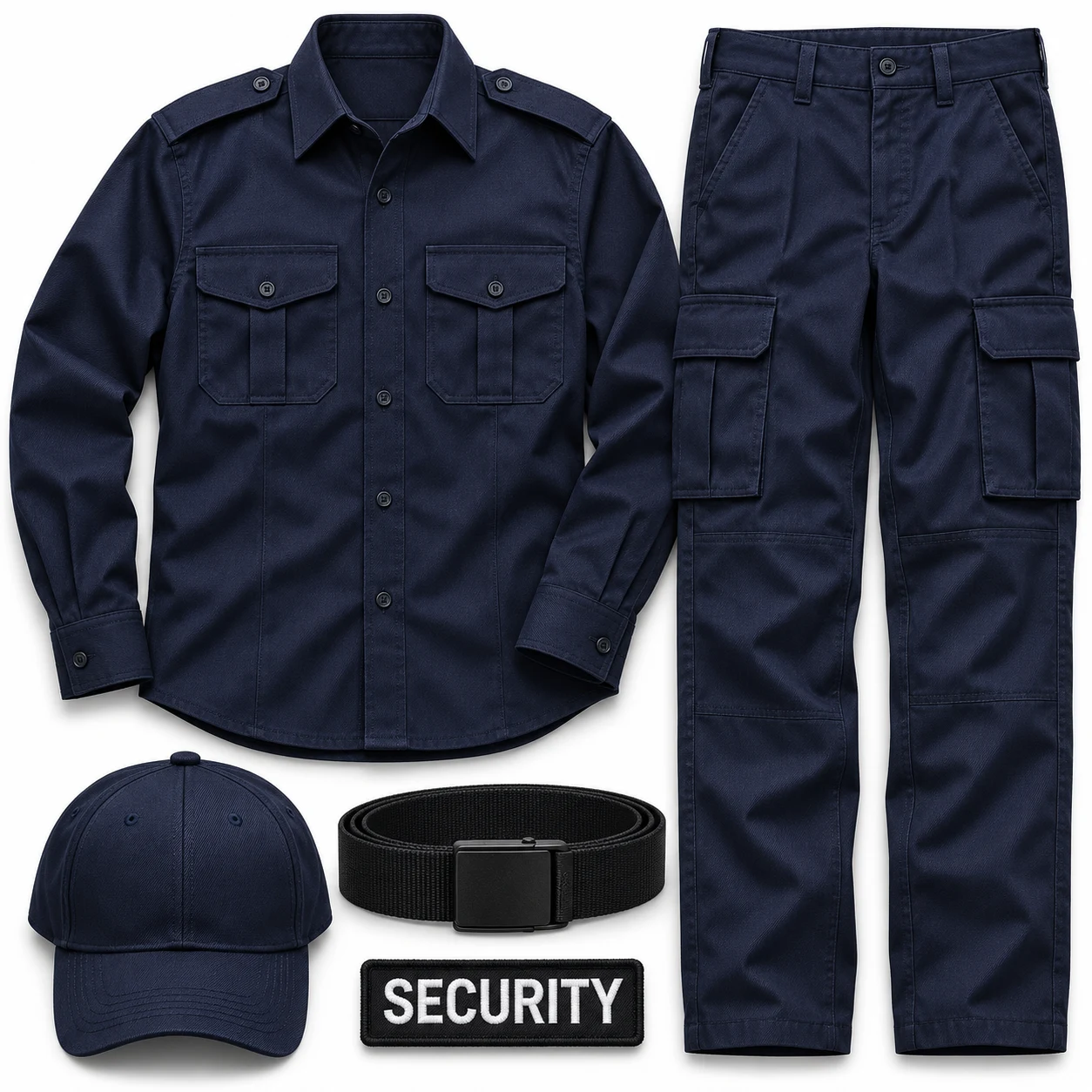
Control the fabric, fit and insignia from the first sample to the next rollout. Choose 65/35 ripstop at 180–220 GSM, define Grade 4–5 colourfastness and ≥1,000 N warp-strength requirements for the selected material, and lock badge, epaulette and radio positions in one approved specification.
Six material routes with measurable selection criteria. Approve the actual textile, test method and wash conditions before bulk production.
Daily Patrol Ripstop
65/35 POLY-COTTON · 180–220 GSM
Warp strength≥1,000 N
Shrinkage · ISO 6330≤2–3%
A ripstop grid helps contain local tears while the blend balances durability and comfort. Set the tensile method and wash procedure against the selected construction.
Best for: Daily patrol shirts & trousers
Heavy Tactical
REINFORCED POLY-COTTON · 230–250+ GSM
Abrasion · ISO 12947-2≥30,000 cycles
Tear · ISO 13937Agreed N limit
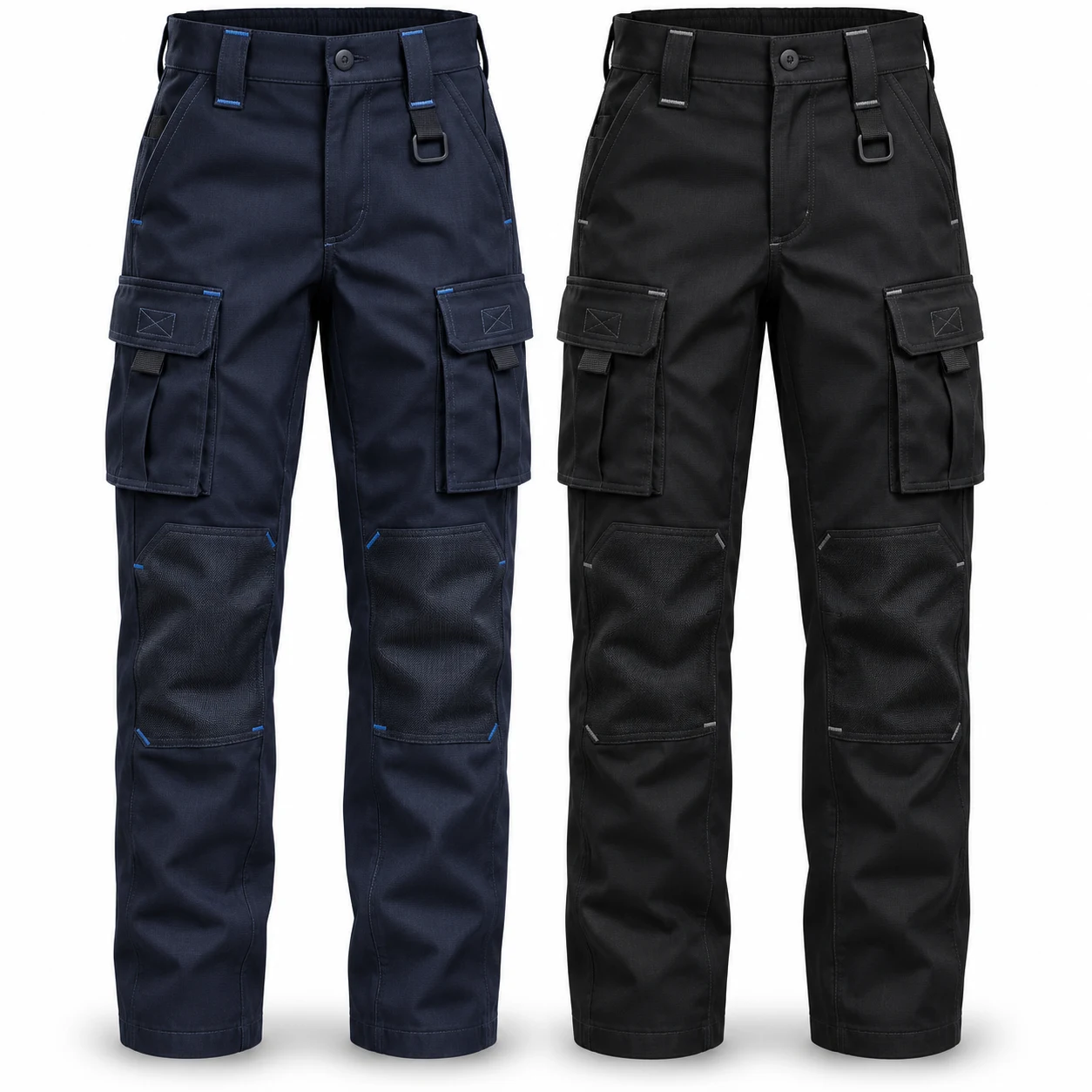
Choose a tighter, heavier weave and bartacked stress points for loaded pockets and outdoor movement. Record the tear method and required force in the material brief.
Best for: Rugged outdoor & field posts
Lightweight Shift
EASY-CARE POLY-COTTON · 145–170 GSM
Colour · ISO 105-C06Grade 4–5
Dimensional change≤2% brief
A lighter shirt suits warm indoor posts and hot climates. Approve opacity, hand feel and appearance after the intended wash and pressing routine.
Best for: Indoor reception & hot climates
Hi-Vis Security
FLUORESCENT FABRIC + TAPE · 180–220 GSM
US design optionANSI/ISEA 107
EU design optionEN ISO 20471
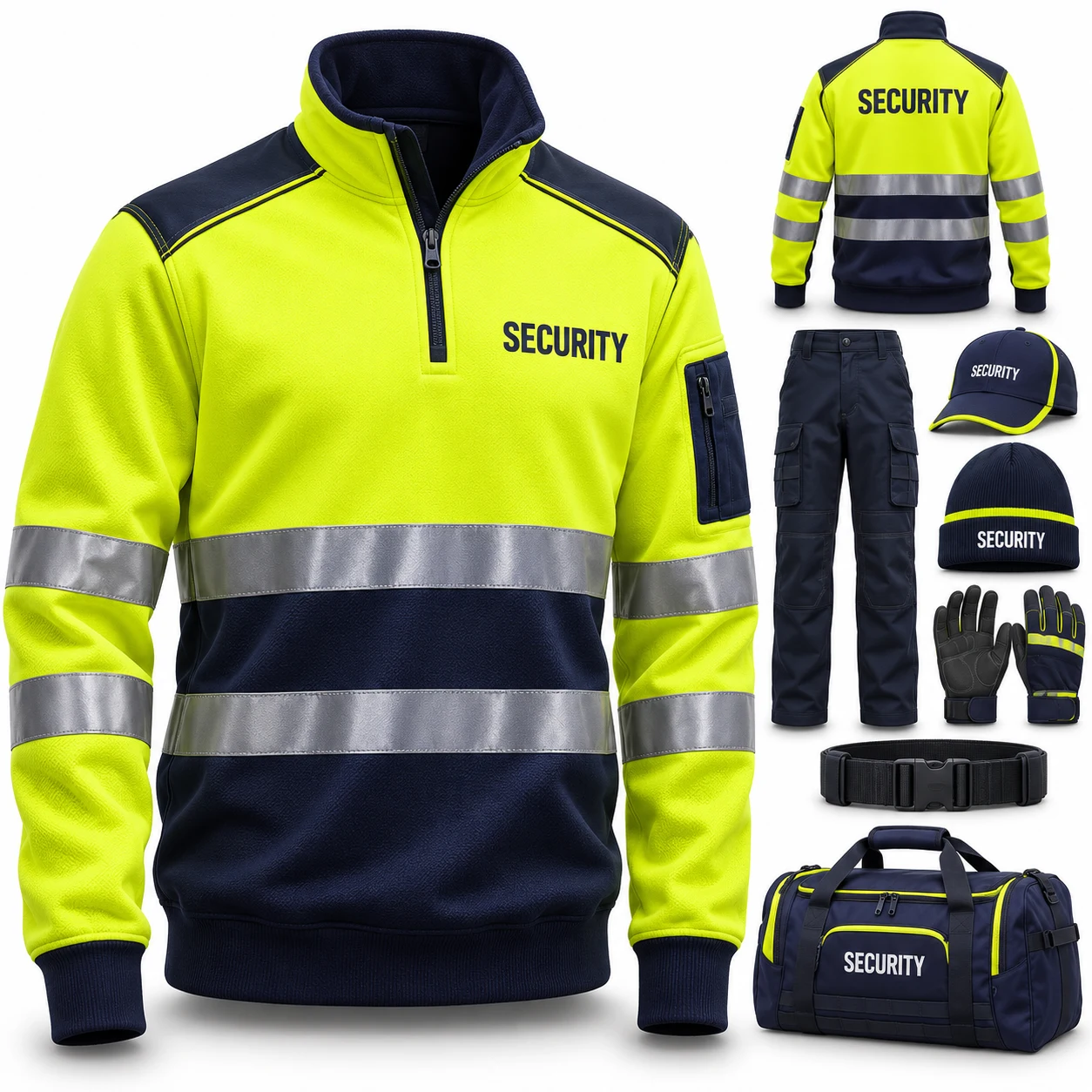
Develop the complete garment for the required visibility type and class, including background area, tape placement and care. Class 3 requires a suitable full garment design.
Best for: Traffic, access & perimeter duty
Flame-Retardant
FR POLY-COTTON / ARAMID · 230–280 GSM
Flame test methodEN ISO 15025
Durability program60 washes
Set the applicable protective garment standard, performance levels and wash conditioning for the actual hazard. A vertical-flame test alone does not establish arc-flash protection.
Best for: Specified heat-exposure roles
All-Weather DWR
WATER-REPELLENT POLY-COTTON · 200–240 GSM
Spray · AATCC 22≥90 brief
Stain resistanceGrade 4+ brief
Add a DWR or stain-release finish for light rain and everyday spills. Name the stain test and laundering sequence; use a separate waterproof construction for sustained rain.
Six customization dimensions recorded in one approved garment file, ready to carry into the next order.
Functional Details
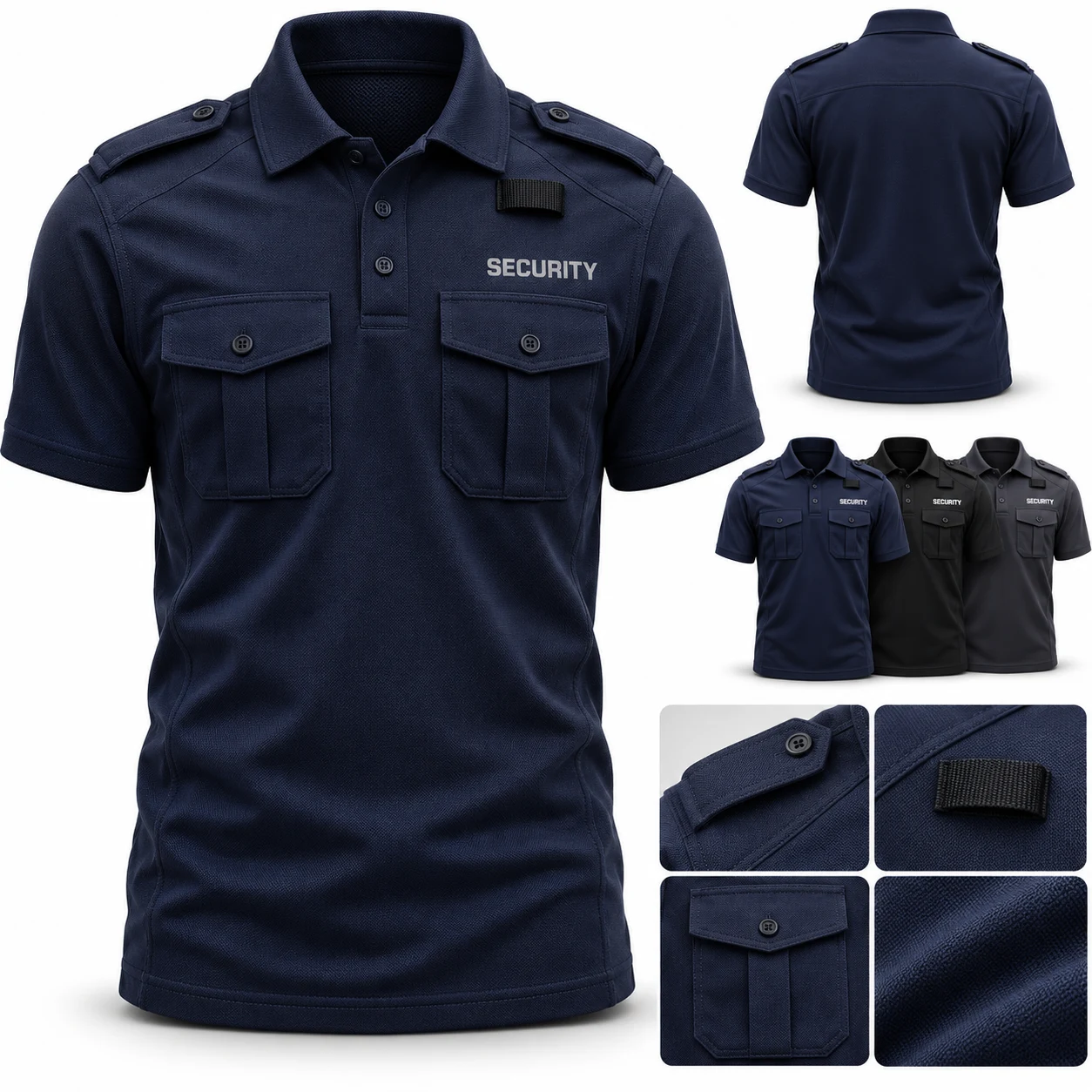
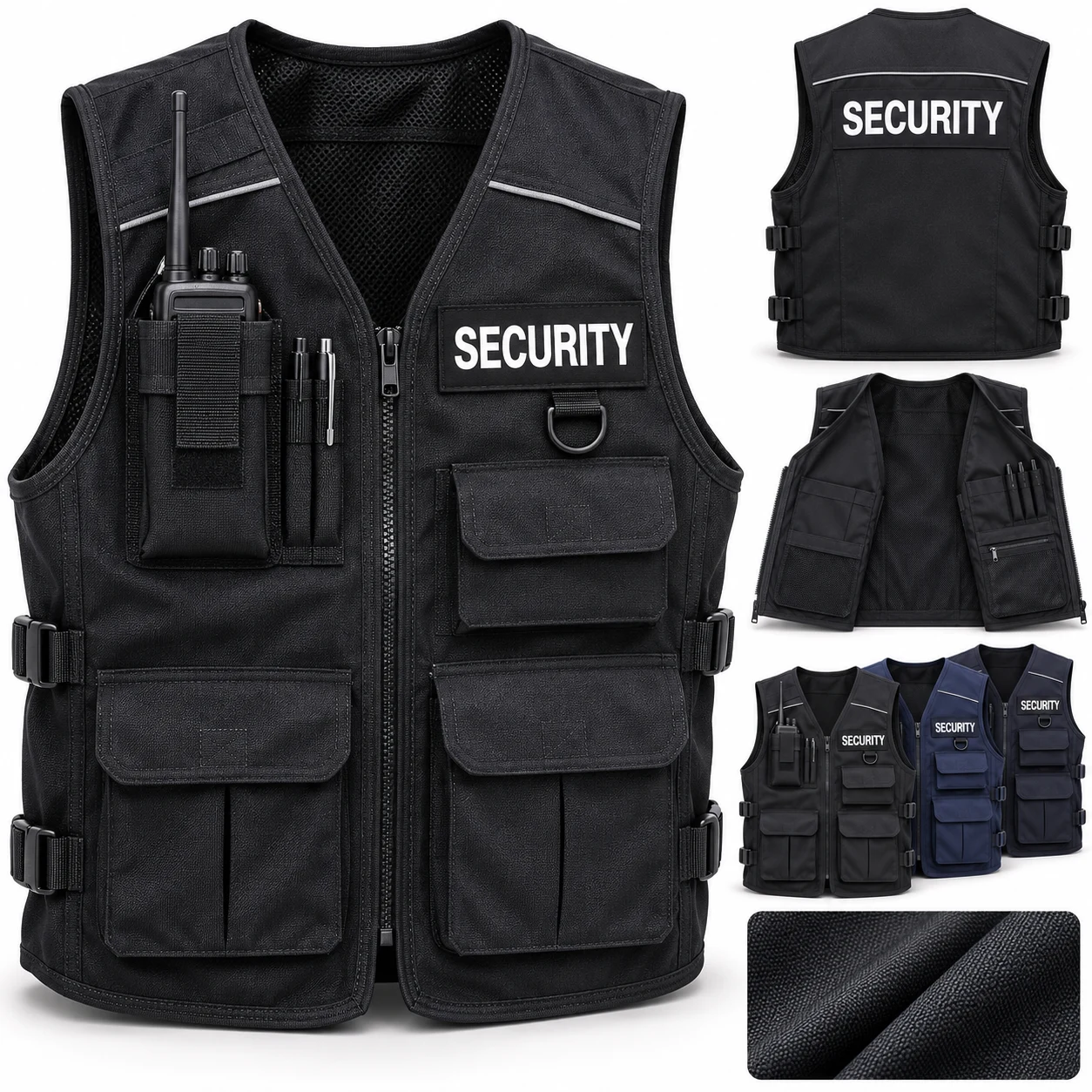
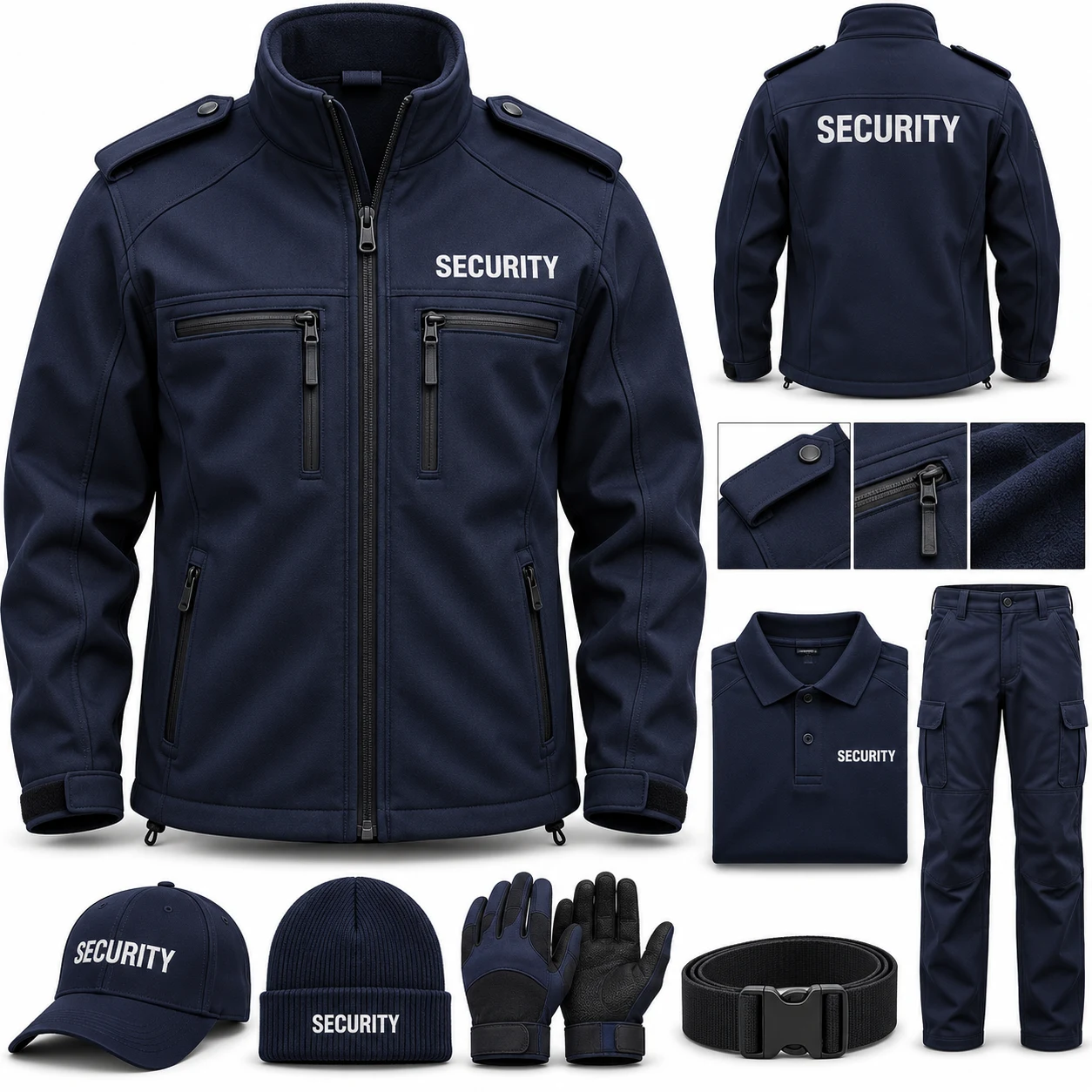
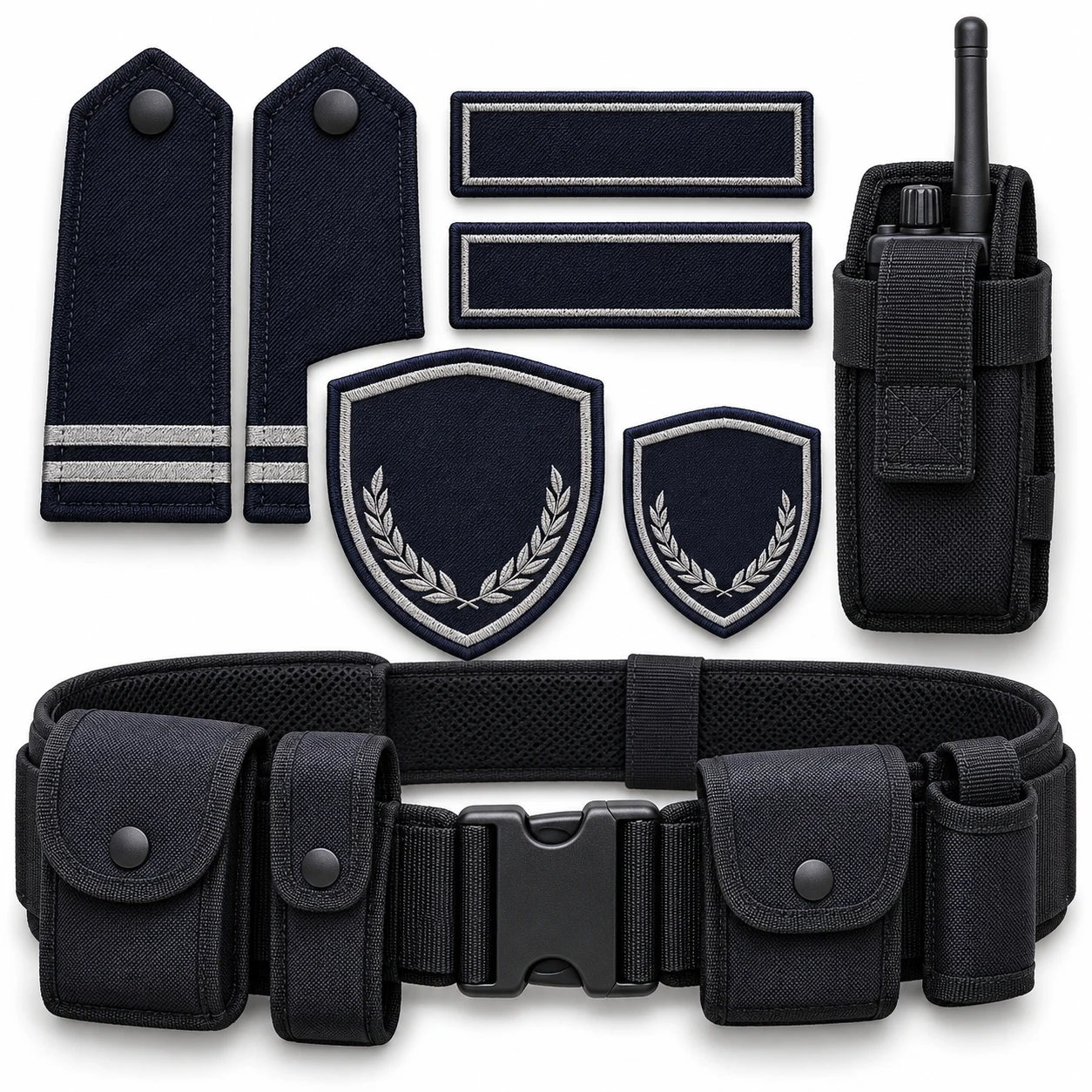
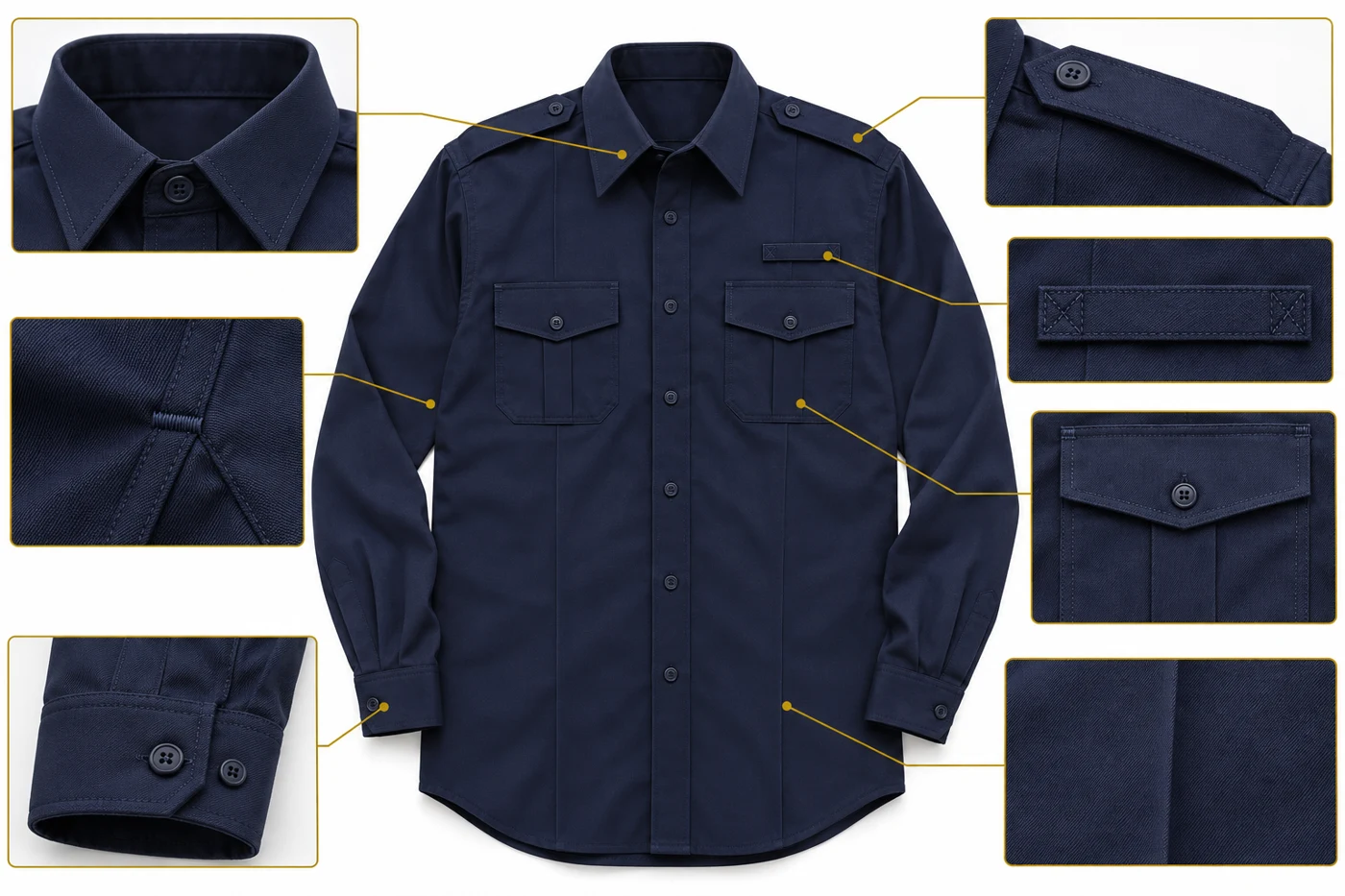
Place the badge tab and epaulettes for clear identification. Size radio pockets and microphone loops around the equipment your guards carry. Test reach, cuff adjustment and pocket access on the wearer before approving the fit.
50-piece MOQ · drawing review in 3–5 days · sample build in 7–10 days
Branding & Logos
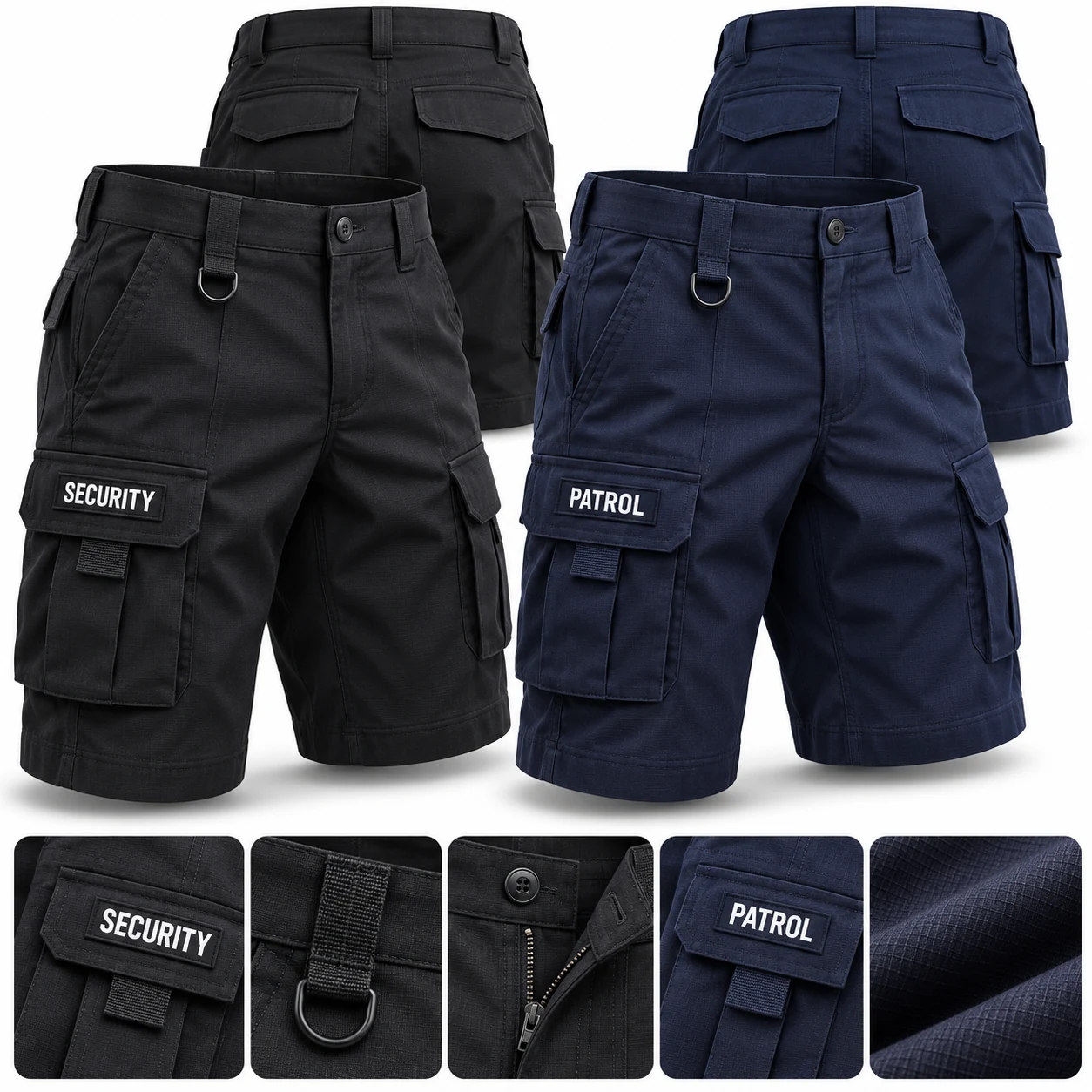
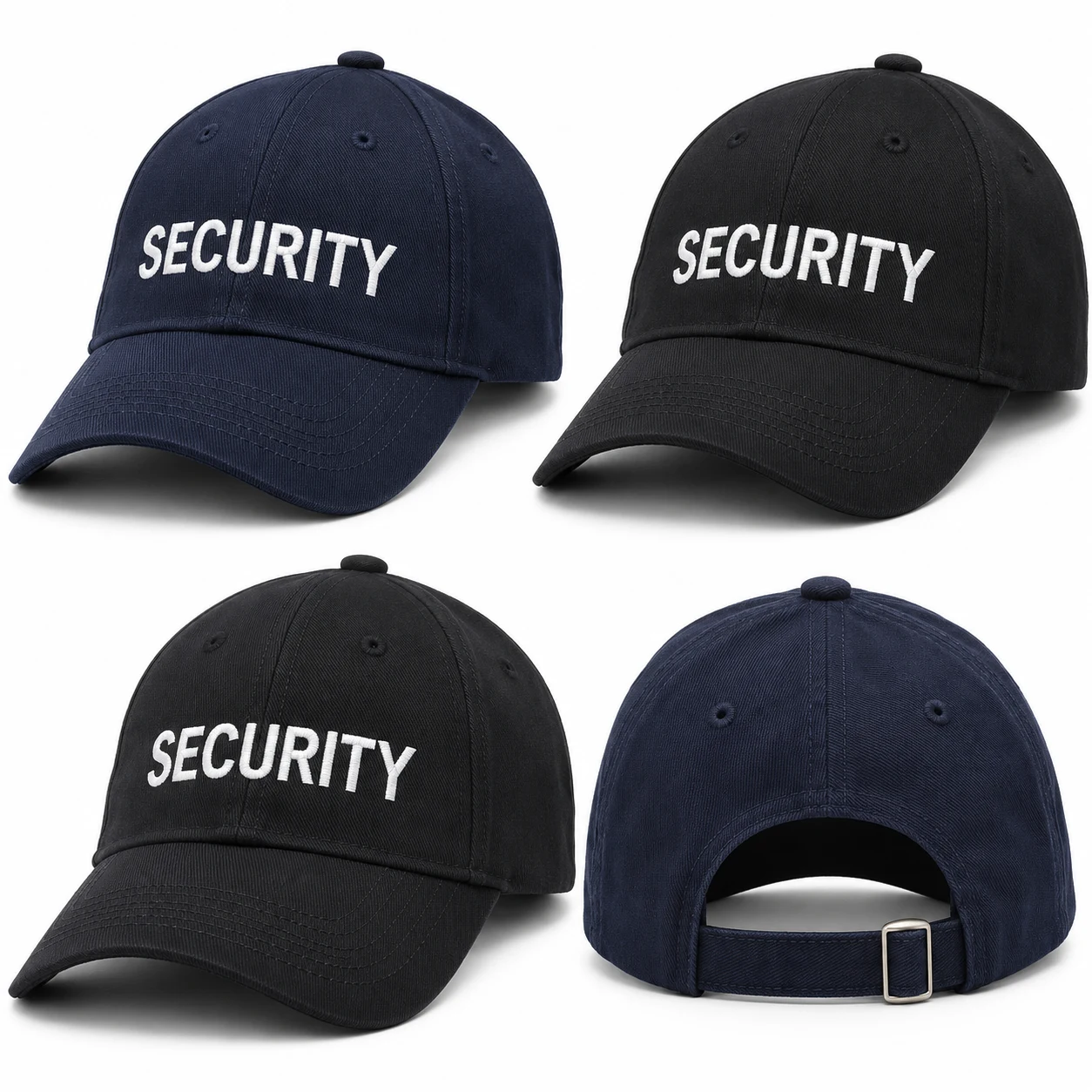
Put SECURITY wording, company badges, name bars and rank markings in measured positions. Approve embroidery, screen print, heat transfer or woven patches on the actual fabric.
Embroidery · screen print · transfers · patches
Fabric & Colour
Choose a construction for the duty post, then retain the physical shade standard and Pantone reference. Compare every incoming colour lot against the approved sample.
Duty-post fabric · physical shade standard
Size Systems
Develop US, EU or Asian grading in men’s and women’s cuts, or grade your own block. Use one measurement chart and fit sample across the full guard force.
Men’s & women’s cuts · custom grading
Private Label & Packing
Coordinate woven neck and care labels, size stickers and branded hang tags. Bag and label by size, site or officer allocation so receiving can issue the uniforms directly.
Woven labels · hang tags · site-coded packing
Tech-Pack Development
Send an existing uniform for construction review. Compare fabric weight, pocket access, zipper grade and reinforcement, then retain a sealed sample and a versioned bill of materials.
A clear responsibility and a defined deliverable at each step, from first brief to export paperwork.
01
Spec & Requirements
YouSend your tech pack, reference uniform or sketch with the site roles and quantities.
WeReview the fabric, construction and cost lines; return a quotation and an initial specification.
2 business days
02
Design & Mockup
YouConfirm the cut, colour, badge layout and equipment positions.
WePrepare an annotated mockup and graded pattern; build and seal the sample before bulk release.
2–5 days design · 7–10 days sample
03
Bulk Production
YouApprove the final sample, size breakdown and production order.
WeCut, sew, decorate and inspect against the retained specification, with dated production checkpoints.
Approx. 4 weeks after approval
04
Export Documentation
YouConfirm the receiving address, shipment terms and site allocation.
WeReconcile invoice, packing list and applicable origin documents before dispatch.
Final 2 days · freight separate
Quality Control Standards
Five quality gates. One approved uniform.
Check the incoming cloth, finished sample and packed order against the same specification. The records stay linked to the PO and material lot.
≤2–3%SHRINKAGE · SELECTED FABRIC
Grade 4–5COLOURFASTNESS BRIEF
≥1,000 NWARP-STRENGTH BRIEF
GATE 01
Incoming Fabric
Check blend, GSM, shade and hand feel against the material brief. Identify rolls and quarantine mismatched fabric before cutting.
GATE 02
Material Tests
Review colourfastness, dimensional change, tear and tensile results for the selected textile. Use ISO 6330 for the agreed domestic wash procedure, or ISO 15797 when industrial laundering is required.
GATE 03
First-Piece Approval
Measure the sample point by point. Confirm SPI, bartacks, zipper grade, badge placement and radio access, then seal the accepted reference.
GATE 04
Inline Checks
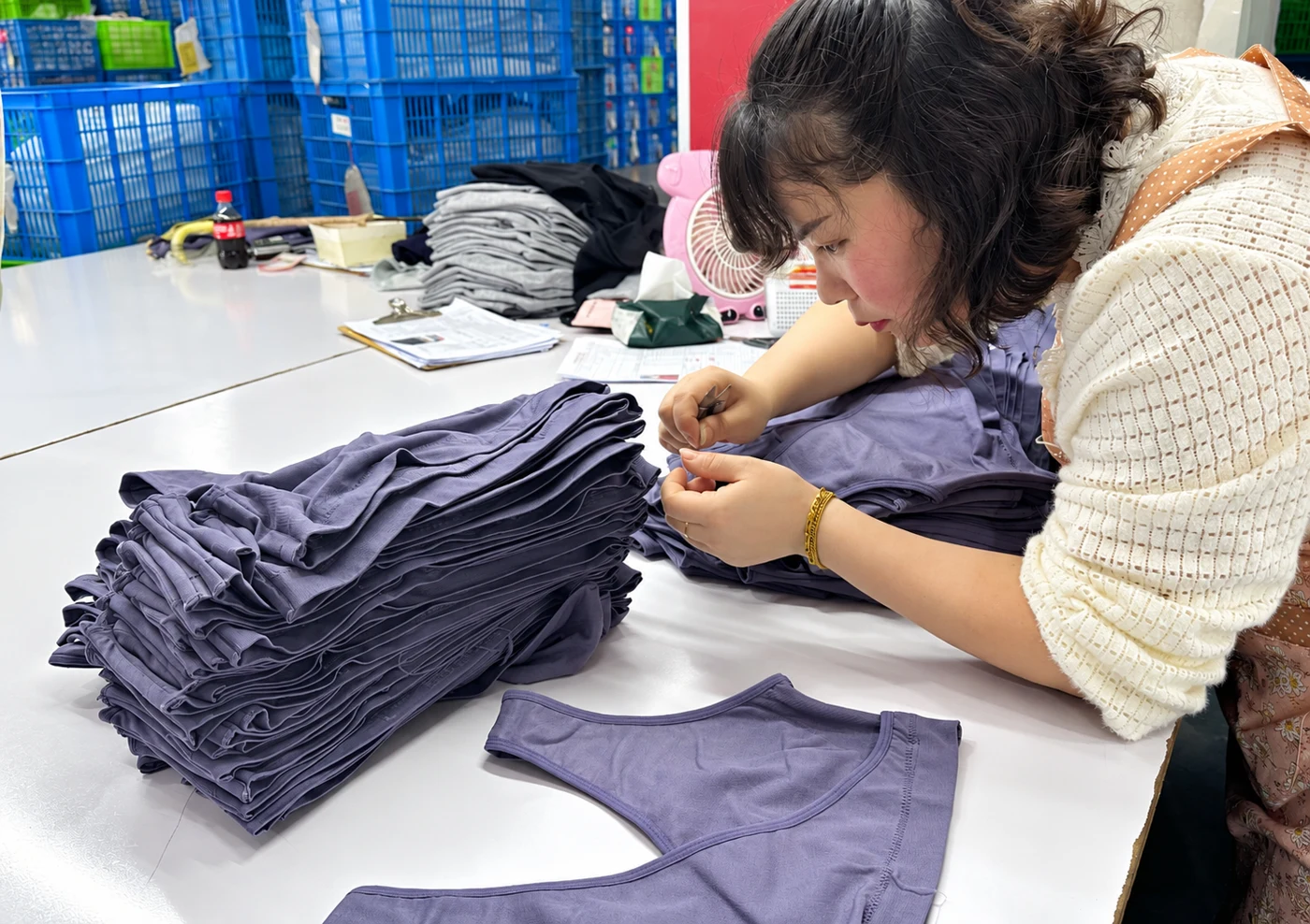
Spot-check seam construction, reinforcement, pocket alignment and decoration during production. Correct defects while the order is on the line.
GATE 05
Final AQL Inspection
Apply the agreed ISO 2859-1 sampling plan and Level II inspection brief. Check workmanship, measurements, shade, quantities and packing before release.
Four connected checks for a coordinated rollout across sites and borders.
01
Quality-System Records
Use ISO 9001 quality-management records to review the relevant manufacturing site and scope. Keep supplier and inspection files connected to the order.
02
Product & Market Scope
Set the required ANSI/ISEA 107 or EN ISO 20471 garment design, and request applicable OEKO-TEX or REACH material records for the destination.
03
Shipment Documents
Prepare the commercial invoice, packing list and applicable certificate of origin before dispatch. Match quantities, carton numbers and weights to the PO.
04
Multi-Country Delivery
Retain one grading and packing standard across destinations. Quote FOB, CIF or available DDP services separately so the landed-cost scope is clear.
In the Field
The uniform. On the job.
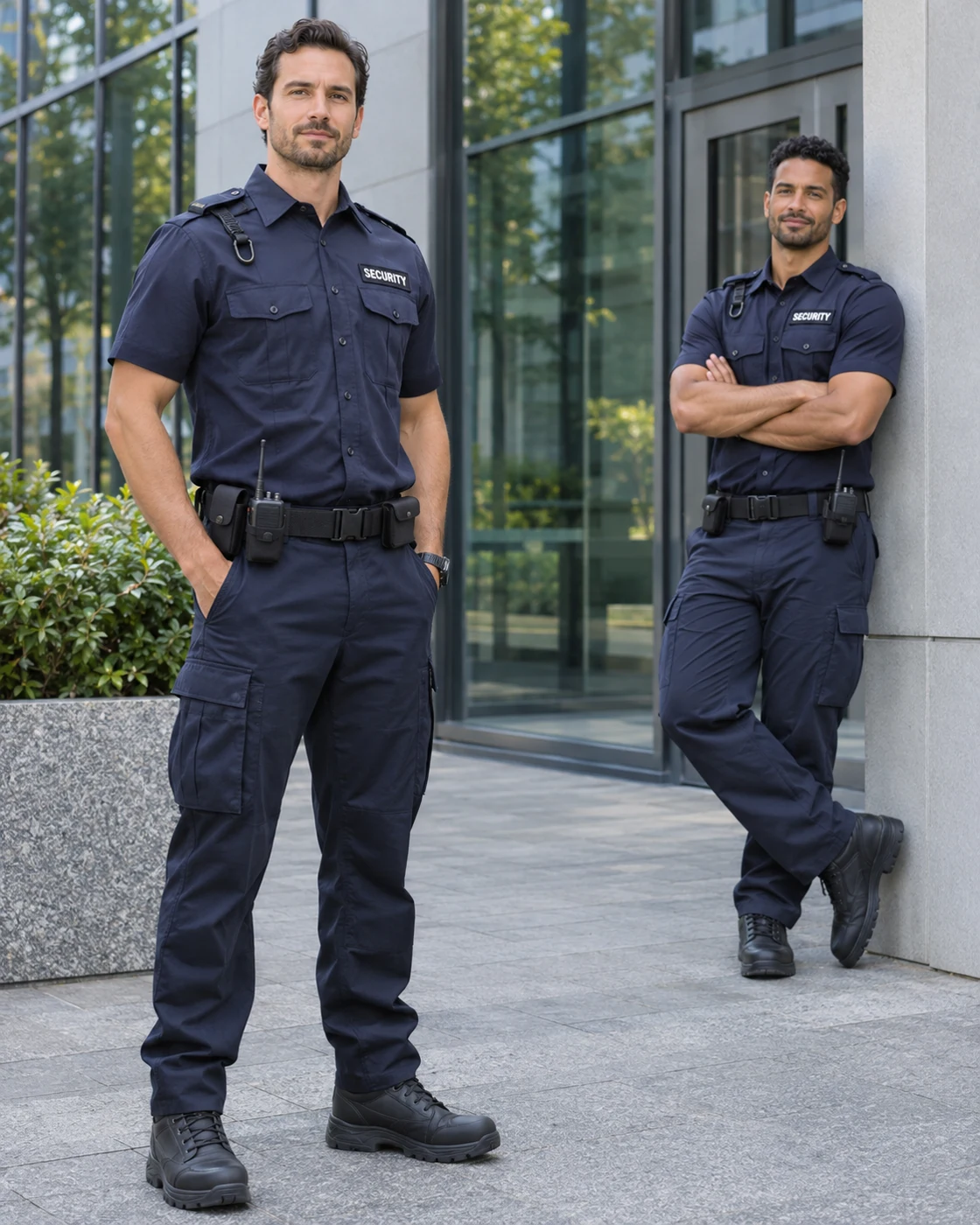
Reception, patrol, vehicle gates and events — a coordinated identity built around different duty posts.
Buyer Perspectives
What security buyers value.
Illustrative procurement perspectives.
“
A consistent navy matters when guards from several sites work together. I want the physical shade reference, approved ripstop and badge layout held under one style number, so a top-up follows the original uniform.
For patrol shirts and trousers, my starting point is 180–220 GSM 65/35 ripstop. I review the specified strength and wash checks with the fit sample, including radio access, pocket loading and how the waistband feels through a long shift.
Five QC gates and a retained sample give the team a practical way to inspect repeat orders. The useful result is a uniform program we can manage by site, size and order number.
Security Director
Multi-Site Guard Operations
“
I compare the whole rollout, not only a shirt price. The quote needs separate lines for garments, badges, labels, packing and freight, with one size chart and one receiving standard across locations.
AQL 2.5 major and 4.0 minor criteria, clear critical-defect rules and a numbered report let our receiving team check the shipment against the same brief used at the factory.
Site-coded cartons and archived embroidery files make replenishment easier to coordinate. For a new uniform, I want the sample approved before the four-week bulk window starts, with the shipping route shown separately.
Procurement Lead
Corporate Security Uniform Programs
FAQ
Security uniform questions. Clear answers before you order.
Minimums, inspection, branding, fabrics, wash tests, delivery and reference-sample development.
What is the minimum order for custom security uniforms?+
Start at 50 pieces per SKU, with one development sample available before bulk. Send the style, colour and size breakdown so the quote identifies each SKU clearly. Compare pricing at 500, 2,000 and 10,000 units for larger programs. For repeats, send the original PO; the team confirms current fabric availability, minimum and price rather than assuming a no-minimum reorder.
Which AQL limits should be in our purchase order?+
A practical brief uses AQL 2.5 for major defects and 4.0 for minor defects, with zero acceptance for defined critical defects. Specify ISO 2859-1, the inspection level, lot size and acceptance numbers. AQL 2.5 is a sampling index, not a maximum promised defect percentage. A critical safety finding holds the shipment for investigation and correction; a failed lot is sorted or reworked and reinspected.
How do you keep SECURITY wording and badges consistent?+
Approve one annotated artwork file showing wording, font, dimensions and placement by garment style and size. Review the actual embroidery sew-out, transfer or patch on the chosen fabric. Retain the production file and physical sample under the SKU, then compare the next dye lot to the physical shade standard before cutting.
Which fabric and GSM should indoor and field guards wear?+
Use 145–170 GSM easy-care poly-cotton for warm indoor posts, and 180–220 GSM 65/35 ripstop for routine patrol shirts and trousers. Move to 230–250+ GSM reinforced cloth for demanding field duty. Vehicle and roadside posts may need a complete hi-vis garment to the required class; heat hazards need a separately defined protective specification. DWR suits light rain, while sustained exposure calls for a waterproof construction.
How do we specify wash life and resistance to fading?+
Set Grade 4–5 colourfastness under the selected ISO 105-C06 procedure, a 2–3% dimensional-change limit and the agreed strength criteria for the actual cloth. ISO 6330 defines domestic washing procedures; use an appropriate ISO 15797 program for industrial laundering. If the program requires 300 cycles, record the wash chemistry, temperature, drying and acceptance checks and commission that extended test. A standard colourfastness result alone does not prove 300-wash durability.
What are the sample, bulk and export timings?+
Plan 2–5 business days for design and layout review, then 7–10 days for the sample build after materials and details are ready. Standard bulk planning is approximately four weeks after final sample approval. The last two production days cover final packing and export documents; freight and customs are separate. The quotation states the actual dispatch and delivery route, with a commercial invoice, packing list and applicable origin documentation.
Can you match or improve an existing guard uniform?+
Yes. Send a reference garment, the current fabric information and the issues you want solved. Allow about five business days for a teardown and initial cost review once the sample is received. Compare pocket access, bartacks, zipper grade, fabric weight and fit on a revised sample. Approve and seal the final version before the bulk order, and retain its pattern, artwork and bill of materials for repeats.
Let’s Define Your Uniform Program
One uniform standard. Across your guard force.
Send the duty roles, garment list, badge artwork, size quantities and required delivery date. We will bring the fabric, sample and packing plan together.
With your permission, we use Google Analytics to understand website visits and successful enquiries. Optional analytics stays off unless you accept. Your enquiry works with either choice. Privacy Policy