Skip to content
Corporate Identity Uniform Programs

Corporate Identity Uniforms that hold across every office.

One brand, every office. Coordinate polos, shirts, tailoring and branded layers with one approved colour reference, logo placement and size grade. Keep the fabric, artwork and sealed sample on file so each branch orders from the same specification.

Locked at program start
Sample sealed5 business days
Logo placementPer brand guide
Size rangeXS–6XL graded
Fabric specArchived per SKU
Spec-to-quote24 hr
Where Brand Standards Break

Brand standards do not fail in the deck. They fail at the desk.

They do not collapse in one dramatic way — they drift. A different navy at each office, a logo two centimetres off, an “M” that stops meaning the same thing. Each drift is small; together they are the difference between one company and twelve.

Per-office colour drift

Each location buys its own run, matched by eye, so the group slowly stops looking like one company.

Sounds likeThe navy is a different navy at each office

CostsAn off-shade batch is a full re-cut — 15–20 days, at every office it shipped to.

Logo placement by habit

Without an archived placement spec, embroidery sits where the operator put it last time — not where the brand guide says.

Sounds likeThe logo sits differently on every garment

CostsRe-badging is a re-order, not a fix — you cannot un-stitch a placement.

Sizing that moves between batches

A chart that is not graded and locked produces fit complaints that land at the desk, not the factory.

Sounds likeAn “M” fits one office and not the next

CostsA fit re-grade means new pattern blocks before any office is re-supplied.

No shared record

Purchasing, HR, and each branch each hold a version of the truth, and no one holds the approved one.

Sounds likeEvery office orders its own way

CostsThe same spec is re-negotiated and re-sampled at each location, every cycle.

Documentation that scatters

Certificates, colour readings, and size charts live in different inboxes, so the audit chases paper instead of closing.

Sounds likeA brand review asks for the spec file

CostsOne undocumented batch puts the whole standard in question.

The drift is the cost

Not one disaster, but a slow bleed: every re-order a half-tone off, every new hire a size off the chart, every review chasing paper that should already be filed.

The Roster

Every role that meets your brand, dressed to one spec.

A program is a role map, not a single garment. Each brand-facing role — the people a client, candidate, or visitor actually sees — takes its own garment and place on the palette, cut from the same locked spec.

Corporate leadership team in coordinated tailoring in a boardroom

Leadership & Head Office

Executive team · board-facing staff

WearsBlazers, dress shirts, tailoring, knitwear

Brand touchpoint

Owns the brand at the highest-stakes meetings — investor days, client pitches, press.

Front desk staff in branded corporate wear greeting a visitor

Client-Facing & Front Desk

Reception · account managers · host staff

WearsPolos, blouses, blazers, cardigans

Brand touchpoint

First physical impression of the brand for every visitor and client who walks in.

Sales team in coordinated branded shirts reviewing documents

Sales & Customer Teams

Field sales · account teams · trade

WearsShirts, polos, branded outerwear

Brand touchpoint

Represents the company off-site, at client premises and trade events.

Field operations staff in branded work wear in a warehouse

Operations & Field Crews

Logistics · service · on-site teams

WearsWork shirts, softshells, hi-vis where required

Brand touchpoint

Visible at client sites and on the road — where a mismatched crew reads as a sub-contractor.

Tradesperson in durable branded work wear at a workbench

Trades & Technical Staff

Workshop · maintenance · installers

WearsCoveralls, workshop coats, hard-wearing shirts

Brand touchpoint

The craft side of the brand — durable wear that still carries the mark cleanly.

Remote worker in branded knitwear on a video call

Hybrid & Remote Staff

Home-based · distributed teams

WearsBranded knitwear, polos, soft knit layers

Brand touchpoint

On-camera half the day — the touchpoint most programs forget.

Roles can share a palette position without sharing a garment — a client-facing polo and a leadership blazer can read as one collection when the colour, trim, and logo treatment are drawn from the same spec.

Beyond the Uniform

The other half: apparel people choose to wear.

A staff uniform is worn because the job requires it. Branded merchandise is worn because the wearer wants to — that is what turns a logo into a relationship. The same locked palette and logo placement can carry your mark onto customer-, event-, and employee-facing apparel.

Why it earns its place

Uniforms protect the brand at work. Merchandise grows it everywhere else. Ordered on the same spec as your staff program, it removes the usual failure of buying promo goods twice: a one-off supplier with looser colour, thinner fabric, and no archive — so the shirt a member bought last year and the one they buy next year are not the same product.

Attachment

Wearers who opt in

A garment someone chooses to wear earns a place in the closet — and a logo seen far more often than any ad.

Conversion

Gifting that converts

Client and event apparel moves a relationship forward in a way a coaster does not. It is the rare gift the recipient keeps and re-wears.

One spec

Uniform-grade, not promo-grade

Colour, weight, and logo placement come off the same archived spec as your staff program — so reorders match, cycle after cycle.

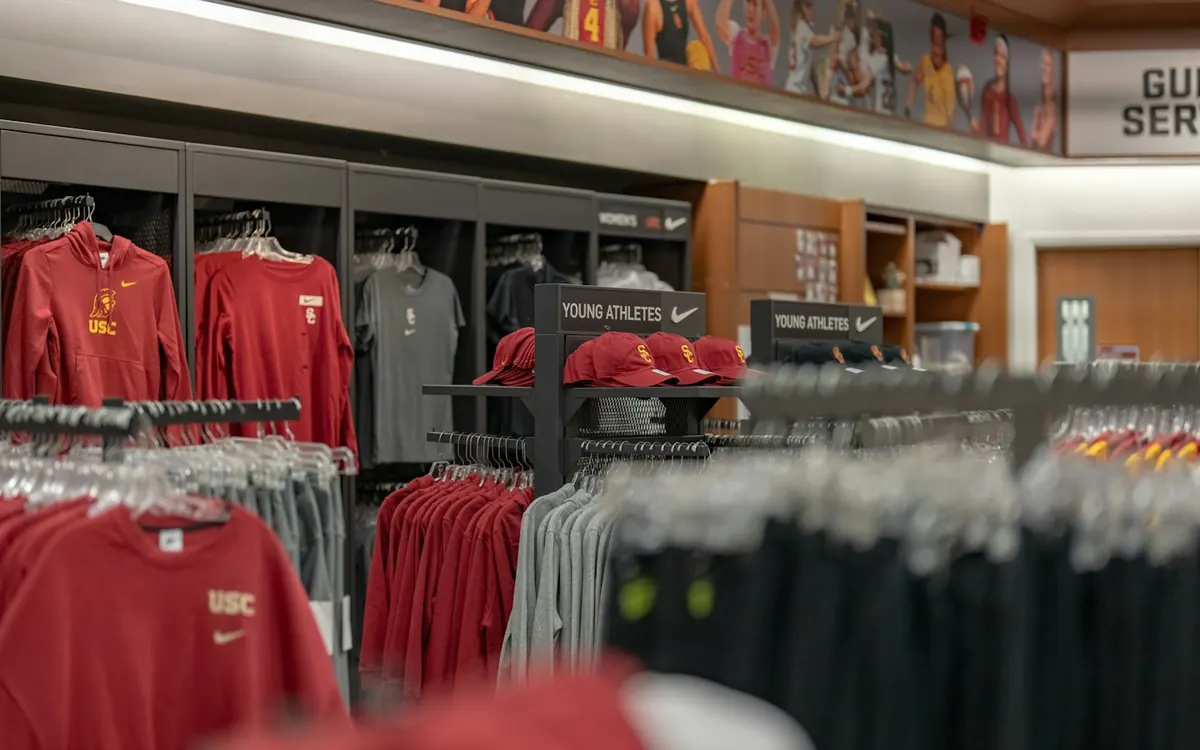
Branded corporate merchandise displayed on rails in a retail-brand store

What the same line can carry

Tees & Polos

Everyday branded basics, cut to the same graded chart as your staff wear.

Hoodies & Sweats

Specify fleece weight, hand feel and agreed pilling, colourfastness and after-wash requirements.

Caps & Headwear

Embroidered or woven labels, matched to your logo placement spec.

Outerwear

Softshells, gilets, and jackets for staff, teams, and gifting tiers.

Knitwear

Fine-gauge knits for leadership, client gifts, and on-camera teams.

Bags & Accessories

Totes, backpacks, and cases on the same palette and trim language.

Three places it pays for itself

Customers

The re-purchase the brand earns

Merch your customers or members buy — branded apparel that turns an audience into wearers of the mark.

Clients & Events

Gifting that travels

Conference, launch, and thank-you apparel that leaves the room and keeps working off-site.

Employees

Wear that builds the team

Opt-in team and team-offsite apparel — one identity inside the company, not just outward.

Merchandise runs on the same factory, palette, and logo-placement spec as your staff program, so a customer tee and a staff polo read as one brand. Order it as a run on its own, or bolt it onto an existing uniform program.

The Locked Spec

One spec, archived, so it cannot drift.

Consistency is not a promise — it is a record. At program start, five things are fixed and filed. Every office order is produced against that record, so a branch added a year later lands matching the first.

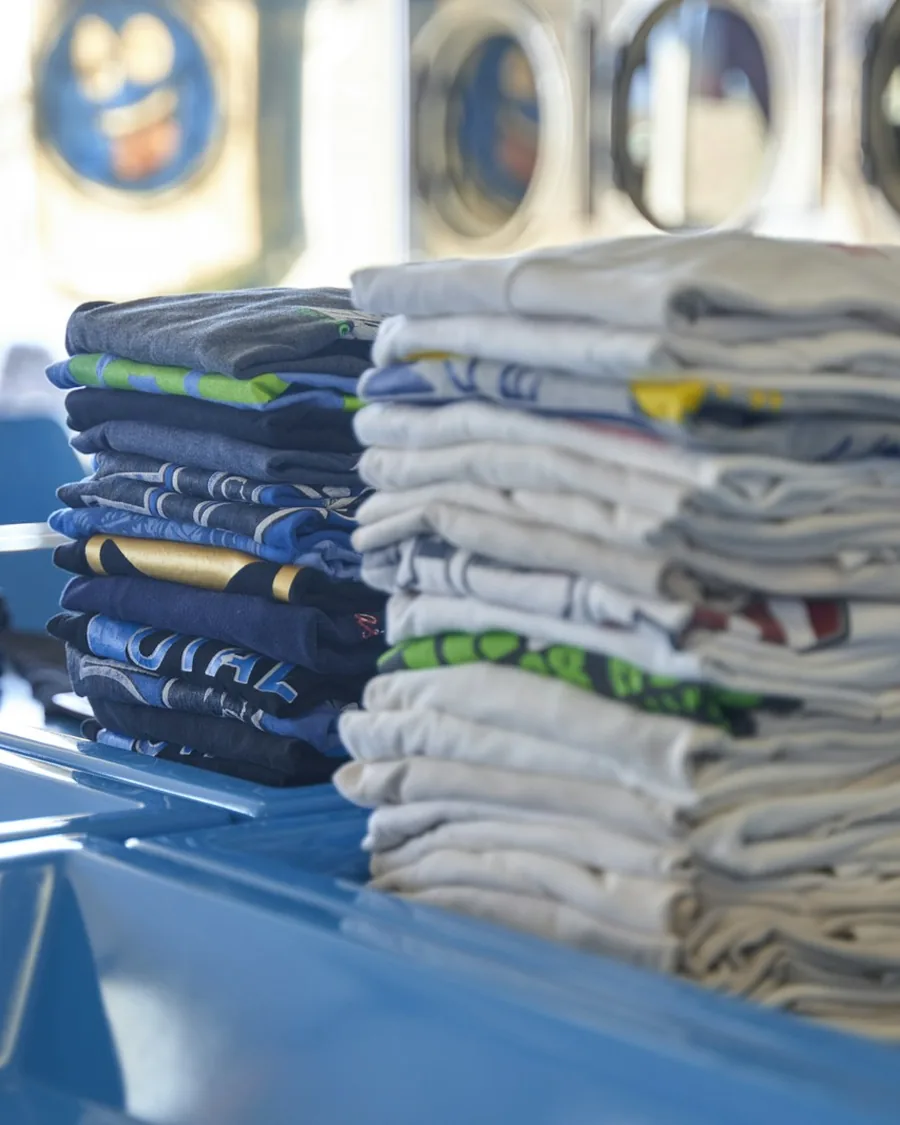
Folded corporate uniforms in a coordinated brand palette
The sealed record
5 records on file
01

Brand colour

Read from your swatch or reference garment by spectrophotometer and locked at the dye house.

Target ΔE ≤1.5 with an agreed measurement method before cutting.

02

Logo placement

Position, size, and stitch or print method locked to your brand guide and filed per style.

Set to the placement spec — not to whoever ran the machine.

03

Size grade

One graded chart, XS–6XL, agreed up front and cut into every pattern block.

A reorder draws the same chart — an “M” means the same fit everywhere.

04

Fabric spec

Fibre, weight, and finish fixed per role and archived under the style code.

A reorder matches handle, drape, and wash behaviour — not just the colour.

05

Sealed sample

The sample you approve is sealed as the golden standard.

Every bulk lot is measured against it, so nothing changes quietly.

Keep the approved colour, placement drawing, graded chart, fabric article and sealed sample under one programme revision. Agree confidentiality, authorised file use and access before sharing proprietary artwork. Sample planning: 5 business days after the complete brief and materials are ready.

The Decision

One program vs many suppliers — the honest comparison.

Most groups arrive comparing price per garment. The choice that actually decides whether the brand holds is how many suppliers sit between your standard and the shirt — because each one is a place the colour, logo, and sizing can move.

Local suppliers per office

Local speed, many standards

Colour control
Agree a shared physical reference across local suppliers.
Logo placement
Confirm each vendor’s approved placement drawing.
Sizing
Reconcile each supplier’s size chart and fit sample.
Fabric spec
Confirm fabric availability and substitution rules.
Per-office pricing
Compare equivalent material and delivery scopes.
Compliance file
Require the same document index from each source.
Opening a new office
Check material and fit continuity for the new location.
Merch capability
Confirm merchandise range and minimums.
Recommended

One factory-direct program

One standard, everywhere

Colour control
ΔE ≤1.5 approval target, with measurement method and physical reference retained.
Logo placement
Locked to the brand guide and filed per style
Sizing
XS–6XL grade developed and approved by style, retained for repeat orders.
Fabric spec
Fixed per role and archived under the style code
Per-office pricing
One quotation basis for garment, branding, testing, packing and freight.
Compliance file
PO-linked material identity, agreed tests, inspection and office packing list.
Opening a new office
Reorder against the sealed sample
Merch capability
Same palette and spec for customer-facing apparel

A single promo / print vendor

Cheap basics, no archive

Colour control
Confirm stock shades and available colour tolerances.
Logo placement
Approve logo size and placement on each blank.
Sizing
Compare blank measurements with your required size grade.
Fabric spec
Specify weight and after-wash criteria for each blank.
Per-office pricing
Compare the full decoration and repeat-order cost.
Compliance file
Verify certificate scope and the supplied material identity.
Opening a new office
Confirm continued availability of the same blank and shade.
Merch capability
Approve against the shared brand references.

A group programme is designed for coordinated colour, branding and fit across several offices, with merchandise developed from the same references. Production starts at 50 pieces per SKU. For urgent local stock, compare local availability with a new production schedule.

Sampling

What “sample approved” actually means.

A sample is a decision, not a gesture. These are the success criteria we agree before cutting — so neither side is negotiating the standard after the sample lands. Copy this into your approval doc.

CriterionPass rule
Dimensions & fitAgree points of measurement and the style-specific grade before cutting. Planning tolerance: ±0.5 in / 1.3 cm unless your tech pack specifies a tighter or different limit.
ColourAgree ΔE ≤1.5 against the physical reference, with instrument, formula, illuminant and observer recorded. Check each dye lot and the finished garment under the agreed conditions.
After-washSpecify the care process, temperature, detergent, drying and cycle count. Check dimensional change, colour, collar shape, seams and decoration after the agreed washing procedure.
Logo & brandingApprove a placement drawing with garment reference points, logo dimensions, method and tolerance. Retain thread colours, print references and an approved sew-out or strike-off.
Batch inspectionUse ISO 2859-1 General Inspection Level II with no critical defects accepted, Major AQL 2.5 / Minor AQL 4.0. Record lot size, sample size and acceptance numbers.
DocumentationFile material/lot identity, applicable certificates, agreed test results, inspection records and office-level packing lists under the PO. Certificate validity and scope must cover the supplied material.

What you need to give us.

A sample lands approved in one round when these arrive with the brief. Hand them over late and the first sample is guessing — this is the checklist that stops that.

Wash conditions

How the garment is laundered on site — commercial or industrial, wash temperature, detergent, and dryer or iron finish. Agree the washing procedure and conditions before sampling.

Role list

Every role on site, the colour and standard each one needs, and headcount per role per location — the map the whole program is built against.

Size distribution

The size breakdown to order, and human measurements where the program is made-to-measure rather than graded from a chart.

Reference colour

A Pantone number, physical swatch, or existing garment we can read by spectrophotometer, so the colour formula is locked to your reference, not matched by eye.

Standards by market

Destination market, care labels, restricted-substance requirements and any material certificates required by your purchasing policy.

First delivery window

The date the first site needs stock, so sampling and production are scheduled against a real deadline instead of a placeholder.

How It Rolls Out

Five stages. Every office on one record.

Start with a 24-hour quotation response, plan sampling at 5 business days after brief and material readiness, then bulk at 15–20 days after final approval. Pack by office and archive the PO file. Confirm freight separately; unchanged repeat styles with available material can be planned at 10–14 production days.

0124 hr

Spec & role intake

Send your offices, roles, brand guide, and quantities — or just a brief. A named engineer builds the role-to-garment list and replies with a spec.

025-day sample

Palette & sample locked

Approve the physical colour reference and placement drawing first. Build the size grade and cut a sample from the selected cloth; keep the accepted garment as the production reference. Sample timing starts once the brief and materials are ready.

0315–20 days

Production across offices

Plan bulk production at 15–20 days after final sample approval and material readiness. Use in-process checks and the agreed pre-shipment sampling plan, and compare each dye lot with the approved colour reference.

04Filed by PO

Packed & filed by office

Each shipment is packed and labelled per office with its own packing list, and the batch compliance pack ships filed by PO.

0510–14 days

Reorder per office

Order against the approved style and revision, with quantities by office and size. Review material availability and any change in fabric, colour, branding or care before release; re-approve changed details.

Opening a new office? Work back from day one.

Sample
5 business days
Production
15–20 days
Freight
By destination

Work back from the opening date. Allow time for briefing, sample approval, production and transit as separate stages. For an existing programme, review the current revision and material availability before ordering. Freight timing depends on destination and service.

Fit Check

Where this program hits hardest.

Fit is a scale, not a yes or no. Every segment is ranked on one five-notch gauge by how much a single-factory program actually buys it — so the right buyer sees themselves near the top, and the wrong one sees themselves off the chart.

Fit indexRanked · built-for-it first
01rank

Groups running 3–50+ locations

Best fit
Multi-office & franchise

Branches, franchise networks, and regional offices that must read as one company on one palette, whatever the city.

Built for it · 5/5
02rank

Promotional & retail apparel

Best fit
Brands with merch ambitions

Companies running corporate merch, client gifting, or a small retail line who want it on uniform-grade spec, not promo-grade.

Built for it · 5/5
03rank

Brand-led corporates

Head office & professional services

Law, finance, consulting, and tech firms whose staff are the brand — tailoring and client-facing wear on one spec.

Strong · 4/5
04rank

Customer-visible teams

Hospitality & retail groups

Where front-of-house wear is a guest-facing asset and the palette has to hold across every site.

Strong · 4/5
05rank

Private-label corporate programs

Distributors & resellers

Resellers who need a factory to run a branded corporate line to a locked spec under their own label.

Solid · 3/5

Where the model stops working

Single site, no scale

One office below 50 units per SKU never reaches a run — and does not need one.

72-hour local restock

We ship from our own factory; rapid local replenishment is faster sourced closer to home.

Certified protective wear

FR, hi-vis, and arc-flash are a different program, tested to their own standards — not this one.

Buying one finished garment

This is a program built per style, not per wearer. Single pieces do not get a spec file.

The honest read

None of the four above is a defect in the program — each is a deliberate limit. A corporate identity program is worth running when colour, logo, and sizing must hold across several locations; below that scale, a local supplier is simply the faster answer, and we will say so before you spend.

Procurement perspectives

One brand standard. Every office.

“

I need one navy across office polos, front-desk blouses and branded outerwear. Start with a physical colour reference, then agree how each fabric and dye lot will be measured against it.

For approval, I would keep five records together: the colour reading, logo placement drawing, graded measurements, fabric article and sealed sample. A branch opening later should order against that same revision.

At receiving, office and department labels must match the packing list. That makes the garment programme practical for HR, facilities and the people issuing new-starter kits.

“
Illustrative facilities director portrait

Facilities Director

Multi-Office & Franchise Uniform Programme

“

My first approval is the brand guide: logo dimensions, reference points, thread or print colours and the decoration method for each style. An embroidered polo and a printed event tee need separate approved application samples.

The quotation needs garment, decoration, tests, packing and freight on separate lines. Sample planning is 5 business days after complete brief and materials; bulk is planned at 15–20 days after approval and material readiness.

For replenishment, retain patterns, materials and artwork under the style number. Review substitutions before release and keep test and inspection records linked to the purchase order.

“
Illustrative corporate procurement lead portrait

Procurement Lead

Corporate Apparel & Brand Merchandise

FAQ

The questions that decide a corporate program,
answered straight.

If your question isn’t here, our RFQ desk responds within 24 hours — no sales pitch, just specs.

Production starts at 50 pieces per SKU. A development sample can start from one garment. Confirm style, colour and size mix in the quotation; specialised fabric minimums may apply. Repeat-order quantities and charges are confirmed against material availability, rather than assumed to have no minimum.

Plan sampling at 5 business days after the complete brief and available materials are confirmed. Bulk production is planned at 15–20 days after final approval and material readiness. Freight is quoted separately by destination and service. Unchanged repeat styles with available materials can be planned at 10–14 production days. Revisions, special materials and testing can extend the schedule.

Approve measurements and grade, physical colour reference, fabric article, logo size and placement, decoration method and care procedure before cutting. Planning dimensional tolerance is ±0.5 in / 1.3 cm unless the tech pack states otherwise. Agree the ΔE ≤1.5 measurement method and after-wash criteria; retain the accepted sample and its revision.

Yes. Use one programme number for the colour reference, approved patterns, size grade, fabric and artwork. Each office orders quantities by style and size against that revision. Pack and label cartons by location and department, with a corresponding packing list.

Start with a physical swatch or reference garment. Agree the instrument, colour-difference formula, illuminant and observer for a ΔE ≤1.5 target. Review the chosen fabric’s finish and texture, check new dye lots before cutting and retain finished-garment references for repeat orders.

Yes. Supply the vector artwork and brand guide. Approve a placement drawing showing logo dimensions, distances from garment reference points and the permitted tolerance. For embroidery, retain thread colour, backing and stitch settings; for printing, approve a strike-off. Check the delivered method and position against that file.

Yes. Develop polos, shirts, tees, hoodies, knitwear and outerwear from the same palette and artwork references. Approve fabric, fit and decoration separately for each style. Accessory availability and construction are confirmed with the brief. Production starts at 50 pieces per SKU.

Develop a style-specific XS–6XL grade and approve the points of measurement, fit sample and size set. Roles can share the colour palette while using different garment patterns. Use the same approved grade on repeat runs and review individual fit requirements before ordering.

Agree a PO document index covering material and lot identity, applicable certificates, requested test reports, inspection results and location-labelled packing lists. The reference inspection plan is ISO 2859-1 General Level II, no critical defects accepted, Major AQL 2.5 / Minor AQL 4.0. Any OEKO-TEX record must have valid scope covering the selected material.

One retained colour reference, size grade and artwork file reduces repeated approvals across offices. Compare the same fabric, decoration, quantity and delivery terms before comparing prices. Local stock can be useful for urgent needs; planned group orders use the approved programme references.

Single finished garments, quantities below the confirmed production minimum and urgent 72-hour new-production deliveries need a different supply plan. Certified protective garments require a separate hazard and product-standard review. Send the requirement before selecting a corporate style for a protective task.

Give us your offices. We’ll return the brand spec.

Send your offices, roles, brand guide, and quantities — or just a brief. A named engineer replies within 24 hours with a role-to-garment spec and a mill-direct quote. No sales pitch.

Explore corporate uniforms, embroidery and site-labelled packaging for your complete brand programme.
Get a Quote

Search Washedloom

Chat on WhatsApp