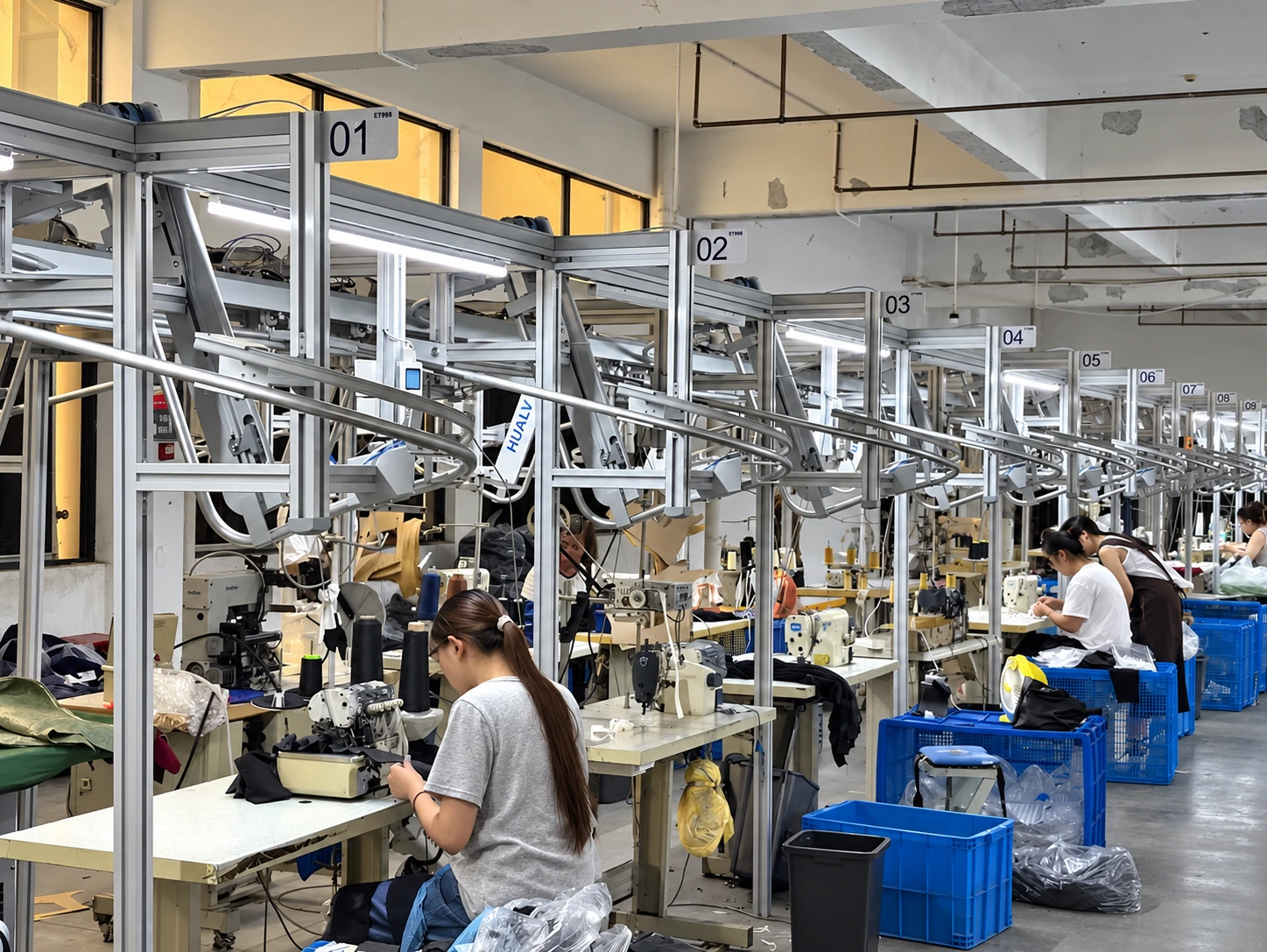
Custom Medical Uniform Manufacturers. Built for every shift.
Scrubs, lab coats and clinic uniforms developed around long shifts and repeat laundering. Choose 130–210+ GSM fabrics, lock your department colours and grade XXS–5XL fits before bulk production. From 50 pieces per style, with a PO-linked inspection file.
≈180 GSMSTANDARD SCRUB WEIGHT
Grade 4+COLOURFASTNESS SPEC
≤3%SHRINKAGE SPEC
>70%FINISH-RETENTION TARGET
Products
Choose your medical uniform style.
Nine categories for hospitals, clinics, dental teams and laboratories. Develop each style around the people who wear it and the laundry routine it must withstand.
Need a different cut, pocket layout or department colour?
Fabric & Specifications
Medical fabric specs. Clear before you order.
Choose a construction, weight and laundry protocol. The selected-material requirements below become the acceptance criteria for your sample and production order.
01
Fabric Composition
72% polyester / 21% rayon / 7% spandex is a practical stretch-scrub starting point. Other blends can be developed within the 70–80% polyester / 18–25% rayon / 2–7% spandex family, with the final percentages adding to 100%.
Polyester supports durability; rayon adds drape; spandex gives freedom to bend and reach.
02
GSM Weight
Lightweight: 130–150 GSM. Standard: 155–180 GSM. Heavier constructions: 185–210+ GSM. For hospital bulk programs, start in the 155–180 band and check opacity on the actual colour and fit.
Specify the lightest fabric that passes your opacity, comfort and durability review.
03
Tested Performance
For the chosen fabric, write AATCC 61 colourfastness ≥ Grade 4, AATCC 135 shrinkage ≤3%, and AATCC 8 crocking dry ≥4 / wet ≥3 into the order specification. Match the report to the actual lot and wash conditions.
Put measurable acceptance limits in the tech pack, then keep the results with your PO.
04
Antimicrobial Option
Select a mill-applied antimicrobial finish for garment odour control. For a 100+ cycle program at 75°C, require AATCC 100 results on the selected textile after that laundering sequence, with the measured reduction recorded. If finish-performance retention must exceed 70%, define the measured property and baseline in that test brief.
Approve the treatment and wash report together. Antimicrobial fabric does not replace clinical laundering.
Color & Size
Your department colours. A fit for every team member.
Nine standard colour directions and ten size bands, with custom shades, men’s and women’s fits, and an approved size set for your program.
Standard medical palette
Navy Blue
A versatile option for hospital-wide programs.
Ceil Blue
A familiar clinical shade for nursing and outpatient teams.
Royal Blue
A brighter blue for clear department identification.
Hunter Green
A common colour choice for OR support and anaesthesia teams.
Teal
A fresh option for dental and outpatient teams.
Black
A clean uniform identity for imaging and aesthetics teams.
Charcoal Gray
A neutral choice for clinical and support departments.
Burgundy
A distinctive option for emergency or respiratory teams.
Purple
A recognisable colour for paediatrics and specialist clinics.
Match an existing program with a physical swatch or garment. Record the Pantone reference and a ΔE ≤1.5 colour-tolerance specification, including the measurement method, before approving each new dye lot.
Scrub size chart (inches / cm)
Size
Chest / Bust
Waist
Hips
XXS
30–32 in(76–81 cm)
23–25 in(58–64 cm)
33–35 in(84–89 cm)
XS
32–34 in(81–86 cm)
25–27 in(64–69 cm)
35–37 in(89–94 cm)
S
34–36 in(86–91 cm)
27–29 in(69–74 cm)
37–39 in(94–99 cm)
M
36–38 in(91–97 cm)
29–31 in(74–79 cm)
39–41 in(99–104 cm)
L
38–41 in(97–104 cm)
31–34 in(79–86 cm)
41–44 in(104–112 cm)
XL
41–44 in(104–112 cm)
34–37 in(86–94 cm)
44–47 in(112–119 cm)
2XL
44–47 in(112–119 cm)
37–40 in(94–102 cm)
47–50 in(119–127 cm)
3XL
47–50 in(119–127 cm)
40–43 in(102–109 cm)
50–53 in(127–135 cm)
4XL
50–53 in(127–135 cm)
43–46 in(109–117 cm)
53–56 in(135–142 cm)
5XL
53–56 in(135–142 cm)
46–49 in(117–124 cm)
56–59 in(142–150 cm)
Use this body-size starting chart to build the fit sample. Your approved garment measurements, ease and grading rules define the finished size set.
How We Work
More than production. A complete supply program.
Six connected services keep the specification, production schedule and repeat order in one place.
Design & Technical Development
Send a sketch, reference garment or tech pack. We develop the pattern, pocket construction, measurements and grading so the sample resolves the details before bulk cutting.
One approved specification from first pattern to production.
Dedicated Account Coordination
Keep your fabric, fit, artwork and delivery decisions with one named order contact. Record revisions against the style and PO so the production brief stays current.
A clear owner for the sample, production and order file.
Production Visibility
Agree checkpoints for material approval, cutting, sewing, finishing and inspection. Request dated updates at those milestones rather than waiting until the dispatch week.
Know which stage is complete and which decision comes next.
Repeat-Order Program
Retain your pattern, graded measurements, shade standard and decoration file. A repeat order starts with the approved style reference and a review of current fabric stock.
10–14-day repeat production slots reviewed against material readiness.
Export Documentation
Set the label languages, fibre and care information, material evidence and destination requirements with the RFQ. Match the invoice, packing list and inspection file to the PO.
Prepare the required records before the cartons leave.
After-Sales Resolution
Report an issue with the PO, carton number, size, photographs and affected quantity. Trace the lot, compare it with the approved sample and agree the corrective action in writing.
A documented route from the reported defect to resolution.
Quality Control
Five quality gates. Before your order ships.
One agreed specification connects fabric approval, sewing, sizing, laboratory checks and final inspection.
01
Fabric Lot
Before cutting
Check GSM with ASTM D3776, tensile strength with ASTM D5034, colourfastness with AATCC 61 and dimensional change with AATCC 135.
Catch unsuitable fabric before it becomes finished uniforms.
02
In-Line
AQL 2.5 checkpoints
Use the agreed ISO 2859-1 sampling plan to review seam alignment, stitch tension, pocket placement and bartacks during sewing.
Correct workmanship while the batch is still on the line.
03
Dimensions
100% specified measurements
Include a garment-by-garment check of the agreed chest, length, sleeve and inseam measurements in the inspection plan.
Keep the size run consistent with the approved sample.
04
Third-Party Lab
Independent test records
Select the applicable OEKO-TEX material evidence, AATCC 61 wash report and AATCC 100 antimicrobial report for the chosen textile and finish.
Connect each material claim to an identifiable test record.
05
Pre-Shipment
AQL 2.5 final inspection
Check random finished garments and carton allocations against the PO. A failed lot is held for sorting, correction and reinspection before dispatch.
Resolve nonconformities before the receiving dock.
In the Field
Medical uniforms. Across the working day.
Six views of scrubs and lab coats for hospitals, dental clinics and laboratory teams.
Customer Perspectives
What healthcare buyers value.
Illustrative buyer perspectives.
“
My responsibility is to keep every clinic looking like one organisation. If the new navy differs from the previous delivery, staff notice immediately — a colour name on the purchase order does not solve that problem.
I want one physical shade standard, an instrumental check on every new dye lot and a retained size set. A ΔE ≤1.5 colour specification, with the measurement method agreed, gives the next order a measurable reference instead of relying on memory.
For distribution, I need the size breakdown and location on the carton marks. Archiving the pattern, fabric reference and allocation file makes the next replenishment a repeatable order rather than a fresh development project.
Facilities Director
Multi-Site Healthcare
“
A general certificate does not answer my audit questions. I need to connect the material, laundering results and garment inspection to the exact purchase order being received.
My brief asks for the approved sample, applicable AATCC 61 and AATCC 135 reports, material-certificate scope and AQL 2.5 inspection results in one PO-linked file. If an antimicrobial finish is selected, the AATCC 100 report must state the textile, wash sequence and measured result.
I also compare the same specification at 50, 200 and 1,000 pieces. Separating garment, branding, packaging and freight costs lets me approve the delivered cost and delivery allocation before the bulk order starts.
Procurement Manager
Hospital Supply Programs
FAQ
Medical Uniforms FAQ.
Direct answers on samples, pricing, lead times, repeat orders, testing and documentation.
Can I approve a sample before ordering in bulk?
Yes. Start with one development sample in the fabric, colour and branding intended for production. Sampling is planned at 5 business days after the specification and materials are ready; courier transit is additional.
Wash the sample using your intended laundry routine, review the post-wash colour and measurements, and fit it on the relevant staff group. Record any pocket, sleeve, waist or length changes before approving the size set.
The accepted sample is retained as the production reference. Send your tech pack or reference garment, target quantities, size range and wash protocol to start.
What is the minimum order and how is the price calculated?
The starting minimum is 50 pieces per style. A lab coat and a scrub top are different styles; define the colours and size split for each item in your request.
Fabric composition and GSM, trims, decoration and order quantity determine the unit price. Ask for the same specification at 50, 200 and 1,000 pieces to compare the volume breakpoints.
The quote should separate garments, logo work, packaging and freight. For repeat orders, reference the previous style and PO so current material stock and production costs can be checked against the original specification.
How long do quotation, sampling, bulk production and reorders take?
Initial quote response: 24 hours after a clear brief. Sample production: 5 business days once the specification and materials are ready. Standard bulk production: 15–20 days after final sample approval.
Repeat production using the retained pattern and available materials can be planned for 10–14 days. A new fabric, revised fit or changed decoration needs its own approval step.
Shipping time is separate. Send the required arrival date and delivery postcode with your RFQ so the production slot and freight route can be planned together.
How do you keep repeat orders the same colour and size?
We retain the approved physical shade reference, pattern and graded measurements under the style number. Each new dye lot is reviewed before cutting against the same standard.
Write the colour limit — for example ΔE ≤1.5 — together with the measuring instrument conditions and visual review into the brief. Compare the new fabric with the retained standard, rather than a worn or faded uniform.
For sizing, approve finished garment measurements and tolerances across XXS–5XL or your custom range. Send the previous PO and new quantities; any fabric or construction change is raised before cutting.
Can the antimicrobial finish withstand industrial laundering?
Choose the finish for the actual wash process. For a program requiring 100+ industrial cycles at 75°C, request AATCC 100 results after that exact wash sequence on the selected fabric.
The report must identify the treatment, organisms, test conditions and measured bacterial reduction. A result on an unwashed swatch does not establish performance after 100 cycles.
Confirm detergent, bleach, drying and temperature limits before sample approval. This option addresses bacterial growth and odour on the garment; it does not sterilise clothing or replace the facility’s infection-control process.
Which documents come with a medical uniform order?
Agree a PO-linked document list before production: the approved garment specification, fabric-lot details, sample reference, applicable AATCC 61 laundering, AATCC 135 shrinkage and AATCC 8 crocking results, and final AQL inspection report.
For selected OEKO-TEX STANDARD 100 materials, review the actual certificate scope and validity. Add AATCC 100 evidence when an antimicrobial finish is ordered.
Commercial invoice, packing list, carton marks and customs documents follow the agreed delivery terms. Send your audit checklist and destination requirements with the RFQ so the file can be prepared for the order you are buying.
What does AQL 2.5 mean if a batch has defects?
AQL 2.5 is an acceptance limit used with an agreed sampling plan, such as ISO 2859-1, for major defects. It is not a promise that exactly 2.5% of every order will be defective.
Define the lot size, inspection level, defect categories and acceptance numbers before production. Check seams, measurements, shade, labels and packing against the approved sample and PO.
If the lot fails, hold it for sorting and correction, then reinspect before dispatch. The inspection report records the sample, findings and disposition so your receiving team can trace the decision.
Do medical uniforms require FDA registration?
First separate everyday staff clothing from garments sold with a medical protective purpose. Tell us the exact garment, intended use, barrier claims and destination country before the quote is finalised.
For the US, surgical and isolation gowns can fall under FDA medical-device rules; their requirements depend on the product’s classification and intended use. An ordinary scrub fabric report cannot establish surgical-gown clearance or barrier performance.
If the order includes protective gowns, keep their specification and regulatory file separate from routine staff scrubs. Review the required registration, clearance and test evidence for that product before purchasing. FDA guidance on medical gowns.
Your Medical Uniform Program
Let’s build your medical uniform range.
Send your styles, quantities, size breakdown, colour references and laundry requirements. We will turn them into a sample and production plan.
Your privacy choices
With your permission, we use Google Analytics to understand website visits and successful enquiries. Optional analytics stays off unless you accept. Your enquiry works with either choice. Privacy Policy

 Polyester supports durability; rayon adds drape; spandex gives freedom to bend and reach.