Match Body140 GSM
Performance Interlock
92% poly / 8% spandexFlatlock seams
Torso front & back
Lightweight interlock balances a smooth print surface with stretch. Flatlock construction reduces raised seam contact during a full match.
Approve fabric, fit and team colors before bulk production, then retain the pattern, artwork and player list for reorders. Set AQL 2.5 inspection, a selected-fabric shrinkage target below 1.5%, and name/number placement to ±2mm in the agreed specification. From the first kit to a replacement shirt, the signed sample and color reference keep your club’s range consistent.
Selected-fabric targets; confirm the material, test method and report with your sample.
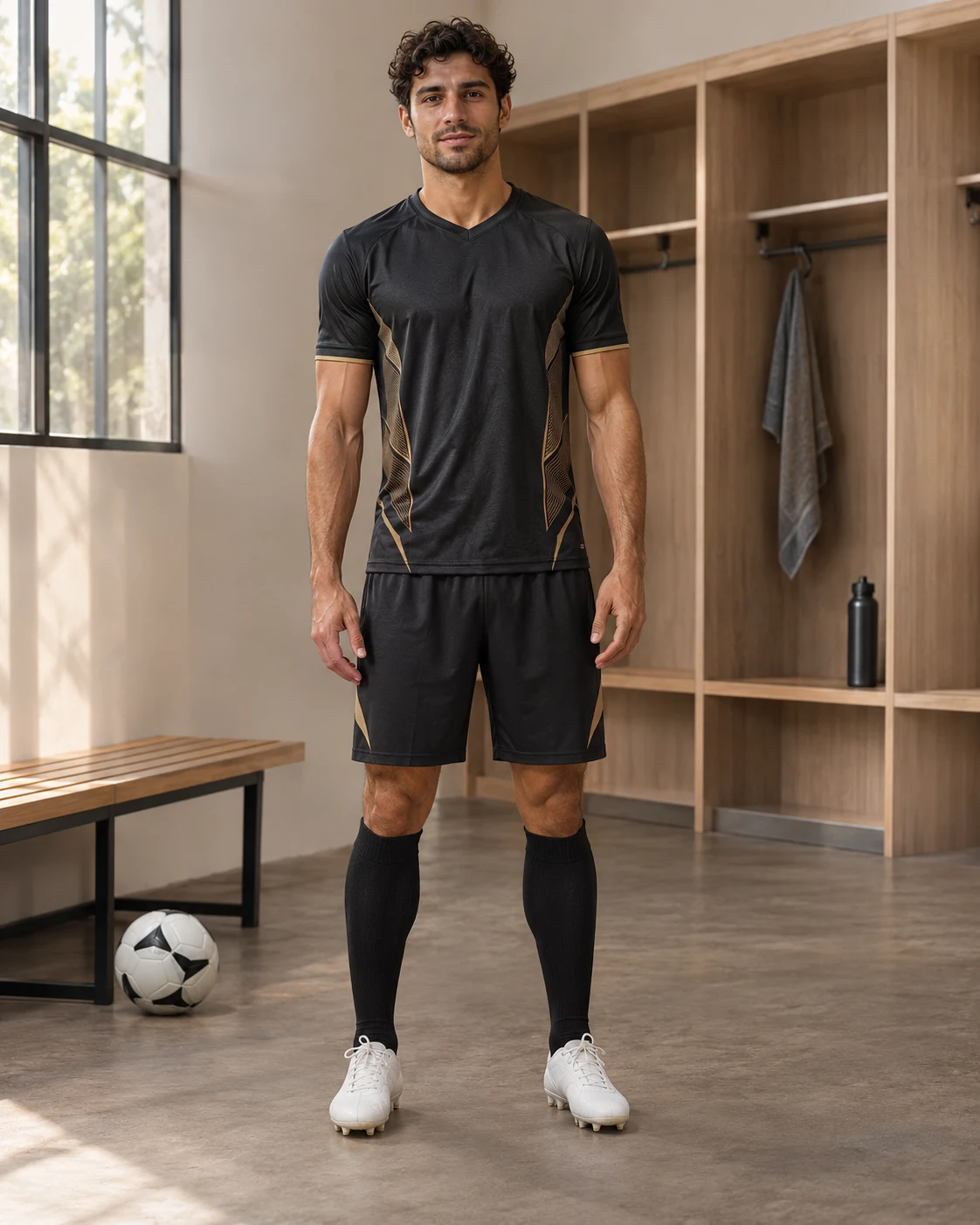
Match-day shirts, training layers and referee sets, developed around your team specification.
Need a different fit, layer or combination?
Match the knit to the body zone: lightweight coverage, targeted ventilation and controlled stretch, combined in one coordinated kit.
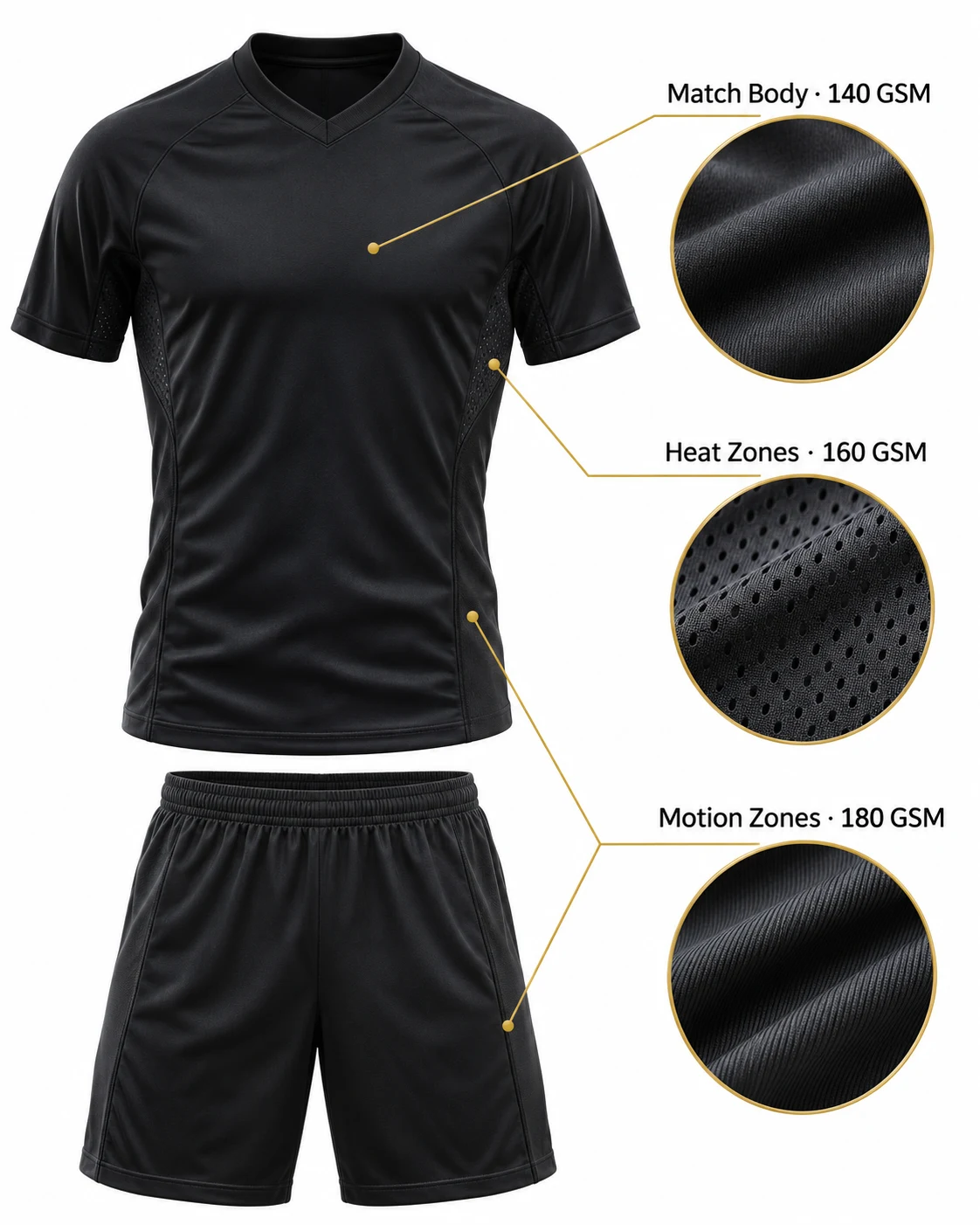
Lightweight interlock balances a smooth print surface with stretch. Flatlock construction reduces raised seam contact during a full match.
Place open-knit ventilation in high-heat areas. Compare the mesh with the body fabric and confirm airflow performance for the selected construction.
Use stretch and recovery where a player reaches, turns and sprints. Agree the intended compression and movement allowance in the fit sample.
 Sublimation-ready polyester-rich fabrics: specify 90%+ polyester for the intended print route.Selected-fabric shrinkage target: under 1.5% after the agreed wash test; check panel alignment.One graded size specification coordinates shirts, training pieces and shorts.Wash-fastness target: ISO 105-C06 grade 4–5 for the selected fabric, ink and approved test scope.
Control temperature, dwell and dimensional change together. A trial transfer establishes the recipe before the artwork is released across the kit.
 Panel checks & agreed targets
Transfer dye into the polyester structure rather than laying a print film on top. Match temperature to the fabric and ink system, keeping the surface smooth.
Balance heat exposure with the fabric weight and transfer equipment. Record the approved dwell time so a repeat panel follows the same process.
Measure relaxation in both fabric directions, then compensate the artwork so seams, stripes and player numbers meet their intended positions.
Set artwork scaling from a trial transfer and stabilize the fabric before cutting. Retain the approved RIP file and compensation settings for reorders.
Six dimensions of customization, with artwork, construction and player details held in one approved specification.

Turn a sketch or reference kit into a graded pattern and print-ready artwork. Coordinate team colors across shirt panels and shorts before approving the master file.

Choose the neckline and sleeve construction for your squad: crew, V-neck or polo, with set-in or raglan sleeves. Review mobility, seam position and hem reinforcement in the fit sample.

Give the club crest the right texture with a woven badge, embroidery or raised silicone. Check attachment, flex and placement on the actual jersey fabric.

Map every player’s size, name, number and lettering style to a unique roster ID. Use that same file for packing checks and an individual replacement later in the season.

Coordinate neck labels, care instructions, size identification and hang tags with the garment. Keep branding consistent while making the kit easy to sort and maintain.

Pack the agreed pieces as one player set, identify the size and roster reference, then group cartons by squad. Specify warehouse delivery or a player-by-player dispatch plan.
Five stages connect the first brief to a repeat order, with the approved sample and player list guiding every handover.
Send your tech pack, reference kit or sketch with quantities and destination. We specify fabric, weight, construction and decoration in a costed brief.
Costed specification within 48 hours.Review fabric, fit, color and decoration on a physical sample. Record changes and sign the final reference before bulk production.
Approve the fit and color reference first.Release the approved pattern, artwork, color recipe and roster. Coordinate cutting, sublimation and sewing across 10 Production Lines.
One documented production brief.Check measurements, print alignment and player details to the agreed brief. Plan AQL 2.5 sampling; file inspection records by purchase order.
Traceable checks linked to your order.Match player sets, roster and carton marks to the dispatch list. Keep the size chart, artwork and reference sample for replacements and reorders.
From carton allocation to repeat order.Match-day movement, team preparation and academy training: see the different settings a coordinated kit is built for.
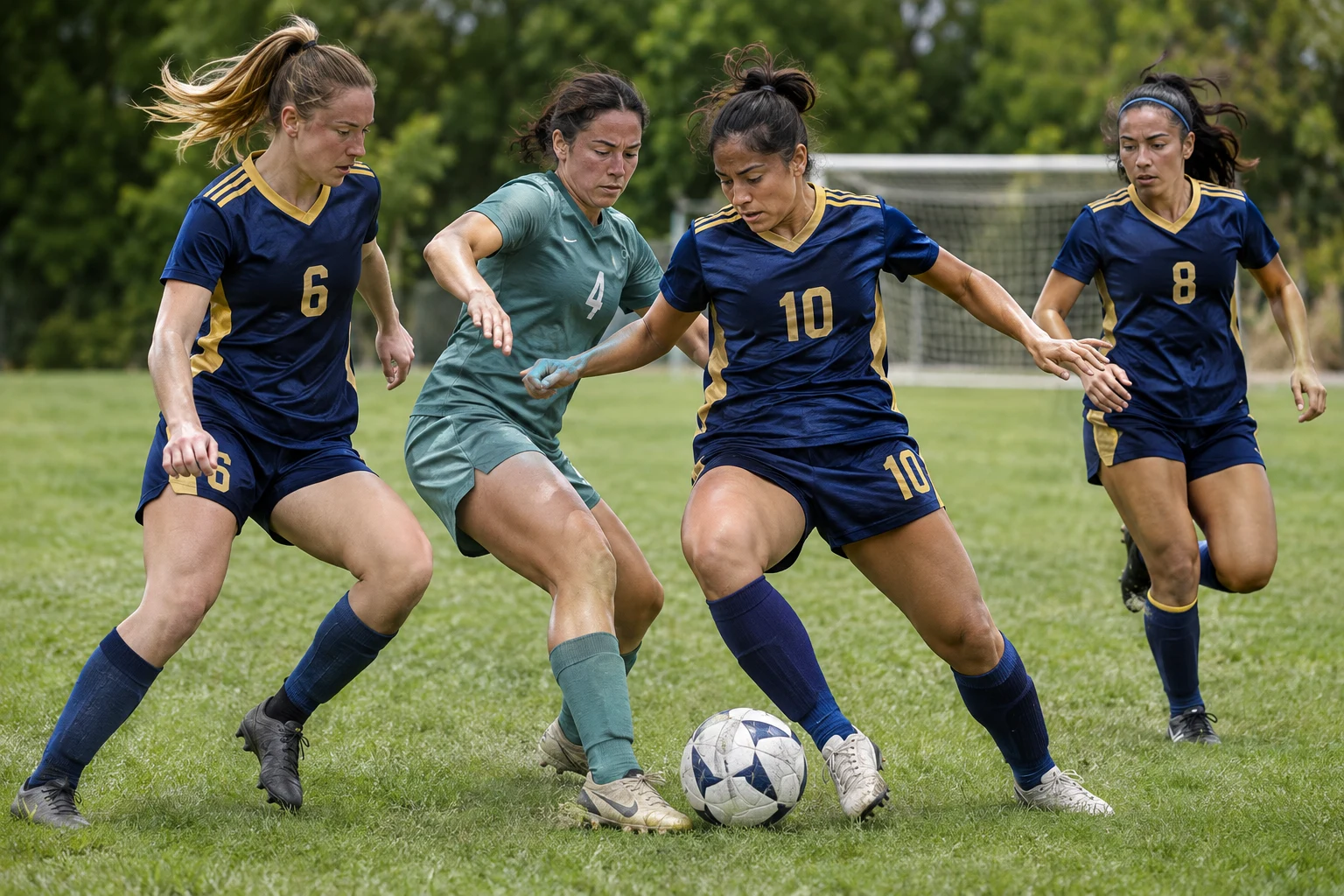
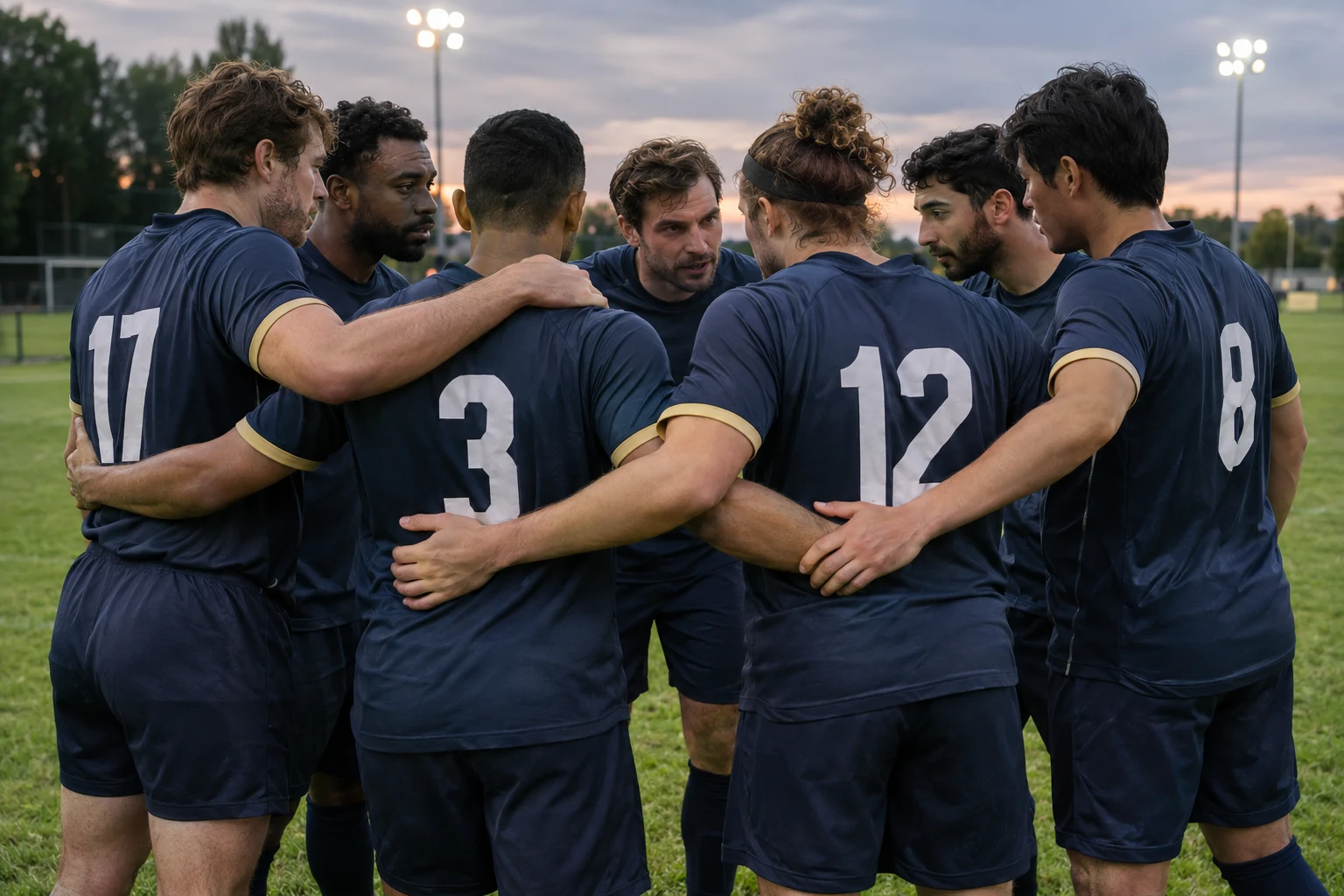

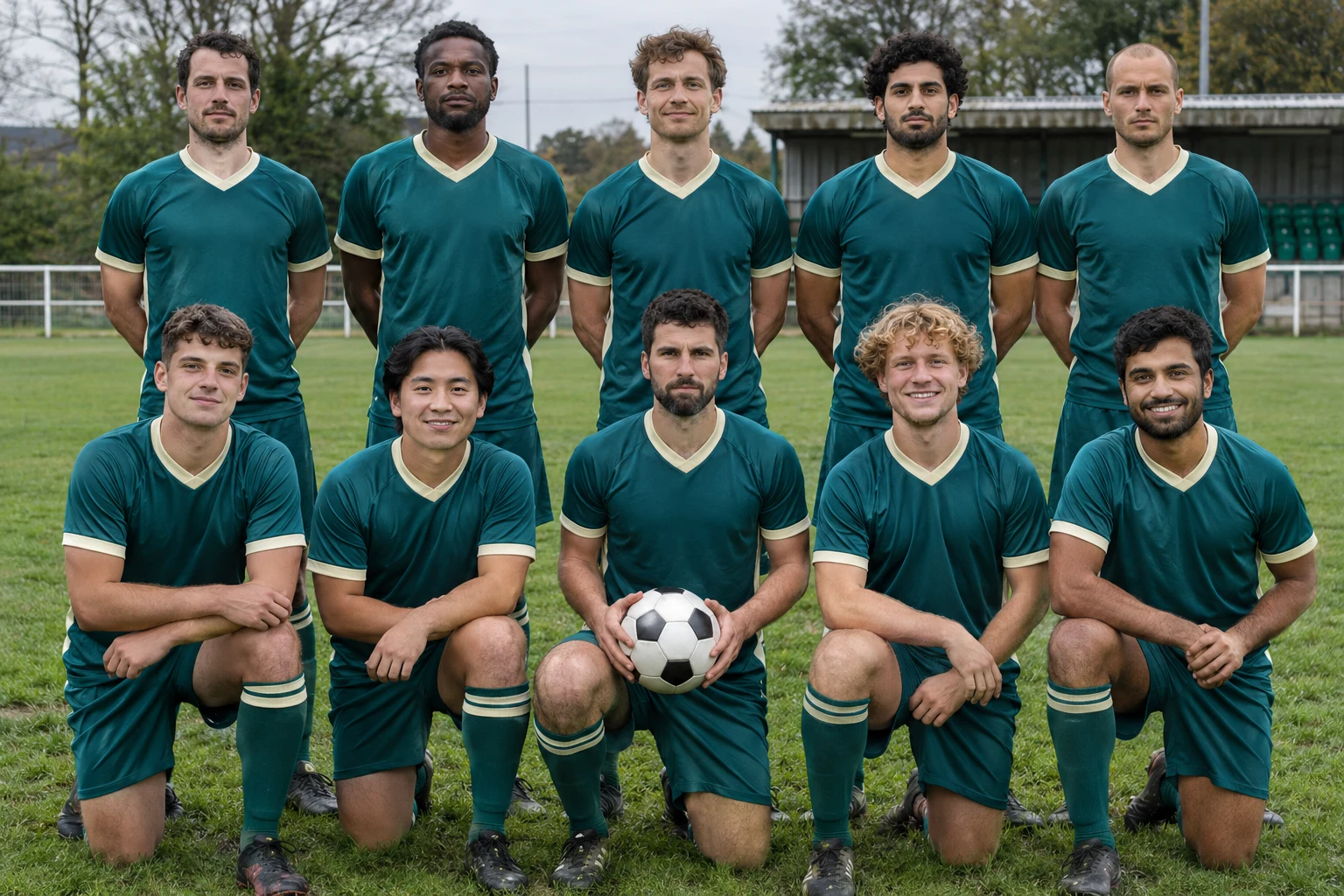
“Our academy color has to work on the first shirt and next season’s replacement. A screen mockup alone would not show me how the fabric, fit and finished print work together.
For a proposed 60-set program, I would want the 140 GSM shirt and the ventilation panels in one complete sample. Seeing the graded fit, the inside seams and the shirt after the intended wash would make the approval useful. I would also ask for the agreed shrinkage and wash-fastness checks in the order file, with the actual test scope attached.
What matters most is what gets kept after approval: the pattern version, the signed color reference, the RIP artwork and the player list. Those details give a future reorder a clear starting point, even when our squad changes.
When one person can explain the difference between a new design and a repeat of an approved kit, I can plan the next season with a much clearer brief.”

“A 30-player roster has 30 combinations of size, name and number, with goalkeepers and late signings to remember. I need those details checked before pressing or packing.
My first step would be a player-by-player approval sheet. I would check the spelling, lettering style, number size and position, then match that sheet to the decorated sample. A placement tolerance such as ±2mm needs an agreed measurement point, so the bulk inspection checks the same thing I approved.
For delivery, I would want each player’s pieces packed together, with the size and roster reference visible. If direct dispatch is part of the program, the address list and parcel allocation should be agreed before the cartons are closed.
The useful reorder record is the one that lets us identify a single replacement jersey without rebuilding the artwork or guessing which size chart was used. That makes a mid-season change manageable.”

Have a kit specification to discuss? Our RFQ desk aims to reply within 24 hours with the details you need.
Start a first run from 10 sets, then compare 50, 100, 300 and 1,000-set tiers. The suitable tier depends on fabric, decoration, personalization and the delivery plan.
Use the first sample to approve fabric, color and fit before scaling the order. Once the specification is archived, individual replacements and reorders can be planned without a fixed minimum; confirm the retained materials and setup for your style.
A typical transfer starting window is 190–210°C for 30–60 seconds. Trial the selected fabric and ink first, then record the temperature, dwell and dimensional change.
Apply measured warp/weft compensation of around 0.5–1.5% and RIP scaling/pre-shrink allowances of around 1–2% where required by the trial. Agree the wash-test condition, shrinkage target and ±2mm name/number placement reference before releasing bulk panels.
Player-by-player dispatch can be planned from the 100-set program tier. Send the roster, kit contents, address file and destination requirements with the quotation brief.
Each set is identified by player ID, size and approved personalization. Agree storage arrangements, parcel costs, dispatch dates and replacement handling before the order; a single warehouse shipment remains an option.
Allow about 15–20 days after final sample approval for a 10-set first run. A 1,000-set academy order is typically planned over 30–40 days, depending on its construction and personalization.
Reorders can use the archived pattern, color recipe and RIP file, reducing development work. Confirm material availability and the current production slot for the actual delivery date. Rush production is by arrangement; transit time is separate.
Use 140 GSM performance interlock for lightweight match-body panels, 160 GSM micro-mesh for training and ventilated heat zones, and 180 GSM poly-spandex tricot for stretch-led side panels or shorts.
Weight alone does not determine fit. Compare the stretch, opacity and recovery of the actual fabrics, then approve the graded size chart and a sample in the intended cut. Your match and training pieces can follow one coordinated size specification.
All-over sublimation suits polyester-rich fabrics and full-bleed artwork. It colors the fiber rather than adding a surface film; keep the approved RIP file for a repeat design.
HTV suits names, numbers and simple marks, with the film and pressing conditions selected for the knit. Woven, embroidered or 3D silicone badges add texture and a club finish, at an additional unit cost. Compare the sample, wash routine, flex and attachment before choosing the method.
Share your team colors, player numbers and delivery date. We’ll help you coordinate the fabric, kit design and personalization plan.