
School Colour & Crest Archive
Retain a physical shade standard, Pantone reference and signed embroidery sew-out. Store the stitch file, backing, crest dimensions and placement by style so a top-up starts from the original approved reference.
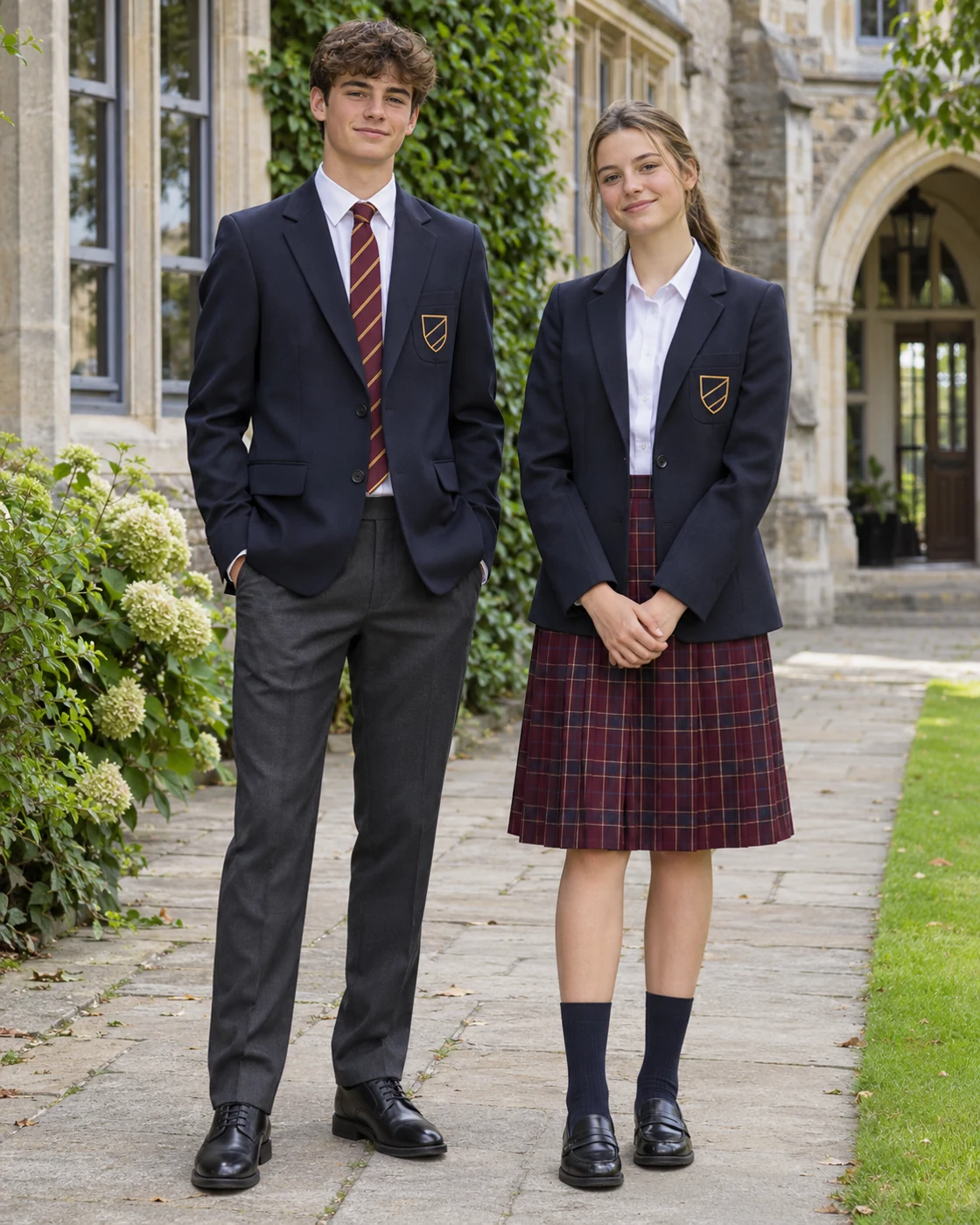
K–12 uniforms from 50 pieces per style, with coordinated house colours, crests and graded sizes. Retain a school-specific size archive and embroidery file for repeat orders. Specify hard-wearing fabrics up to a 55,000-cycle abrasion brief, with wash checks and AQL 2.5 inspection before dispatch.
Nine coordinated uniform families, from kindergarten to senior school, PE and winter wear.
Set the performance brief against the selected textile and approved sample. The same shade, stitch and measurement references carry through to the next order.
| Control | Test method | Specification | Selection / approval brief | Purpose |
|---|---|---|---|---|
| Colour consistency | Spectrophotometer · ΔE | ΔE ≤1.0 | Physical shade standard + retained dye-lot reference | Shade control |
| Abrasion resistance | ISO 12947 · Martindale | 40,000+ cycles | 55,000-cycle option for selected hard-wearing textiles | Durability |
| Wash dimensional change | ISO 5077 / AATCC 135 | ≤2–3% | ≤1.8% target when specified for the selected cloth | Fit retention |
| Pilling resistance | ASTM D3512 | Grade ≥4 | Grade 4–5 material selection | Surface finish |
| Colourfastness | AATCC 61 | Grade ≥4 | Grade 4–5 brief for the approved shade | Wash colour |
| Seam slippage | ISO 13936-2 | ≤4 mm at agreed load | Reinforcement + seam construction matched to fabric | Seam integrity |
Retain a physical shade standard, Pantone reference and signed embroidery sew-out. Store the stitch file, backing, crest dimensions and placement by style so a top-up starts from the original approved reference.

Wash the production-finished sample using the school’s care routine. Measure before and after, assess shade and seams, and record the method and results against the PO before releasing the order.

Specify double stitching at the crotch, bartacks at pocket corners and 12–14 SPI outer seams where suitable. Check the actual cloth and stitch combination through movement and laundering.
Four ways to build the range around the school, rather than forcing the school into a stock uniform.

Build shields, circular badges and layered crests from your authorised artwork. Approve thread shades, backing and a sew-out on the actual blazer, knit or polo before production.
14,000-stitch detail options · ±1 mm placement briefKeep a versioned stitch file and check the chosen thread system through an 80-cycle wash program when required.
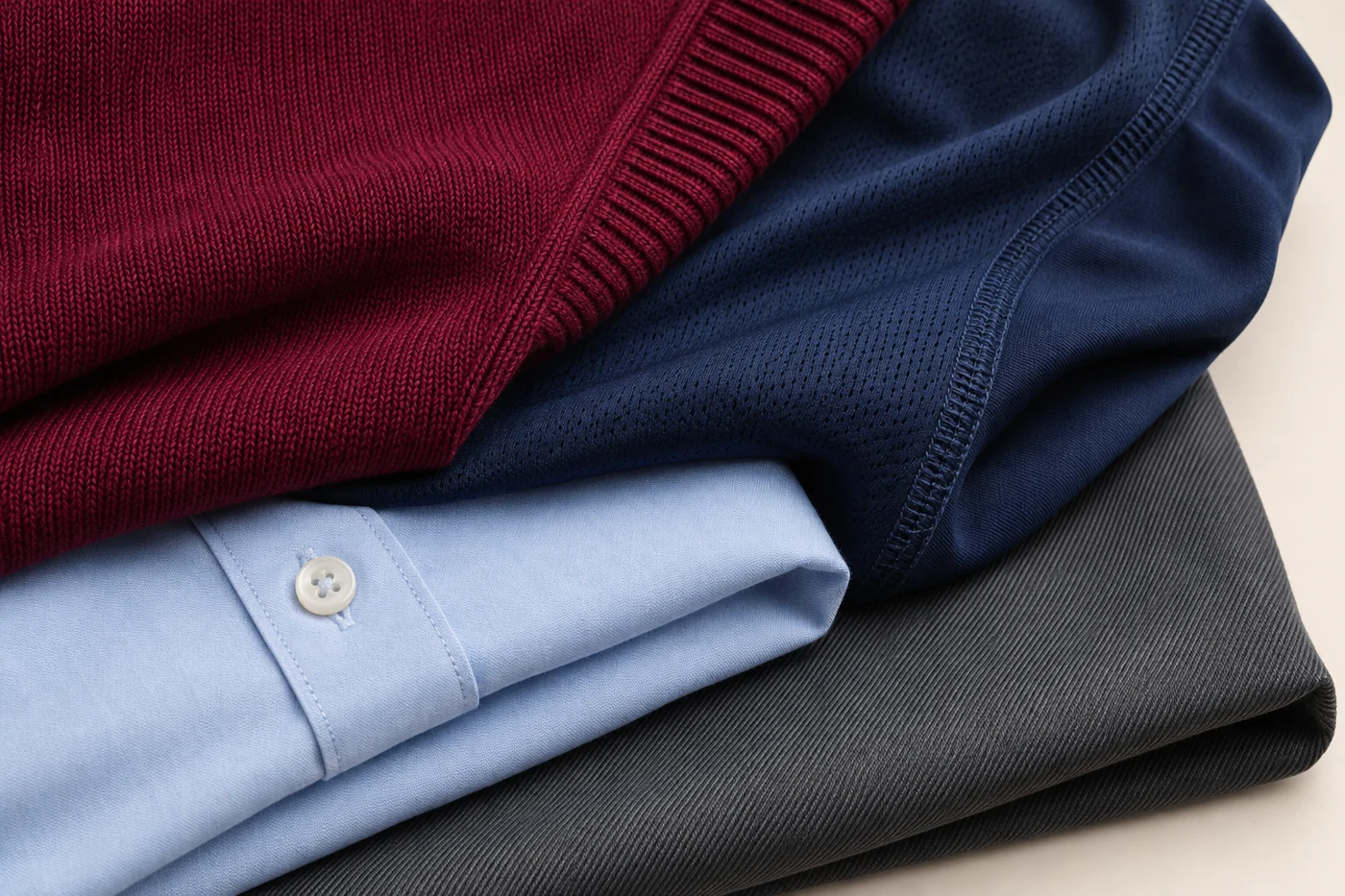
Choose 4-way stretch for PE, anti-pill knitwear for winter and UPF-rated textiles for sunny campuses. Match fibre, GSM and finish to the age group and the laundry routine.
Stretch · anti-pill · UPF optionsSelect material-specific test records and validate the finished colour and construction before approval.
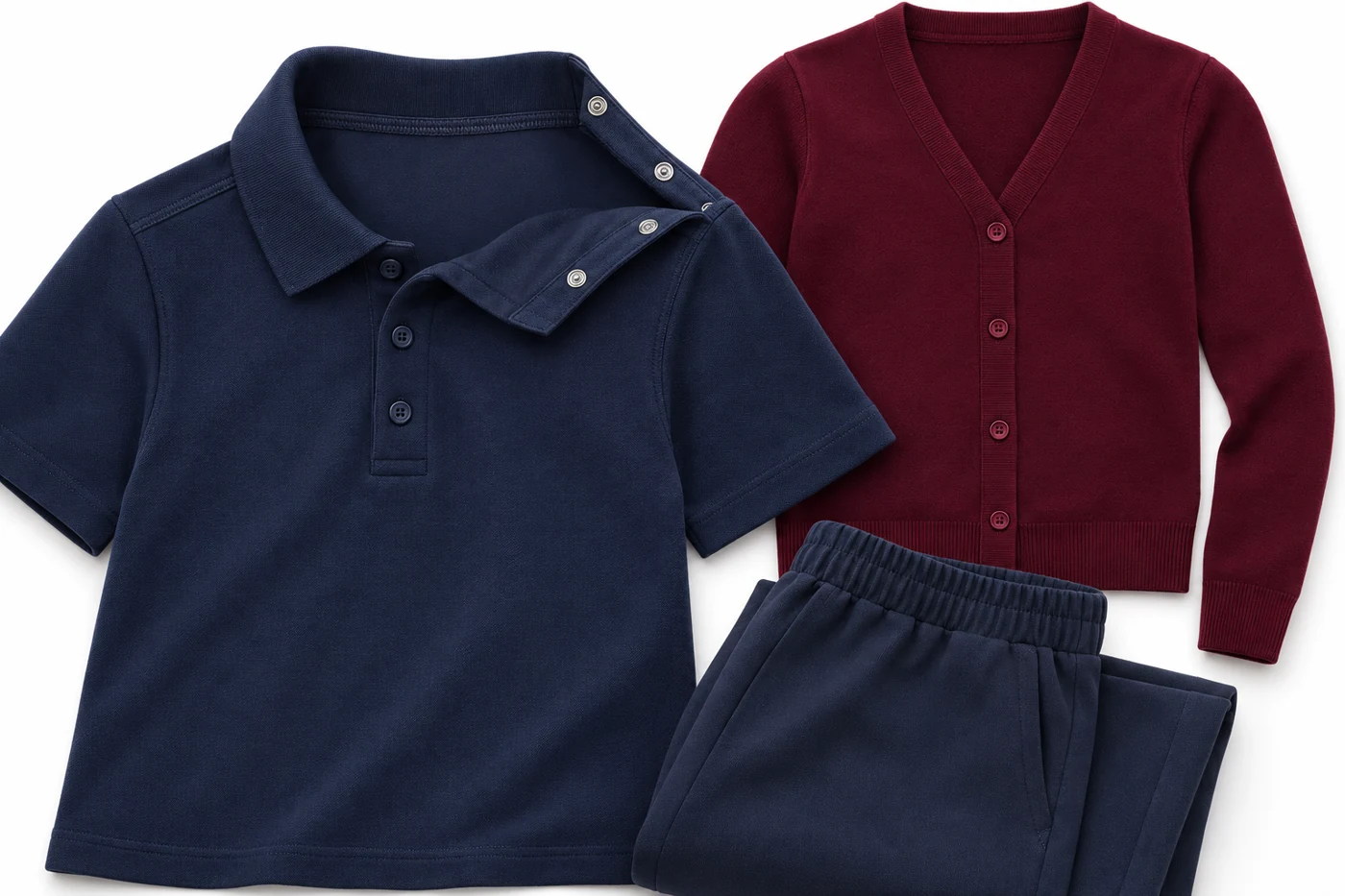
Develop tagless necklines, smooth seams and easy-open fastenings for sensory and dressing needs. Build slim, tall and fuller-fit blocks around wearer measurements.
Dedicated fit blocks · easy-dressing detailsFit the sample for sitting, reaching and independent dressing; retain the approved adjustments by size.
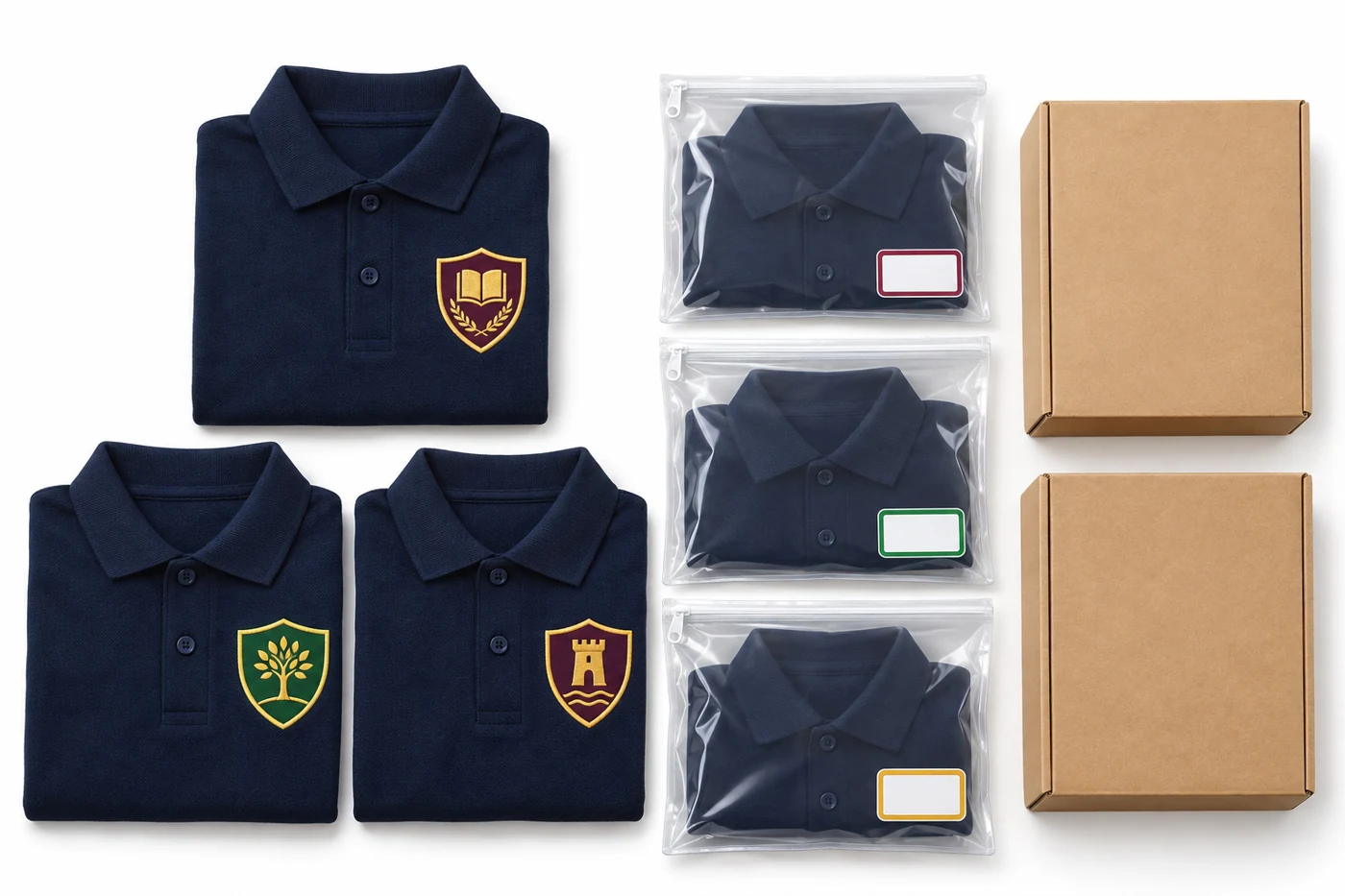
Put each campus crest, house colour and name badge on a separate order line. Link every style to its school code and carton allocation before packing begins.
Campus-coded bags · size-labelled cartonsOne PO can coordinate different campuses without mixing their crests, colours or receiving quantities.
Cover the textile, fastenings, finished garment and order documents in one child-safety brief.
*Destination, age group and component scope determine the required test program; coatings and other components may have separate limits.
Work back from the school’s receiving date. Keep sample approval, production and freight as separate milestones, with peak-season buffer built into the plan.
Confirm the style list, grade sizes and school colours. Review a crest sew-out and pre-production sample; allow time for two revision rounds before signing off.
Source the approved fabric and check each colour lot against the physical standard. Release cutting only after material, shrinkage and pattern checks are complete.
Allocate production across 10 lines, inspect to the agreed AQL plan and reconcile campus-coded bags against the size list. Larger seasonal programs use the reserved window.
Approve carton marks and the shipment manifest before dispatch. Work back from the school’s receiving date and include the chosen route, customs and peak-season buffer.
Retained specifications, reserve sizes and a written top-up process keep the uniform program moving after the first delivery.
Keep the style number, grade rule and crest version on file. State the reorder minimum, price tier and material availability in the quotation so a top-up does not restart development.

Identify fast-moving sizes before the first run. Agree a reserve-stock quantity, ownership and storage period so mid-year enrolments can be served from the planned allocation.

Set a named contact and a 12-working-hour reply target for order questions. Include the PO, style and campus code so the team can locate the right file immediately.

Use dated sample photographs, video fit reviews and couriered swatches. Consolidate comments into one numbered revision so artwork and sizing approvals move together.
Send the PO, affected sizes, quantities and clear photographs. Trace the lot, agree the correction or replacement scope and confirm the dispatch plan in writing.
Reserve a reorder review ahead of the next intake. Confirm growth sizes and new enrolments early, then reuse the retained colour and crest references for the next run.
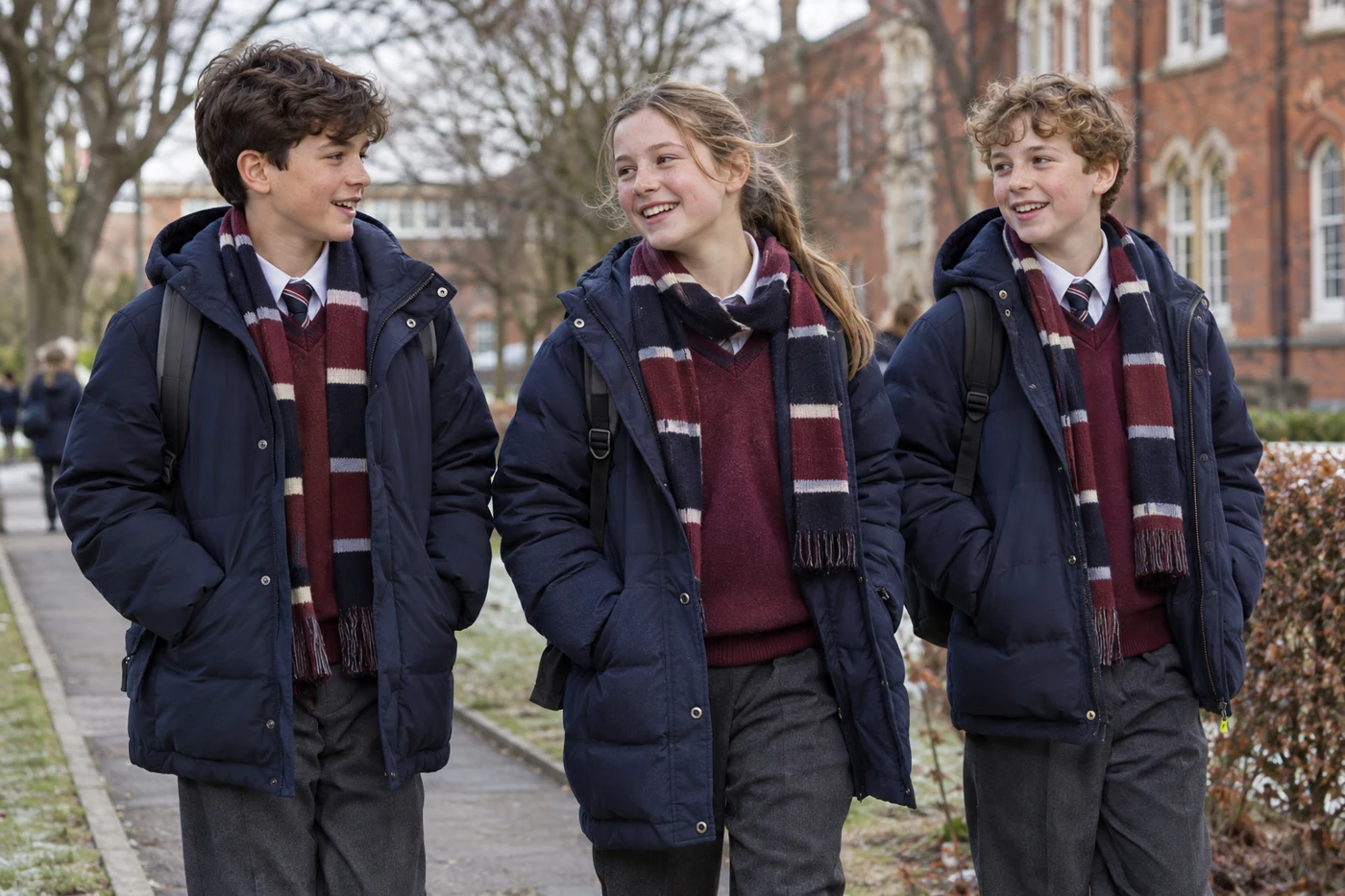
From lessons and assembly to PE, outdoor learning and the final ceremony.





Illustrative procurement perspectives.
For a multi-campus program, my first priority is one colour reference across blazers, knitwear and repeat orders. A physical shade standard and an archived crest sew-out give us something precise to approve instead of another “close enough” burgundy.
I want the school code, grade and size split agreed before the first carton is packed. Nine uniform families can sit in one program, but every campus still needs its own item list, crest version and receiving allocation.
The purchasing value is continuity: a retained size chart, a clear replenishment window and cartons that can go straight to the right school. Those controls make the next intake easier to plan.

A distinctive crest needs to look right on a blazer, a polo and a winter jumper. I look for a sew-out on each fabric, a recorded position and a versioned stitch file before approving the full range.
My sample checklist covers wash shrinkage, colourfastness and fastening security alongside fit. A Grade 4–5 colourfastness brief and an agreed 2–3% shrinkage limit are useful when they are connected to the selected cloth and a readable test report.
The quote should separate garments, decoration, packing and freight. Starting at 50 pieces per style gives a smaller school a practical entry point, while a planned top-up keeps new pupils and growth sizes in view.

Minimums, wash performance, school dates, growing sizes, safety records and mid-year top-ups.
Bulk orders start at 50 pieces per style. List the required sizes and house colours under each style; a blazer, polo and skirt count as separate styles. One order can cover several grades or campuses, with each crest and colour identified on its own line.
You can start with one development sample. Send the garment list, quantities, artwork and delivery postcode so the quote can state the size/colour split, sample charge and freight separately.
Approve a production-finished sample and wash it using the care process the school will actually use. Record its dimensions before and after, compare the shade to the retained standard and check seams, buttons and the crest.
A practical brief specifies ≤2–3% shrinkage, Grade 4–5 colourfastness and Grade ≥4 pilling for the selected fabric. For colour continuity, agree the ΔE method and ≤1.0 shade limit. AQL 2.5 inspection checks the bulk against the signed sample; the material report identifies what was tested.
Start with the required arrival date and plan an eight-week back-to-school window: Week 1 sample, Weeks 2–3 fabric and cutting, Weeks 4–7 seasonal production and QC, Week 8 dispatch/arrival planning. Reserve longer if the freight route or approval rounds require it.
The standard sample build is 5 business days after the materials and specification are ready. Standard bulk production is 15–20 days after final sample approval; it is separate from sampling and shipping. The quotation must show the actual dispatch, transit and receiving dates rather than treating Week 8 as a guaranteed route.
Create a school-specific size archive for early years, primary and secondary proportions. Approve a size set, then retain the finished measurements, grading increments and slim, regular, fuller or tall fit blocks used for the program.
For the next intake, send the previous style/PO and the revised size quantities. Use the same approved grade rule for continuity; select the next size or a growth allowance from the actual fit sample instead of simply scaling an adult pattern down.
The order file should identify the fabric, dye lot, trims and decoration, plus applicable material and garment test reports. Request OEKO-TEX STANDARD 100 Class I material options and confirm that the named certificate scope covers the chosen textile.
Include age-appropriate cord and fastening checks in the garment design. For US-bound programs, define applicable lead, phthalate and other children’s-product tests with the responsible importer and laboratory, and include the information needed for the CPC. Agree the document list before production so receiving knows exactly what to expect.
Yes—send the original PO, style, campus, size breakdown and required date. The team checks retained fabric, reserved stock and current capacity, then confirms the available quantity, price and dispatch plan. A pre-agreed reserve of fast-moving sizes avoids waiting for a new run.
For a defect, provide photographs and the affected style, size, quantity and carton or lot reference. The claim is checked against the signed sample and inspection record; correction, replacement or another agreed remedy is documented with its timing.
Send your styles, crest artwork, school colours, size quantities and required arrival date. We will bring the sample, production and packing brief together.