Moisture Vapour Transmission
Set the MVTR method and conditions for the selected cloth; compare moisture transport for long duty periods.

Bring the flight deck, cabin and ground team into one coordinated program. Lock the colour reference, grade rule and rank details before production. Plan mass-graded orders on an 8–12-week cycle, with 7–14-day replenishment available for agreed buffer stock.
Get a Quote & Samples — 24hr ResponseNine product families for flight crew, cabin service, airport operations and a coordinated fleet identity.
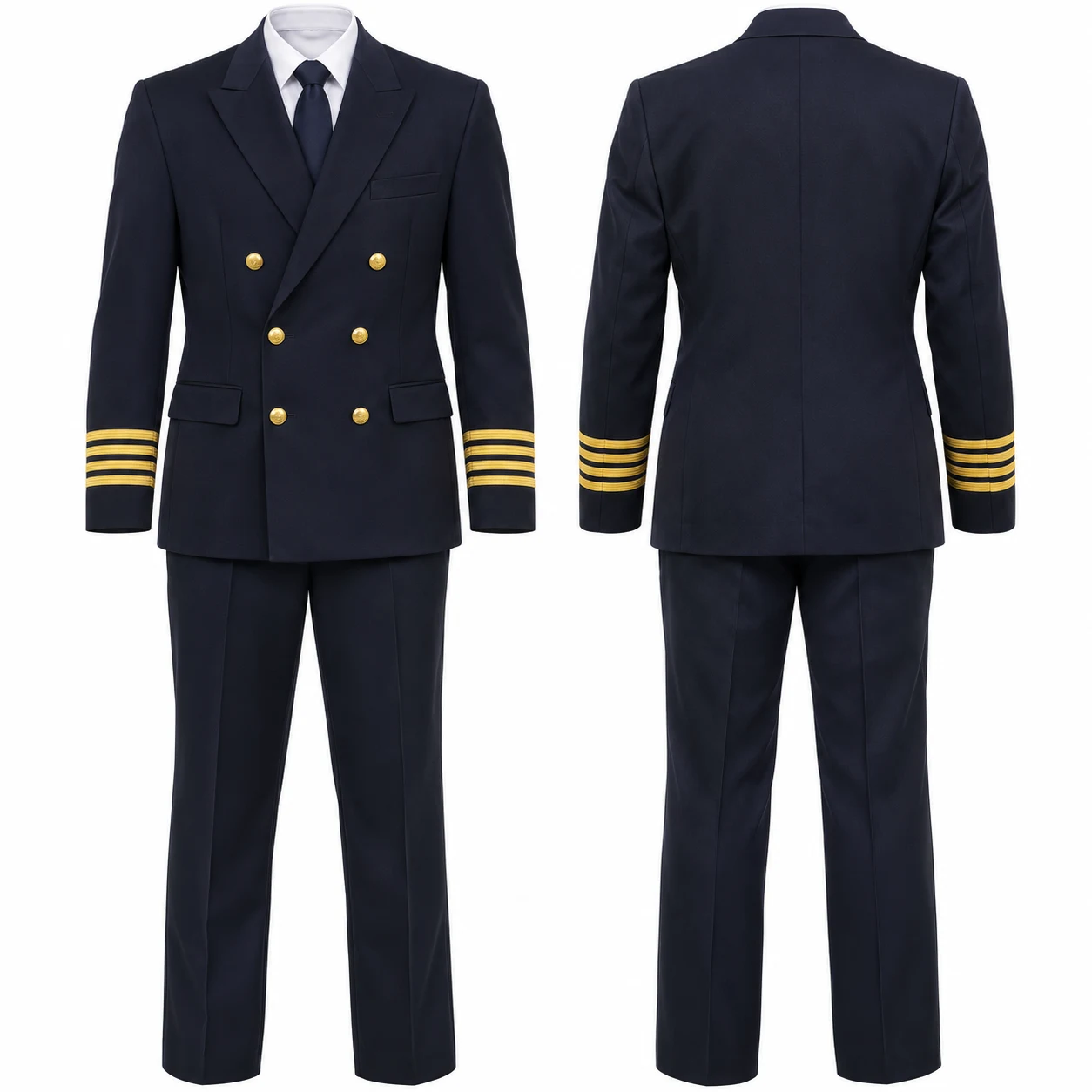 Pilot Uniforms
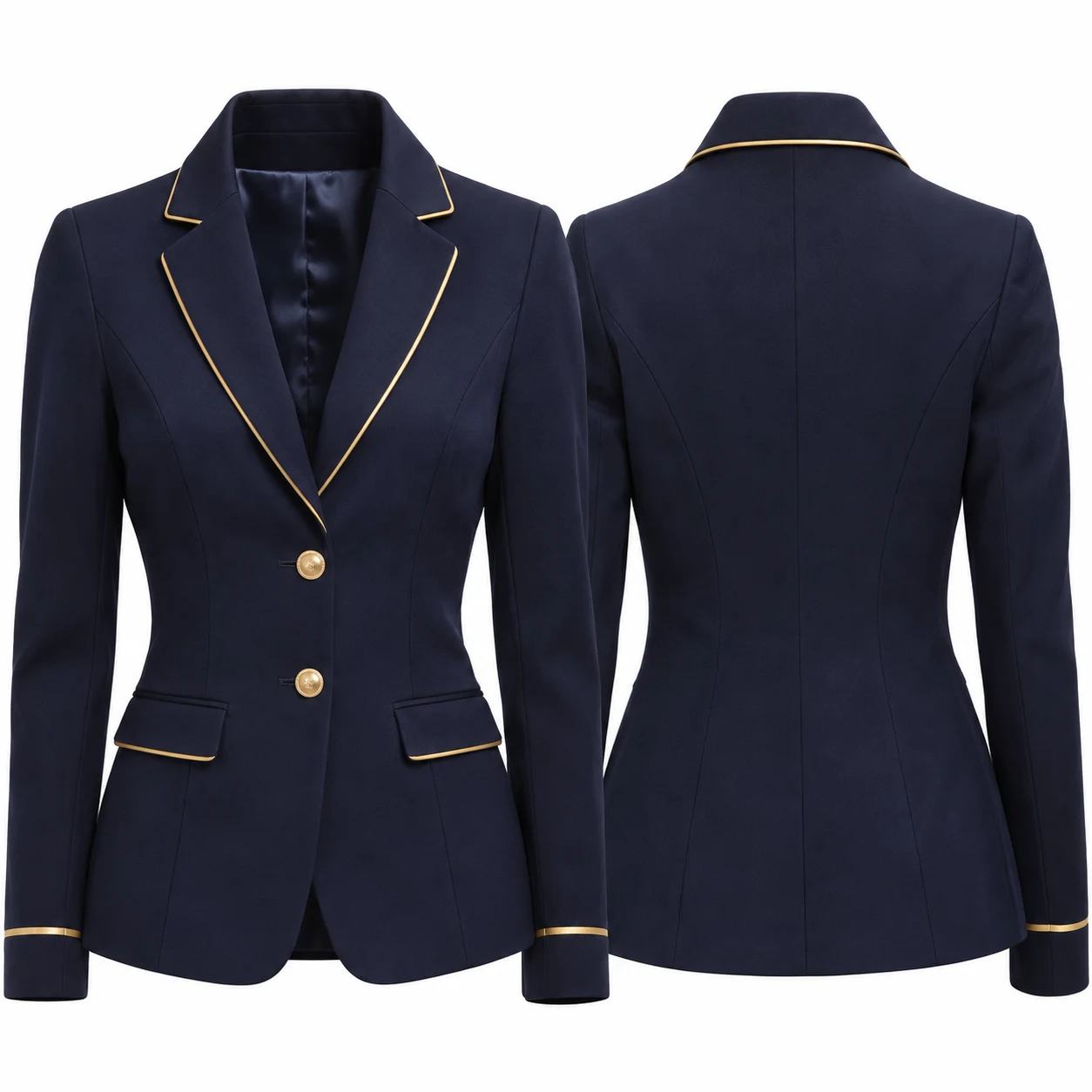 Cabin Crew Blazers
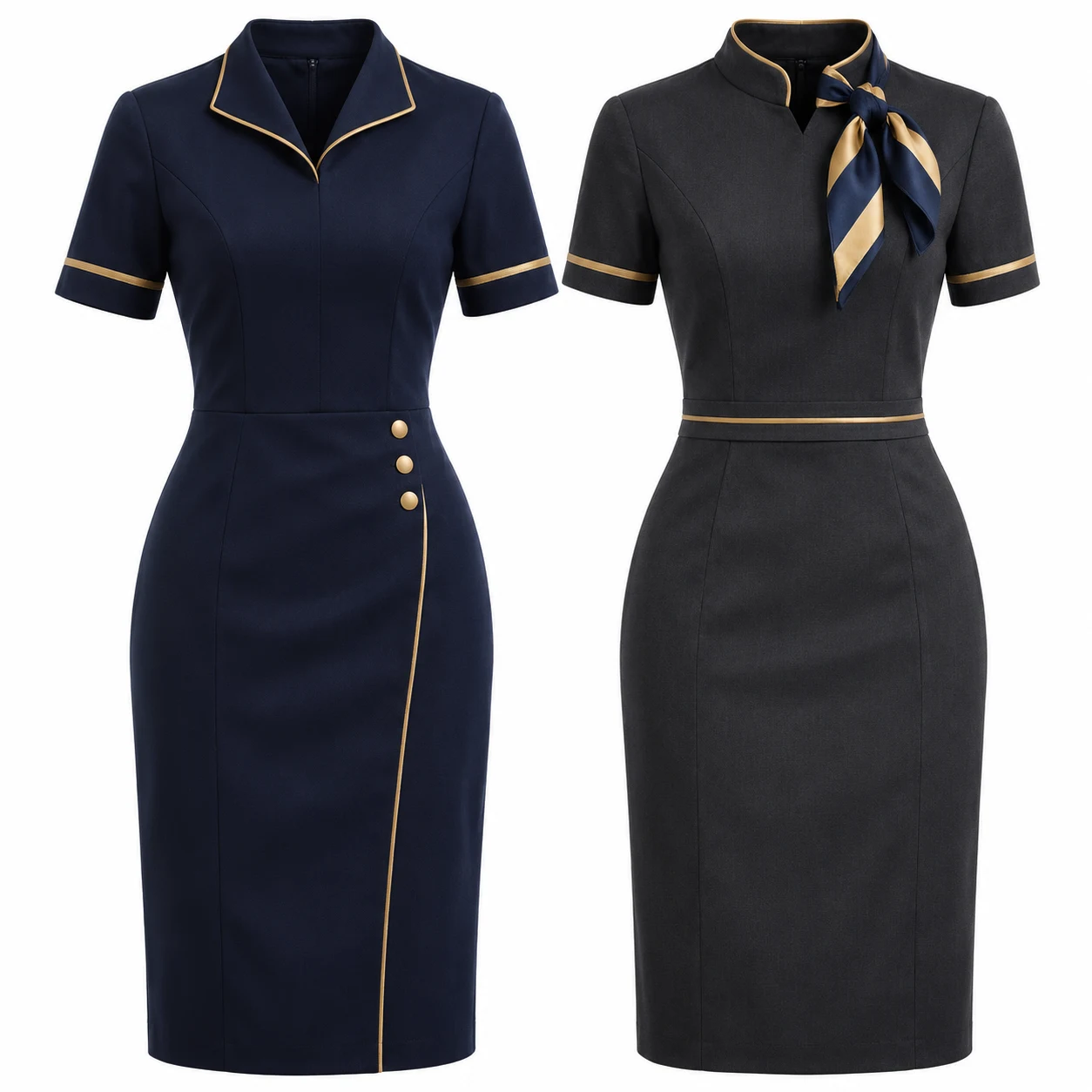 Flight Attendant Dresses
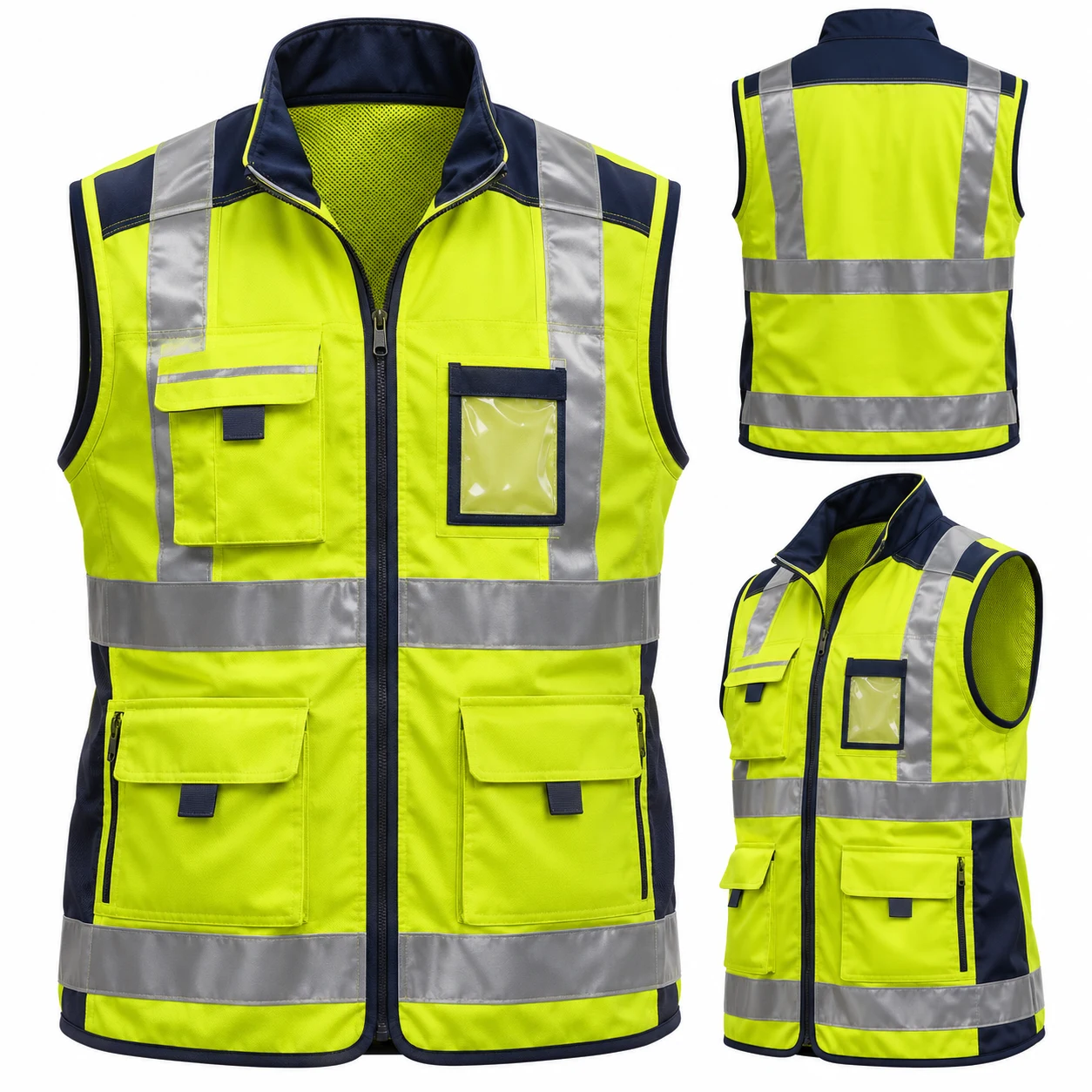 Hi-Vis Ground Crew Vests
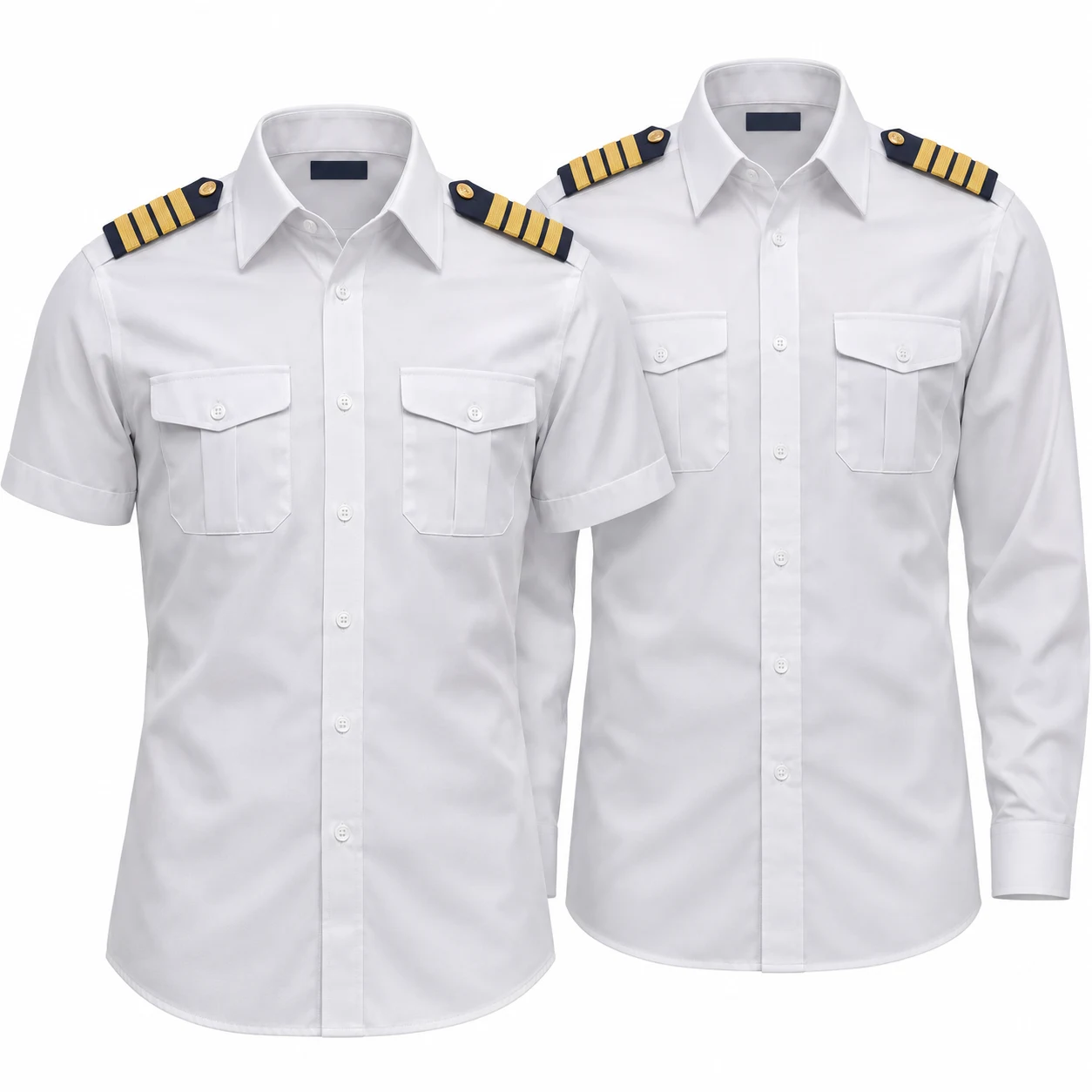 Pilot Shirts
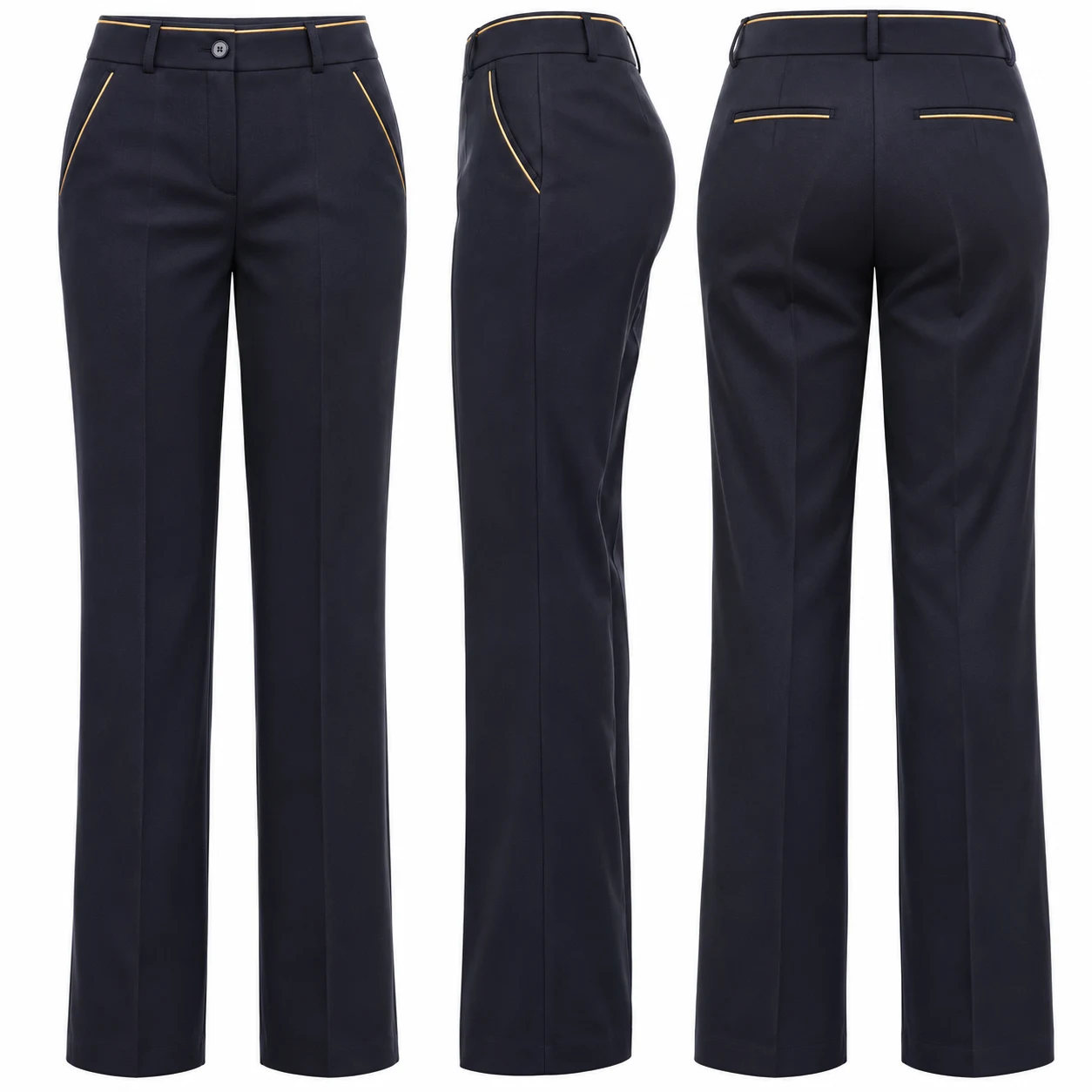 Cabin Crew Trousers
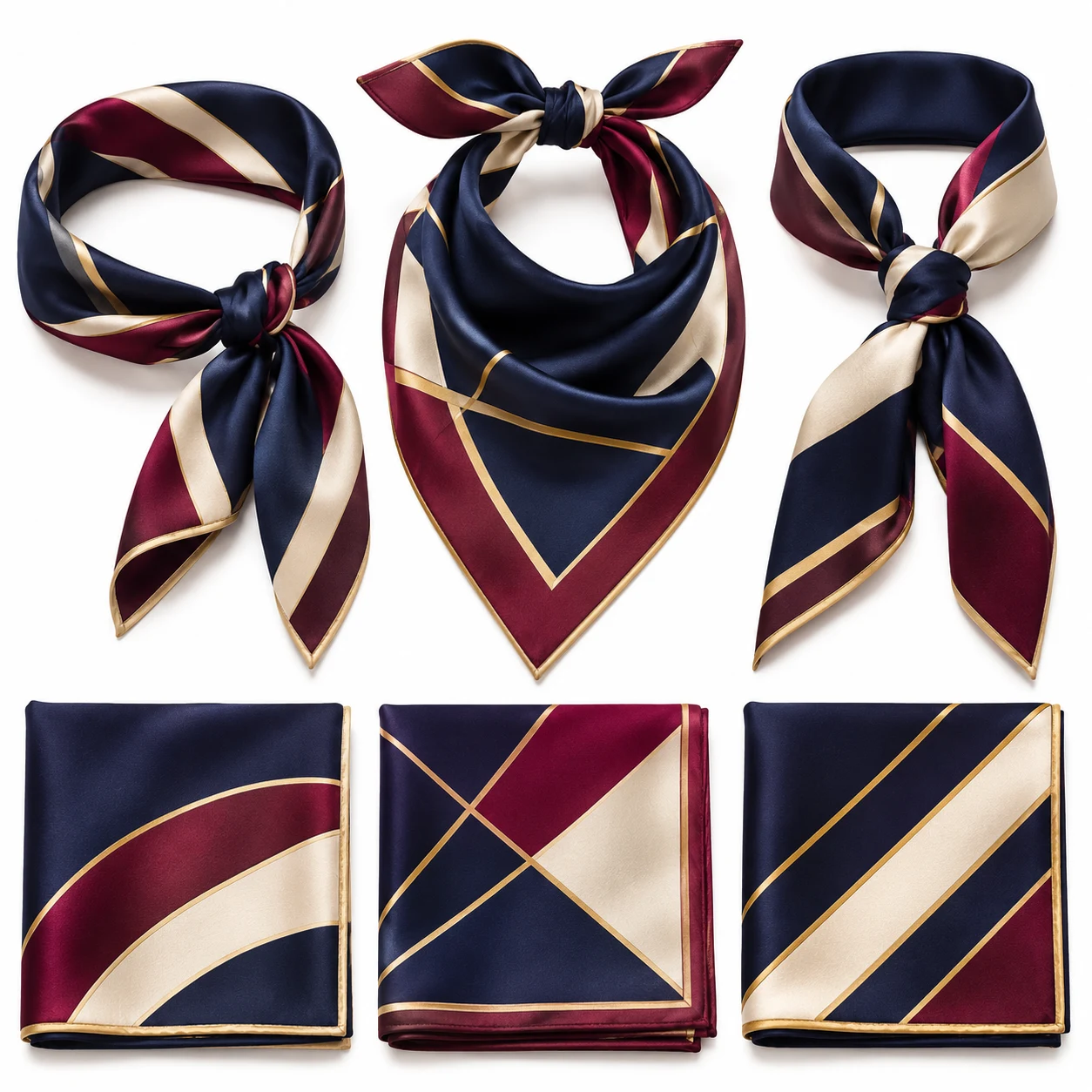 Cabin Crew Silk Neck Scarves
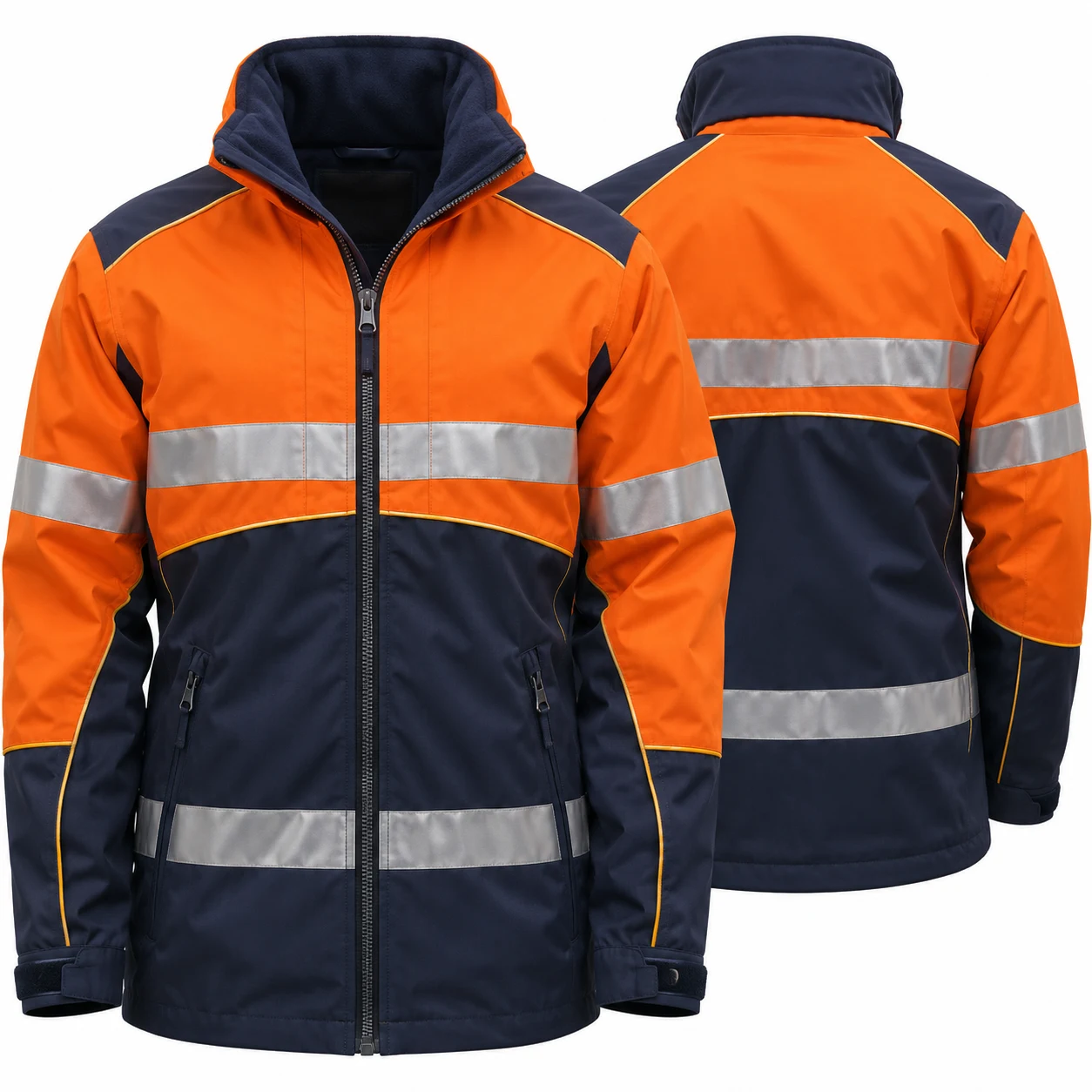 Airport Operations Jackets
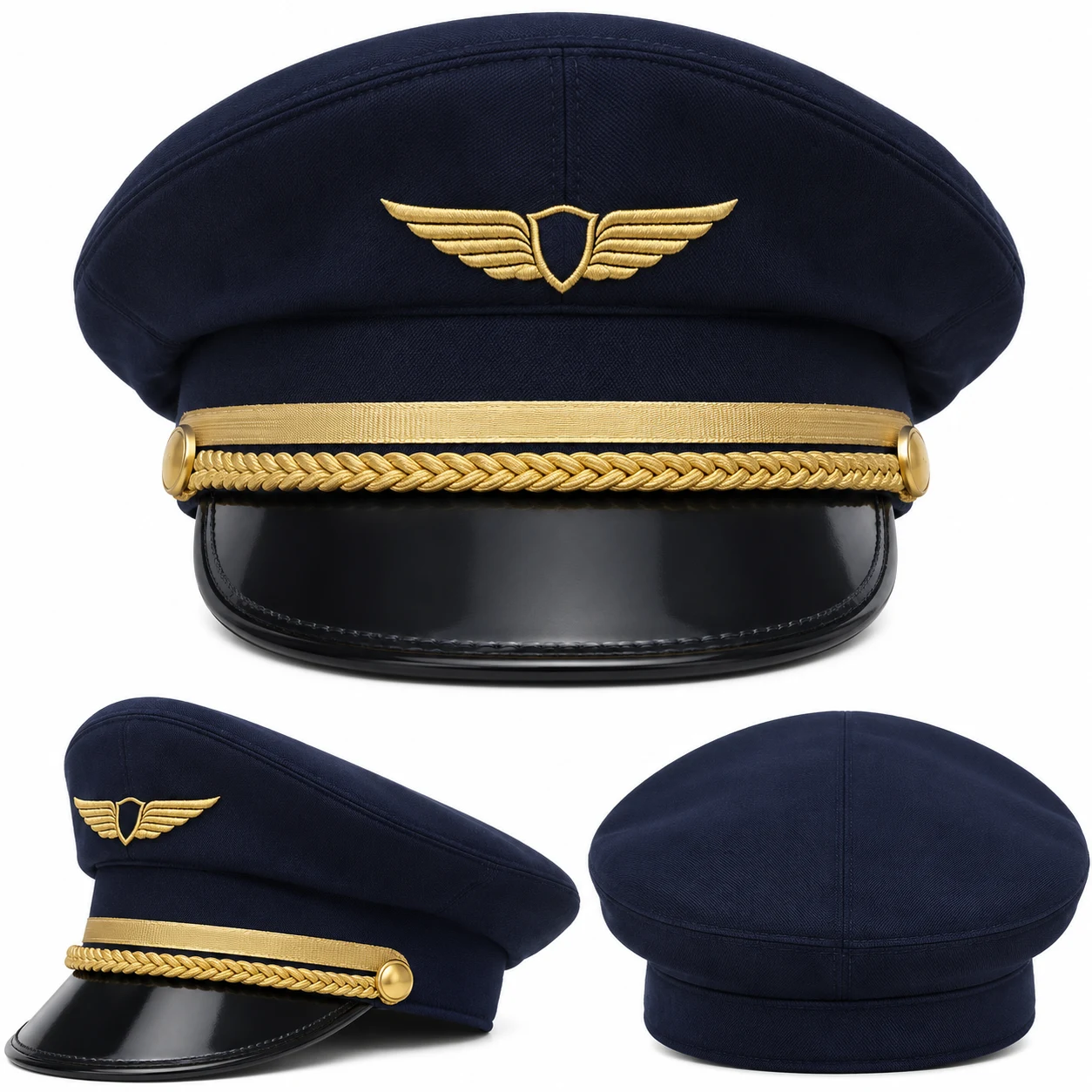 Pilot Caps
Need a different cut, climate layer or accessory?
Use these measurable benchmarks to select the actual fabric. Include the method, conditioning and acceptance limits in the purchase specification.
Set the MVTR method and conditions for the selected cloth; compare moisture transport for long duty periods.
Balance cabin comfort and apron exposure with a defined pressure, test area and fabric construction.
Define the stretch direction, extension and recovery interval so the garment returns to its approved shape.
A wool-rich face gives the jacket a formal finish; polyester supports durability and elastane adds reach. Approve the lining, crease retention and after-care appearance with the cloth.
Best for: Pilot jackets, trousers & cabin blazersChoose the shirt weight for opacity and heat, then test collar and cuff appearance after the intended washing and pressing cycle. Keep epaulette and pocket positions fixed by size.
Best for: Daily pilot & cabin shirtsSpecify the complete electrostatic-dissipative clothing system and care procedure for the assessed ramp task. Conductive yarn alone does not establish garment conformity.
Best for: Ramp, fueling & apron rolesSet the required heat, flame or arc protection for the actual maintenance task. Test the selected garment construction after the agreed washing program; a fabric flame result is only part of that file.
Best for: Specified maintenance & engineering tasksCheck reach, sitting and bending in the fitted sample. Define the extension and recovery procedure, then compare bagging at elbows, seat and knees against the retained reference.
Best for: Cabin crew garments with active movementFlight deck, cabin, ramp and hangar: one brand identity, with construction and fit matched to each job.

Keep the cabin image consistent through boarding, service and arrival. Combine wrinkle-resistant suiting with a breathable lining, practical reach and a stain-release finish selected for the actual textile.
 A polished appearance, with room to work.

Set the pilot silhouette, rank bars and wing position in one annotated file. Use a ±2 mm embroidery-placement brief where practical, then approve seated comfort, sleeve length and shoulder movement in the cockpit fit sample.
Rank clearly defined. Fit checked in the seated position.
Match weight and layering to the apron climate. Reinforce loaded pocket corners, keep radios accessible and develop reflective layouts for the required visibility class rather than treating all ground posts as one garment.
Visible identity and usable storage for the apron.
Keep metal hardware, pocket design and loose trim appropriate to the engineering task. Select oil-repellent, abrasion-resistant or protective constructions against the job assessment, with the intended industrial wash program included in development.
A maintenance uniform specified around the task.One accountable program connects design, fit, manufacture and replenishment. Your approved files carry through each stage, so a replacement belongs to the same uniform range.
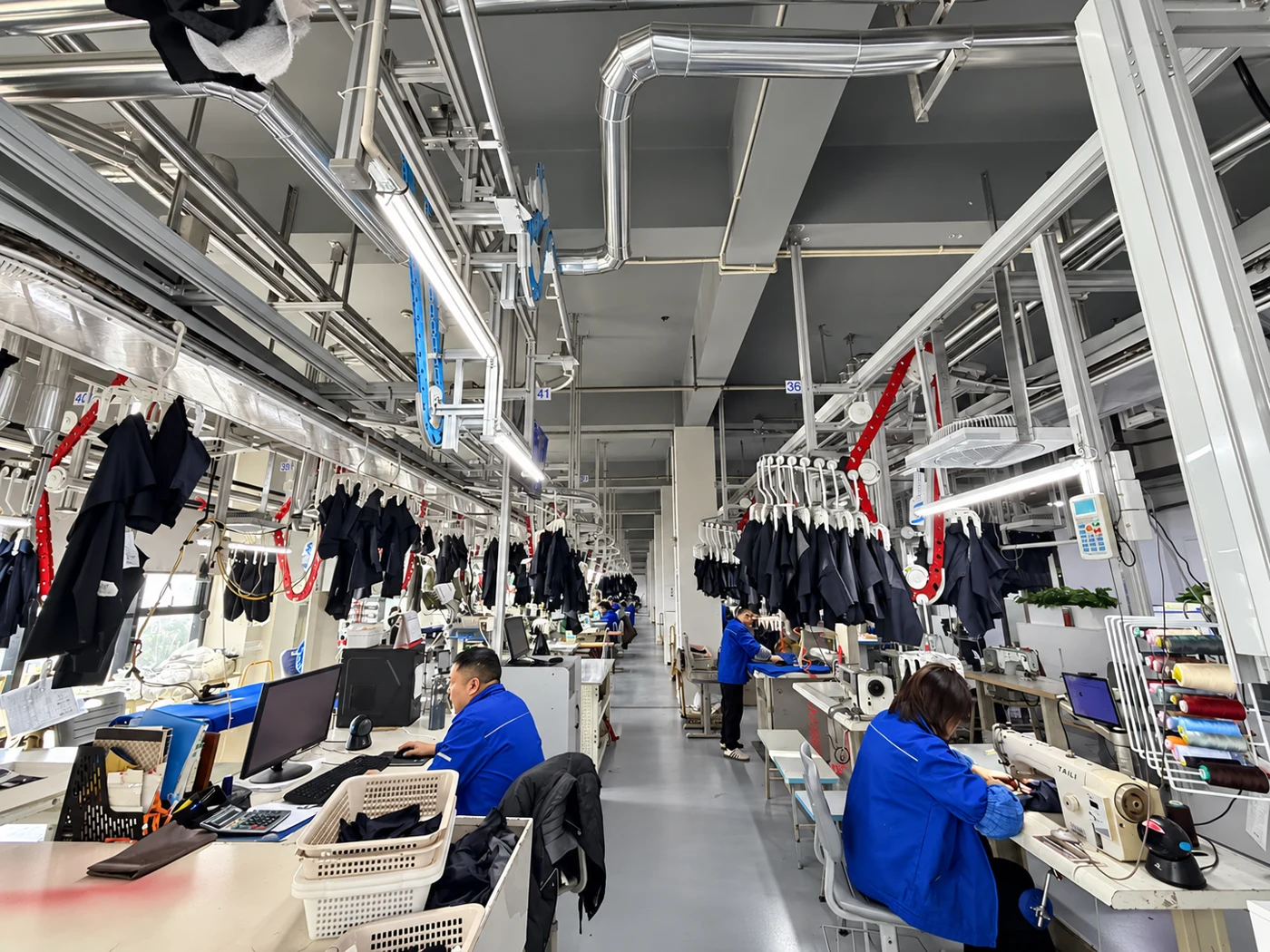
Turn the airline identity into a workable garment range. Resolve the colour palette, silhouette, insignia and fabric choices before the sample is cut.
24hrFirst design & fabric proposalBuild the size plan from the actual crew roster. Use fit kits at each base, record measurements consistently and separate standard alterations from individually drafted garments.
100%Roster coverage in the fit planRun the main rollout and repeat orders against the same approved garment file. Inspect measurements, shade, insignia and workmanship before release.
AQL 1.5Major-defect inspection brief; critical defects zero acceptancePack by crew member, size or base so a carton can go straight to issue. Agree the stock allocation and delivery route before promising urgent replacements.
7–14 daysReplenishment from agreed available buffer stockSee how a coordinated airline range moves from the boarding door to the flight deck and the apron.




Illustrative procurement perspectives.
For our crew, colour consistency is the first approval point. The navy jacket, trousers and cabin dress need a common reference, with dye-lot grouping so a team looks coordinated at the gate.
I would put a ΔE below 0.8 target in the colour brief with the measuring method, illuminant and approved physical standard. The retained swatch and reading need to stay with the SKU so the next order is judged against the same reference.
Fit and wash checks belong beside that colour file. A 190–280 GSM suiting option and a 110–140 GSM shirt need different care trials, then one clear issue and replacement plan for every base.

A smaller fleet needs a program it can build on. A 50-piece starting order and one approved sample let us settle fabric, fit and rank details before expanding the wardrobe.
For planning, I want the 8–12-week graded-production cycle separated from urgent stock issues. A 7–14-day replacement route only works when sizes and quantities are held in an agreed buffer; new production follows its own lead time.
The practical advantage is a retained pattern, embroidery file, size chart and packing record. We can order against a known uniform standard and receive cartons already allocated to the right base.

Protection, colour, fabric tests, sizing and minimums — five decisions that shape the program.
No. Start with the task and the operator’s uniform standard. Cabin and pilot tailoring is not automatically the same protective clothing as a fueling or engineering garment. For roles with identified heat, flame, electrical or electrostatic hazards, specify the complete garment and applicable performance standard, then review the test evidence for that construction. EN ISO 15025 and ASTM D6413 are flame-test methods; a result alone does not establish full protective-garment conformity. Map the roles before selecting heavier FR materials.
Approve a physical shade standard and specify a colour difference target, such as ΔE below 0.8, with the measurement formula, illuminant, observer and instrument settings. Compare every incoming dye lot before cutting, group matching lots within an issue set and review metamerism under the agreed lighting. Archive the approved swatch and reading by SKU. A reorder is compared with that retained standard, rather than a worn or faded crew garment.
Include ISO 12947-2 abrasion, ISO 12945-2 pilling, ISO 105-B02 lightfastness and ISO 105-C06 wash colourfastness. A useful selection brief is 20,000–30,000 abrasion cycles for suiting, 10,000–15,000 for shirts, Grade 4–5 pilling, Grade 5 lightfastness and Grade 4–5 wash colourfastness. Add dimensional change, seam performance and role-specific protective tests. Where 50–100 wash cycles are needed, define the actual wash and drying program and test the conditioned material; an as-new report does not prove extended wash life.
Choose made-to-measure where individual pilot fit justifies a separately drafted pattern; allow a 16–20-week planning window for a new program. For cabin and ground teams, mass grading uses one approved size system with defined sleeve, waist and hem alterations; plan 8–12 weeks after design, materials and fit approval. Use the same measurement language across both routes. Emergency replenishment in 7–14 days depends on agreed available stock, rather than a new made-to-measure production run.
Start with 50 pieces per style, with a single development sample before bulk. Send your crew roster, garment list, size quantities and rank details so the quote separates each style and any small-program adjustment. Retain the approved pattern, artwork and shade standard for repeats. Agree the reorder minimum, the 8–12-week production plan and any buffer-stock quantity in the quotation; urgent 7–14-day replenishment applies to stock that is already available.
Send the crew roles, garment list, brand guidelines, size roster and required delivery dates. We will connect the fabric, fit and replenishment plan in one quotation.