Skip to content
Private Label & DTC Custom Workwear

Private Label & DTC Custom Workwear. Your brand. A line built to reorder.

Private-label workwear for DTC brands, uniform distributors and branded merchandise programmes. Develop tees, polos, hoodies, work layers and teamwear with your own fit, labels and packaging. Start at 50 pieces per SKU, approve the sample, then reorder from retained patterns, artwork and material references.
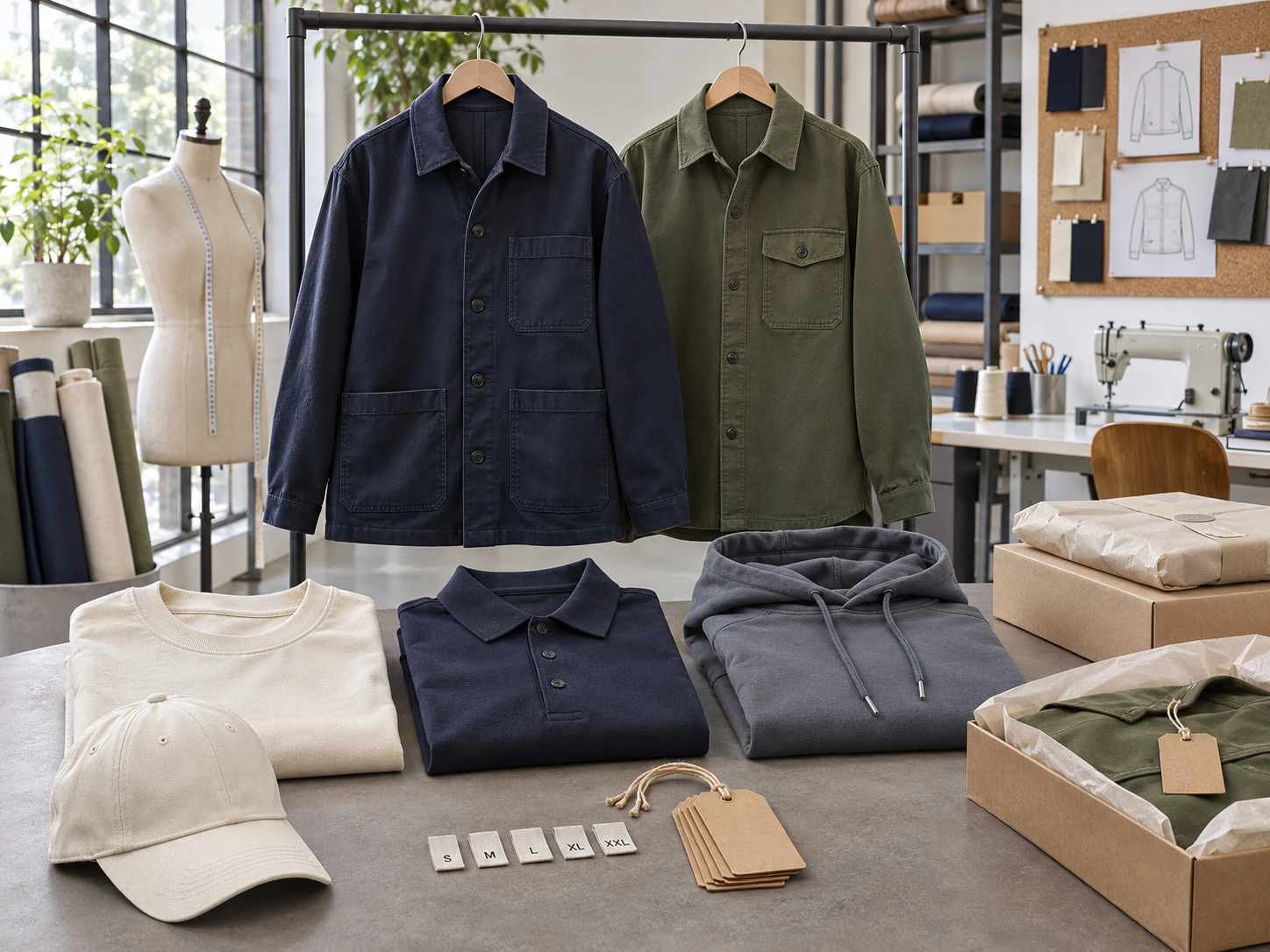
Coordinated navy and olive workwear collection with custom label and packaging options
Lines your brand can run
On the jobWorkwear, safety, and clinical product lines that survive the shift.
Front of houseHospitality and corporate wear that greets your customers.
CampusSchool and academy uniform on one coordinated palette.
On the fieldSublimated team kit that replacements still match mid-season.
Holiday & giftingA limited seasonal run staff and customers collect.

MOQ 50 per SKU · Sampling 5 business days · Factory-direct production · No artwork shared between buyers
Our positioning

One factory for your private-label range. One spec from sample to reorder.

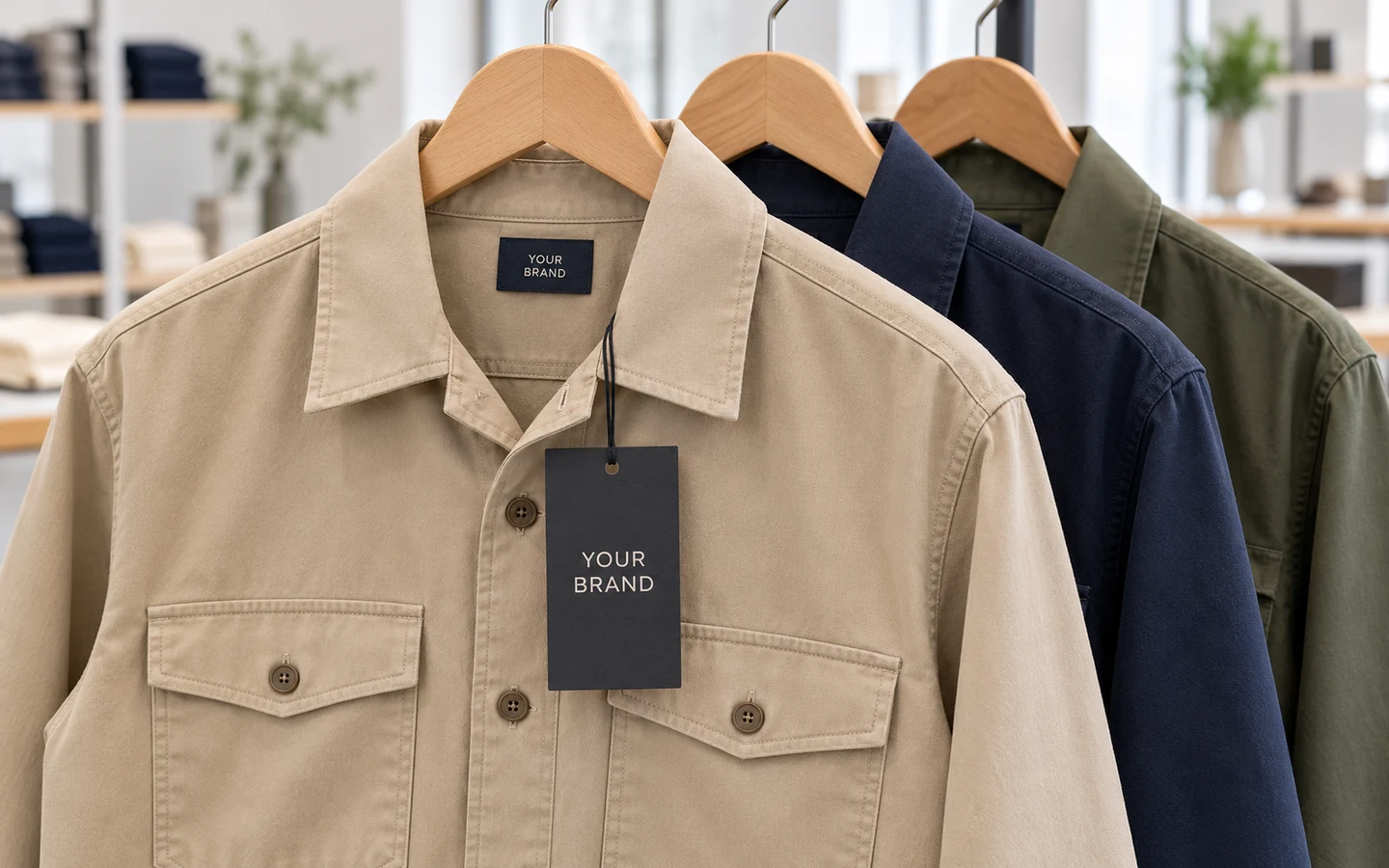
Washedloom connects garment development, fabric sourcing, printing, embroidery, custom labelling and packaging for your private-label product line. Keep the approved colour, fit and branding under one style revision, so a new drop or replenishment order builds on the range you already developed.

Built for
Private-label & DTC brands
Building a line your customers re-buy, not one-off drops.
Workwear & industrial programmes
Coveralls, work shirts, and site kit on one spec.
Medical & clinical groups
Scrubs and clinical wear on a locked department palette.
Hospitality & corporate
Front-of-house and office wear that presents the brand.
School, security & aviation
Uniform programmes with crest and insignia consistency.
Teams, leagues & campus sport
Sublimated kits reorderable mid-season from the locked spec.
Where merch programs leak

Stop the leaks in your branded apparel programme. Build beyond a one-off order.

Five common launch problems—and the production decisions that help prevent them.

01

Generic product

The leak

Generic blanks leave your branded merchandise competing on a logo alone.

What it costs

Little product distinction makes your private-label range easier to replace.

02

Unclear fit

The leak

An unapproved size chart produces fit complaints across the collection.

What it costs

Exchanges tie up stock and reduce confidence in the next purchase.

03

No replenishment plan

The leak

A single event order has no plan for new starters, seasons or customer demand.

What it costs

Best-selling sizes run out while slow sizes remain on the shelf.

04

Lost production files

The leak

Patterns, artwork and fabric references are missing when you need to reorder.

What it costs

Your next drop starts with another development cycle.

05

Inconsistent finish

The leak

Colour, labels and decoration change between suppliers or production runs.

What it costs

Customers stop recognising a consistent branded product line.

The fix

Develop the whole garment

Develop fabric, fit and branding together, so the garment itself supports your label.

Keep the approved revision

Retain approved patterns, artwork and material references under the SKU revision.

Plan the next order

Review size-level demand and material availability before your next production run.

Use shared colour, trim and artwork references across styles.

Product lines

Custom workwear for the markets you serve. Eight product lines. One brand.

Choose the users and working conditions first. We then match garment construction, materials and branding to the roles your collection serves.

Product lineWho wears itWhat we buildYour branding
Workwear & IndustrialPlant, workshop & floor crewsCoveralls, work shirts, work pants, work jacketsCrest embroidery, woven label, hi-vis trim
Safety & Hi-VisConstruction, oil & gas, electricalANSI/ISEA 107 vests & shirts, FR workwearCompany mark, class-coded panel layout
Medical & ClinicalClinics, hospitals, labsScrubs, lab coats, clinical tunicsDepartment colour-coding, monogram
Hospitality & CulinaryHotels, restaurants, kitchensChef coats, aprons, front-of-house wearCrest embroidery, coordinated palette
Corporate & OfficeMulti-office teams, retail staffPolos, shirting, suiting, blazersLogo lockup, brand-palette matching
School & CampusK-12, academy & college programsStudent & staff uniform, sports kitSchool crest, house colours
Security & AviationGuards, cabin crew, ground staffGuard shirts, tunics, cabin wearRank insignia, airline mark
Team & SportClubs, leagues, campus teamsSublimated jerseys, shorts, warm-upsTeam name, per-player letters & numbers

Start with 50 pieces per SKU. Confirm the colour and size mix for each style; fabric and trim minimums are included in the quotation.

The line

Build your private-label collection. From everyday basics to outerwear.

Combine everyday basics, work layers and team apparel in one coordinated range. Each style gets its own approved fabric, measurements and branding file.

  • Washedloom Private-label basics

    Private-label basics

    Everyday line
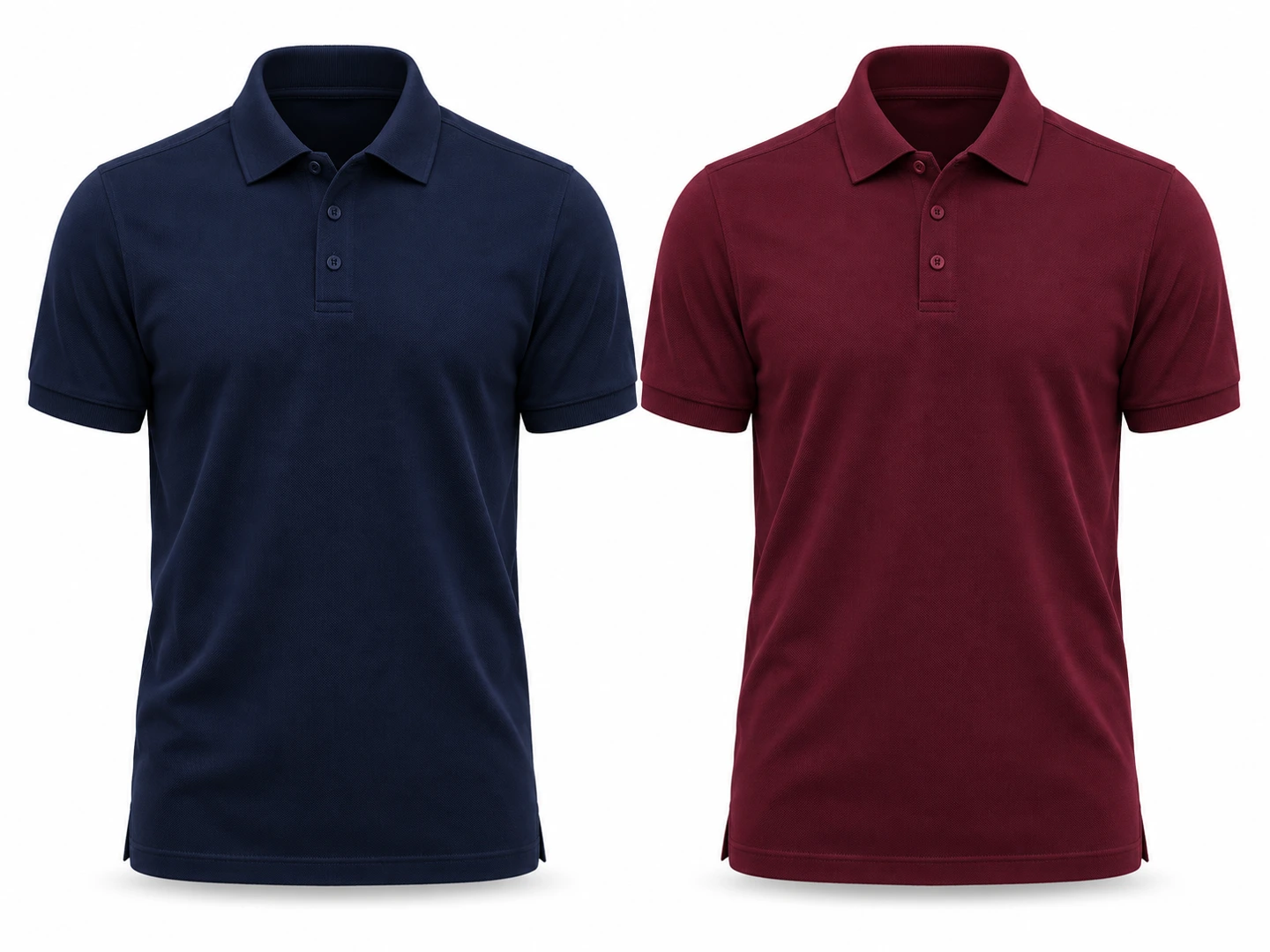
  • Washedloom Polos

    Polos

    Front-of-house & field
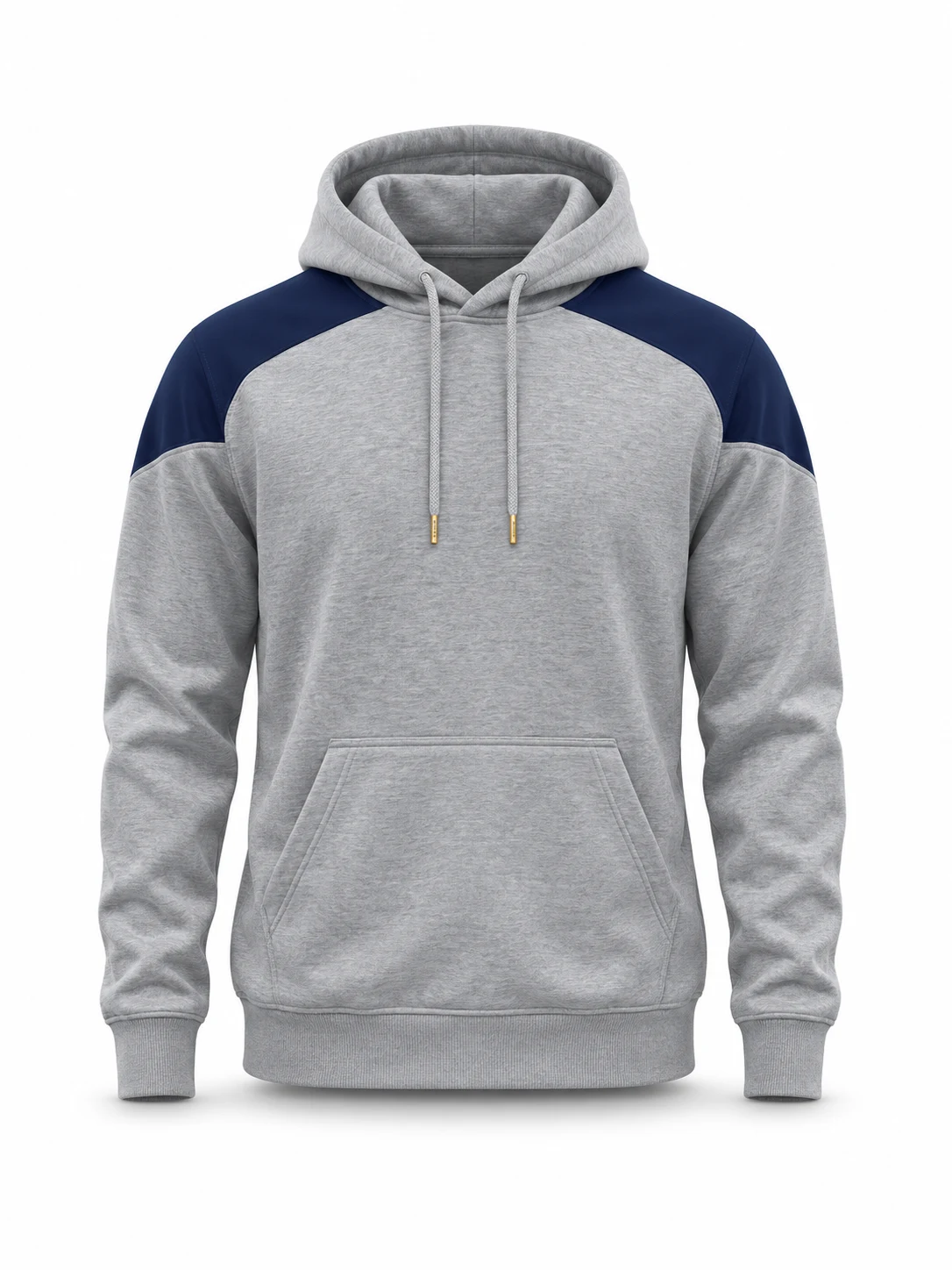
  • Washedloom Hoodies

    Hoodies

    Off-shift & gifting
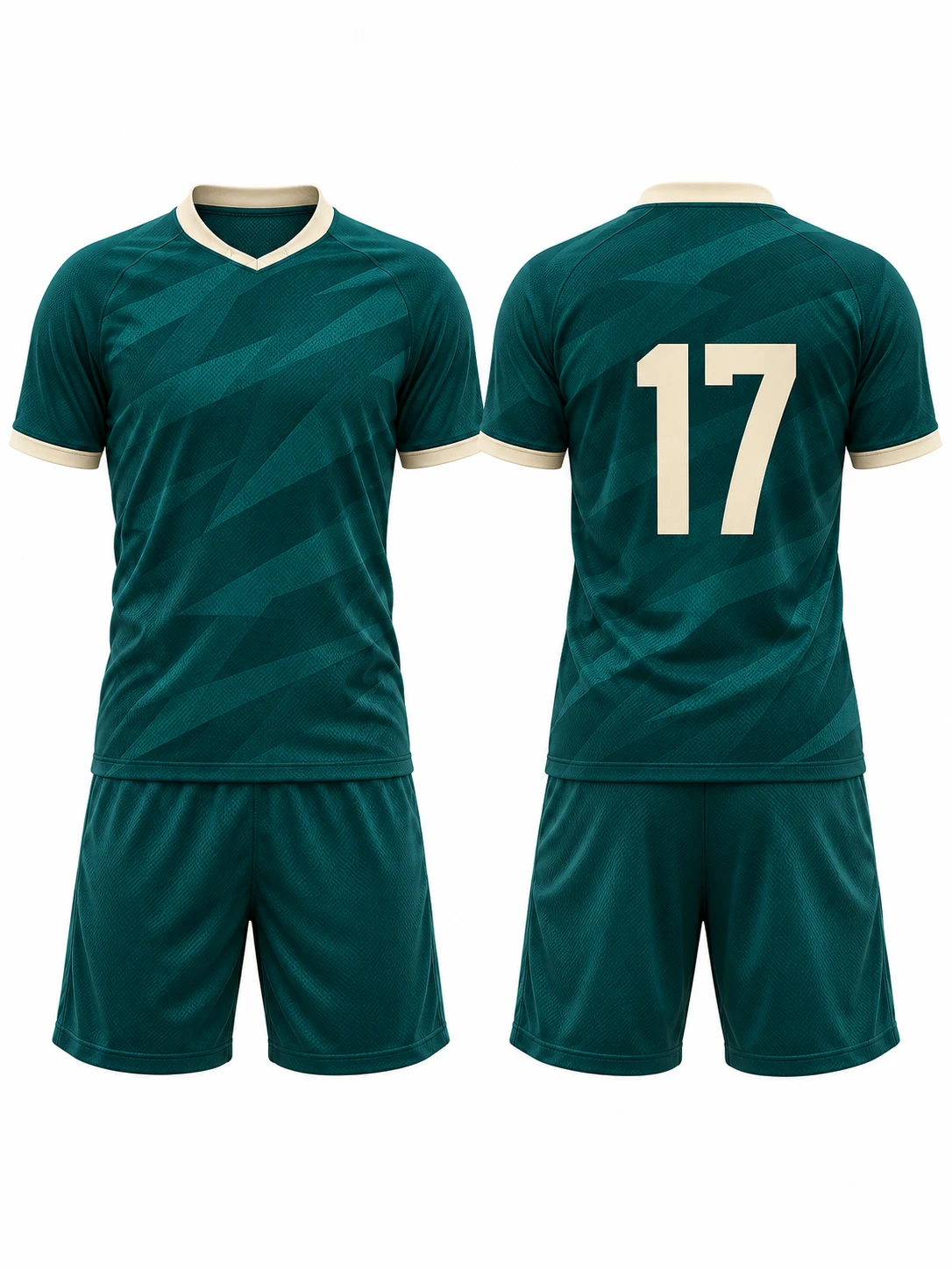
  • Washedloom Jerseys

    Jerseys

    Team & league
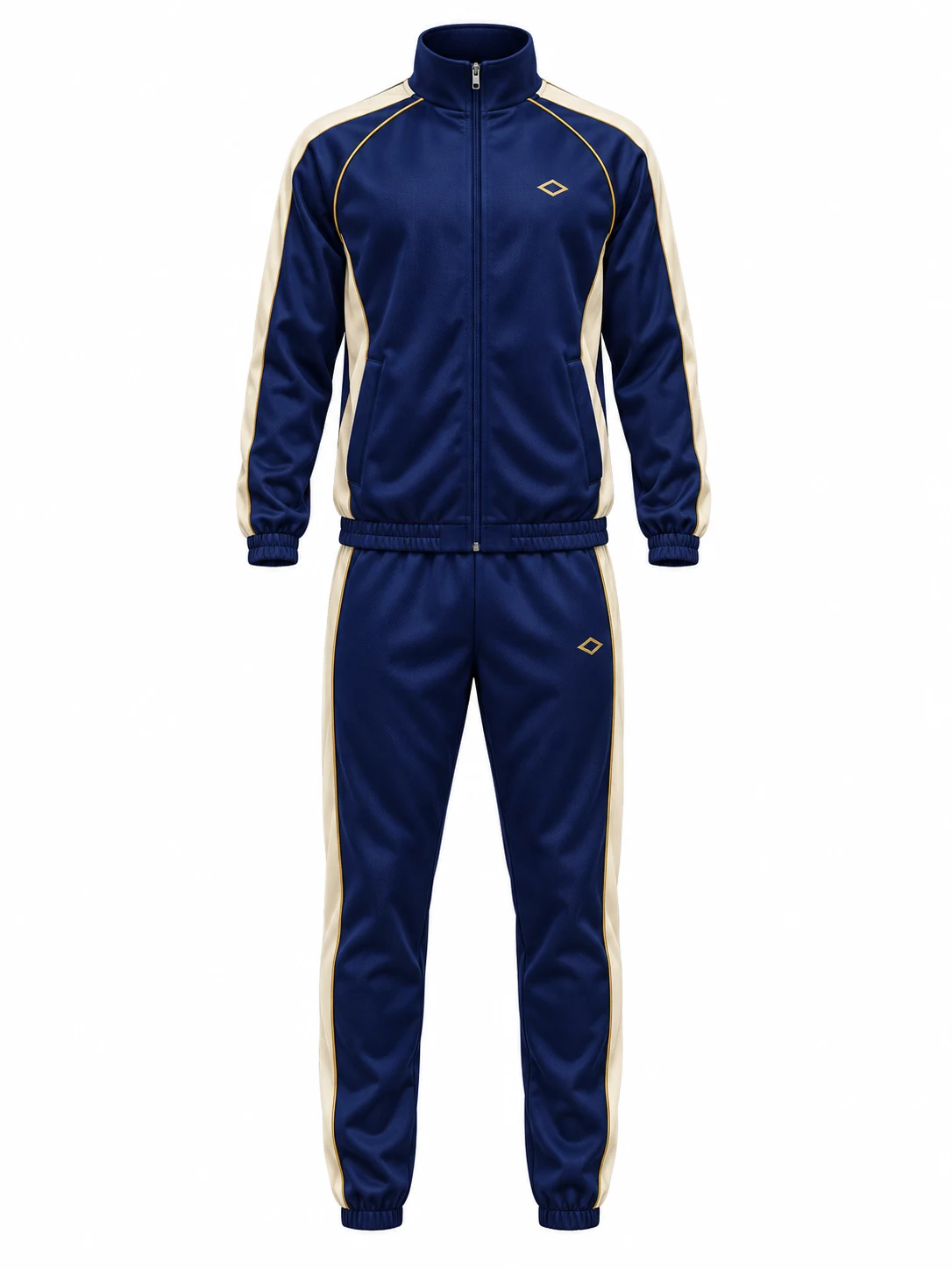
  • Washedloom Warm-ups

    Warm-ups

    Training & travel
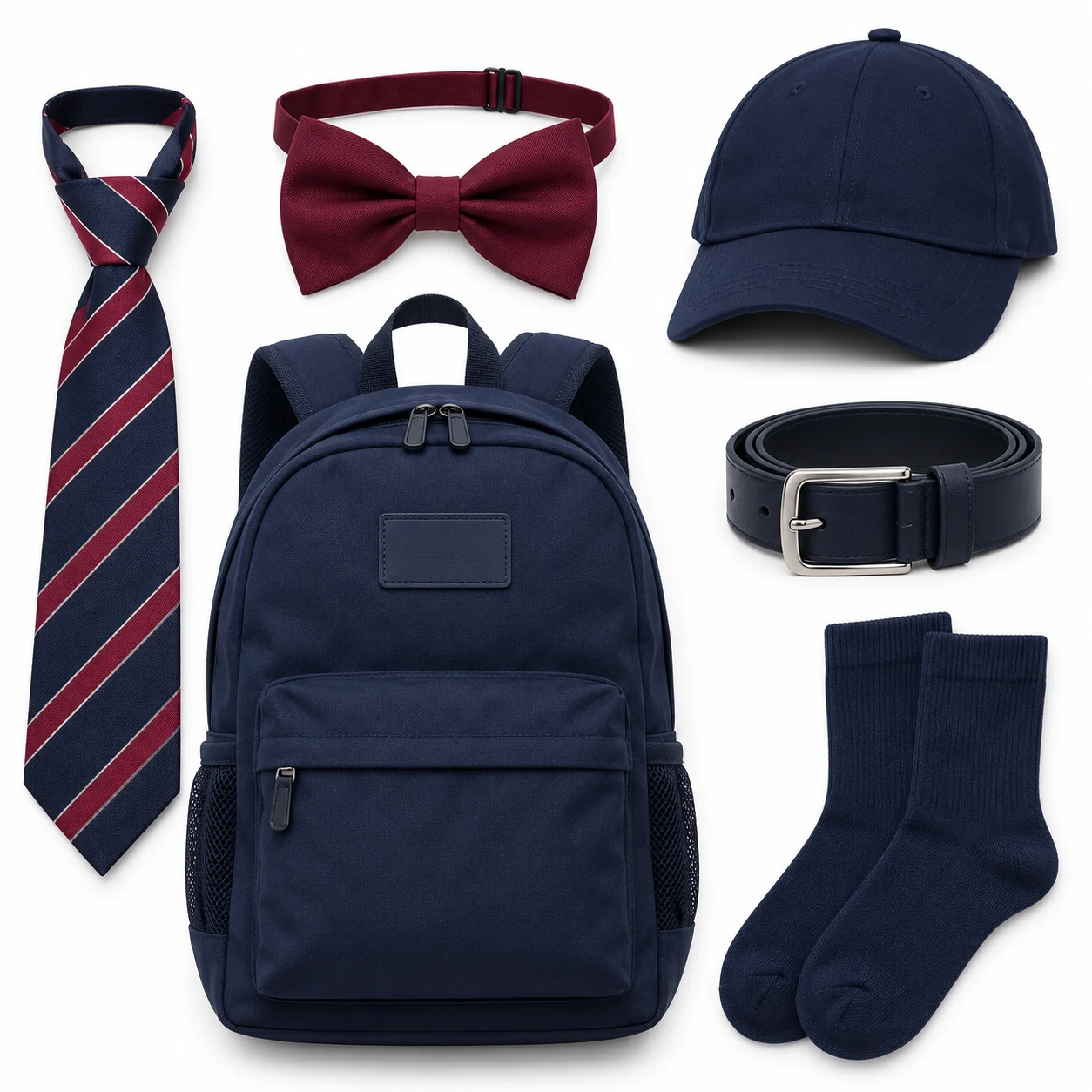
  • Washedloom Uniform accessories

    Uniform accessories

    Everyday & site
  • Washedloom Accessories

    Security accessories

    Gifting & retail
  • Washedloom Outerwear

    Outerwear

    Cold months & site

Start with the pieces your customers need most. Add new styles using the same physical colour references and brand artwork.

Why it works

Turn branded merchandise into a repeat-buy line. Fit, identity and consistency.

Branded apparel supports identity, team recognition and repeat purchases when the garments stay recognisable across sites, seasons and drops. A coordinated colour palette, approved size grade and practical reorder plan connect your staff uniforms, customer merchandise and retail collection.

Recognisable colour

What it is

Your colours, crest and logo placement give the apparel a recognisable identity.

Why it matters

Wearers can identify the brand across uniforms, merchandise and retail pieces.

Approved fit

What it is

A coordinated collection connects staff across roles, locations and shifts.

Why it matters

Shared references keep different garments looking like one programme.

Useful details

What it is

Repeat orders use retained colour, fit and branding references.

Why it matters

Each release builds recognition instead of introducing a different look.

Brand finish

What it is

Staff uniforms present your brand at customer, patient and guest touchpoints.

Why it matters

Useful, well-fitted garments make that everyday presentation consistent.

Repeat orders

What it is

Seasonal drops, new-starter kits and gifting create repeat ordering occasions.

Why it matters

An approved specification and replenishment route let the range continue.

Approve logo position, label artwork and packing together.

The drop playbook

Your DTC drop, from concept to retail. Five connected production stages.

Develop a DTC drop or branded merchandise capsule through concept, sampling, preorder quantity planning, production and retail-ready fulfilment. Each stage uses the same approved style file, so the next release has a production starting point.

  1. 01

    Brief

    Send sketches, artwork or a reference garment, together with target quantities, size range, destination and launch date. We define the fabric, construction and branding for each SKU.

  2. 02

    Sample

    Plan sampling at 5 business days after the complete brief and materials are ready. Check the physical garment for fit, colour, sewing and decoration before approval.

  3. 03

    Order plan

    Start production at 50 pieces per SKU. Agree the colour and size breakdown and itemised costs before committing to the range.

  4. 04

    Production

    Plan bulk at 15–20 days after final sample approval and material readiness. Inspect against the approved garment and the agreed quality plan.

  5. 05

    Brand packing

    Finish with your woven or printed labels, hangtags and packing instructions. Confirm barcodes, carton marks and delivery details for your warehouse or fulfilment partner.

For unchanged styles with available material, repeat production can be planned at 10–14 days. New fabrics, fit or artwork changes require approval. Allow freight time separately.

What changes

From one-off merchandise to a running line. Keep the look, fit and reorder path.

Keep the details customers recognise, then develop your next release from those references.

The look
Before

Catalogue garment with decoration added afterwards.

After

Developed fabric, silhouette, trims and branding.

Build recognition through the complete product.

The fit
Before

Generic measurements that vary between styles.

After

A style-specific grade with an approved size set.

Help customers choose a fit they understand.

The repeat
Before

A new brief every time stock runs low.

After

Retained patterns, artwork and material references.

Order from the accepted revision.

The pride
Before

Different shades and finishes across the range.

After

Shared physical references with approval by material.

Present a coordinated collection.

We will not put a percentage on these for you — what a line earns back depends on how you sell it. What we control is that the garment holds up to the promise.

Why brands go direct

Factory-direct private-label manufacturing. Compare the full production route.

Compare the same material, branding, packing and delivery scope. A clear specification makes price and service differences easier to assess.

Compared on
Trading agent / middleman
Washedloom factory-direct
Minimum order
Confirm style, colour and fabric minimums.
50 pieces per SKU; colour and size mix confirmed in the quote
The spec
Confirm who retains production files.
Approved references retained by style revision.
Colour
Ask which colour reference and method apply.
Agreed physical reference and ΔE ≤1.5 target.
Cost
Compare the itemised sourcing and service charges
Itemised production and branding costs.
Who you talk to
Confirm the route for technical approvals.
A shared file for sample and bulk decisions.
IP
Agree confidentiality and permitted use.
Confidentiality and authorised file use agreed before sharing artwork

Your quotation separates garment, decoration, testing, labels, packing and freight. Confirm the production schedule and approval milestones before the order starts.

Scope a direct line — 24hr
Sampling

Approve your pre-production sample. Know exactly what must pass.

A sample is a decision, not a gesture. These are the success criteria we agree before cutting — so neither side is negotiating the standard after the sample lands. Copy this into your approval doc.

CriterionPass rule
Dimensions & fitAgree points of measurement and the style-specific grade before cutting. Planning tolerance: ±0.5 in / 1.3 cm unless your tech pack specifies a tighter or different limit.
ColourAgree ΔE ≤1.5 against the physical reference, with instrument, formula, illuminant and observer recorded. Check each dye lot and the finished garment under the agreed conditions.
After-washSpecify the care process, temperature, detergent, drying and cycle count. Check dimensional change, colour, collar shape, seams and decoration after the agreed washing procedure.
Logo & brandingApprove a placement drawing with garment reference points, logo dimensions, method and tolerance. Retain thread colours, print references and an approved sew-out or strike-off.
Batch inspectionUse ISO 2859-1 General Inspection Level II with no critical defects accepted, Major AQL 2.5 / Minor AQL 4.0. Record lot size, sample size and acceptance numbers.
DocumentationFile material/lot identity, applicable certificates, agreed test results, inspection records and office-level packing lists under the PO. Certificate validity and scope must cover the supplied material.

What you need to give us.

A sample lands approved in one round when these arrive with the brief. Hand them over late and the first sample is guessing — this is the checklist that stops that.

Wash conditions

How the garment is laundered on site — commercial or industrial, wash temperature, detergent, and dryer or iron finish. Agree the washing procedure and conditions before sampling.

Role list

Every role on site, the colour and standard each one needs, and headcount per role per location — the map the whole program is built against.

Size distribution

The size breakdown to order, and human measurements where the program is made-to-measure rather than graded from a chart.

Reference colour

A Pantone number, physical swatch, or existing garment we can read by spectrophotometer, so the colour formula is locked to your reference, not matched by eye.

Standards by market

Destination market, care labels, restricted-substance requirements and any material certificates required by your purchasing policy.

First delivery window

The date the first site needs stock, so sampling and production are scheduled against a real deadline instead of a placeholder.

First run → scale

Start at 50 pieces per SKU. Scale your private-label winners.

Use these quantity bands to plan investment. Each SKU meets its confirmed minimum; your fabric and branding choices determine the final price.

50 unitsThe first run

50 pieces per SKU lets you launch an approved style without committing to a large opening run.

100–300 unitsA first real drop

Plan a larger size mix for your first selling period. Use demand by size and colour to guide the next order.

300–500 unitsA capsule

Build several coordinated styles on one palette. Confirm minimums and packing separately for every SKU.

1,000+ unitsScaling a winner

Grow the styles that perform using retained patterns and branding references. Review material availability and quantity pricing before release.

Request an itemised quote for your launch and replenishment quantities. We price the actual fabric, construction and finish rather than a generic catalogue product.

Size your first run — 24hr
Quality, before it ships

Protect your brand before shipment. Four quality checks for repeat orders.

Control colour, wash behaviour, size coverage and repeat fit before the order leaves production.

Colour approval

“The second one is not even the same colour.”

Caught at · Spectrophotometer gate

Agree the physical colour reference, instrument, formula, illuminant and observer for a ΔE ≤1.5 target. Review the dye lot before cutting and check finished garments.

Wash checks

“It looked ruined after a month.”

Caught at · Wash-cycle test

Agree wash method, cycle count, dimensional change, colourfastness and pilling criteria before sampling. Inspect the tested fabric and decoration against those requirements.

Size coverage

“They were out of my size again.”

Caught at · Graded size chart

The fit runs XS–6XL on a measured chart, graded to your tolerance, so someone’s size is not the one that always gaps.

Repeat fit

“This one fits nothing like the last.”

Caught at · Sealed-sample reference

Every reorder is cut against the archived, signed sample — so run five matches run one instead of drifting toward whatever is convenient.

These are the failures wearers actually notice, and the ones a review calls out by name. Catching them at the gate is far cheaper than answering for them on the floor or in a comment thread.

What you receive

Your label. Your retail-ready pack. The records behind every run.

Agree the batch QC record, colour specification, applicable compliance documents and branded retail pack before production. Your woven labels, hangtags, barcodes and carton marks follow your approved artwork. Arrange blind shipping to your warehouse or fulfilment partner while retaining required shipping declarations.

Every run

PO inspection file

Inspection results tied to the PO, with the agreed sampling plan, defects found and retained sample reference.

Every style

Colour references

A physical colour reference and agreed readings for each material. New dye lots are reviewed against the same reference.

On request

Market requirements

Request applicable material certificates and laboratory tests for your market. Verify the supplied certificate number, scope and validity.

Your label

Branded packing

Your label artwork, hangtags, barcodes and size markings approved before packing. Confirm carton quantities and warehouse delivery instructions.

Keep the specification revision and delivery records together so purchasing and fulfilment can trace each run.

Procurement Perspectives

Plan your private-label programme. What brand and purchasing teams need.

“

For the first launch, I need the SKU minimum, size breakdown and landed-cost components before deciding how many styles to buy.

The sample review should cover fabric, fit and branding on the garment I will actually sell.

“
Illustrative brand procurement portrait

Brand Development Priorities

Private Label Collection Planning

“

For replenishment, the key is a retained pattern, approved colour reference and a clear record of changes.

I need packing by SKU and size, with the next production window confirmed against material availability.

“
Illustrative brand procurement portrait

Purchasing & Fulfilment Priorities

Repeat Order Planning

FAQ

Private Label & DTC Workwear FAQ. Clear answers before your first run.

If your question isn’t here, our RFQ desk responds within 24 hours — no sales pitch, just specs.

Yes. Develop tees, polos, hoodies, jerseys, warm-ups and outerwear from one brand brief, with labels, hangtags and packing in your name. Confirm accessory availability and approve each style’s fabric, fit and branding. Production starts at 50 pieces per SKU.

Start at 50 pieces per SKU. A three-style capsule requires each style to meet its confirmed minimum; the minimum is not shared across unrelated styles. Confirm colour and size mix, fabric minimums and sample charges in the quotation.

Plan samples at 5 business days after the complete brief and materials are ready. Plan bulk at 15–20 days after final approval and material readiness. Unchanged repeat styles with available materials can be planned at 10–14 production days. Freight is quoted separately.

Retain the physical colour reference, fabric article, approved measurements, pattern grade and sealed sample under the style revision. Agree a ΔE ≤1.5 target with instrument, formula, illuminant and observer. Review each dye lot and approve substitutions before production.

Your supplied artwork remains yours. Agree confidentiality and permitted file use before sharing proprietary files. Approve brand labels, carton marks, barcodes, packing ratios and delivery details for your warehouse or fulfilment partner. Required commercial and origin information remains on shipping documents.

Build your next branded workwear line. Start with your brief.

Send your brand artwork, product categories, target quantities and launch date. Plan a private-label workwear collection or DTC merchandise drop with an itemised quotation, sample approvals and a clear replenishment route.

Get a Quote

Search Washedloom

Chat on WhatsApp