
01
Wrong visibility class
A bright vest can still have the wrong material area or layout for the site.
Procurement impact Issue the correct garment before work starts.Equip construction, welding and energy teams with one controlled workwear programme. Match each role to its garment, keep the approved fabric and tape on file, and deliver batch records with the right site allocation.

Keep garment selection, fit and documentation connected from the first site to the next reorder.
A bright vest can still have the wrong material area or layout for the site.
Procurement impact Issue the correct garment before work starts.A generic certificate does not identify the cloth, model or cartons in your delivery.
Procurement impact Give receiving a record they can reconcile.Different grading can turn an accepted sample into a bulk fit problem.
Procurement impact Keep the approved closure and movement fit.Traffic exposure, welding and flash fire need different garment decisions.
Procurement impact Avoid re-issuing the whole crew after delivery.A new tape grade or fabric can change the approved garment specification.
Procurement impact Keep the delivered style aligned with its file.Build a crew issue list that connects the job, the garment and the standard required at each location.






Vests, work shirts, coveralls, jackets and compatible layers share one approved size chart and a role-specific bill of materials.
Start with the site hazard assessment. Then record the market, standard, garment design and acceptance evidence.
Off-road environments without public-road traffic exposure; selected through the site assessment.
A roadway option where the assessment calls for Class 2; confirm layout across the offered size range.
Additional visible area and body recognition for roles that require Class 3, including demanding traffic environments.
Select a certified garment model for the required flash-fire application; link its records to the supplied construction.
Select dissipative materials and the complete clothing arrangement required by the site, including grounding conditions.
Visibility class, flame resistance and electrostatic performance are separate requirements. EN ISO 20471 classification is assessed under its own system; it is not a direct ANSI type-to-class conversion.
| Crew role | Garment requirement | Records to retain |
|---|---|---|
| Yard & warehouse | Off-road visibility as assessed | Specified ANSI/ISEA 107 Type O/Class record, or the site-selected requirement. |
| Roadway & construction | Roadway hi-vis Class 2 or 3 | Garment type/class, material reports, size coverage and required marking. |
| Night operations & heavy plant | Visibility class selected for exposure | Site assessment, approved layout and post-care material performance. |
| Welding & hot work | Welding-specific protective clothing | Applicable welding standard, class and garment construction; NFPA 2112 alone does not establish welding suitability. |
| Oil & gas / refinery | Flash-fire FR; hi-vis where required | Applicable garment certification/model, material lot and combined layout records. |
| Fuel handling & dust | Electrostatic control where assessed | Specified electrostatic tests, clothing assembly and use conditions. |
Six material routes cover different working conditions. Final selection connects fibre, construction, garment design and the required performance.

Specify the blend, weave, weight and care limits. Retain the exact material identity and the protective garment model it supports.

A cotton-based route with a familiar hand feel. Agree the finish, permitted laundering and performance after the specified care cycles.

Combine fluorescent background cloth with the selected retroreflective component. Check colour, layout and material performance after care.

Choose conductive-grid fabric against the specified test method. Document the garment assembly and the conditions under which it will be used.

Select coating, seam sealing and breathability for the working environment. Verify compatibility when the shell must also meet FR or visibility requirements.

Specify the liner composition, bulk and thermal brief. Assess it with the outer garment so added warmth does not compromise the required protective construction.
Care testing follows the actual site routine. Specify AATCC 61 for colourfastness and AATCC 135 for dimensional change where applicable, with the agreed conditions and cycle count recorded.
One production brief connects the sample, the manufacturing run and the records that travel with the order.
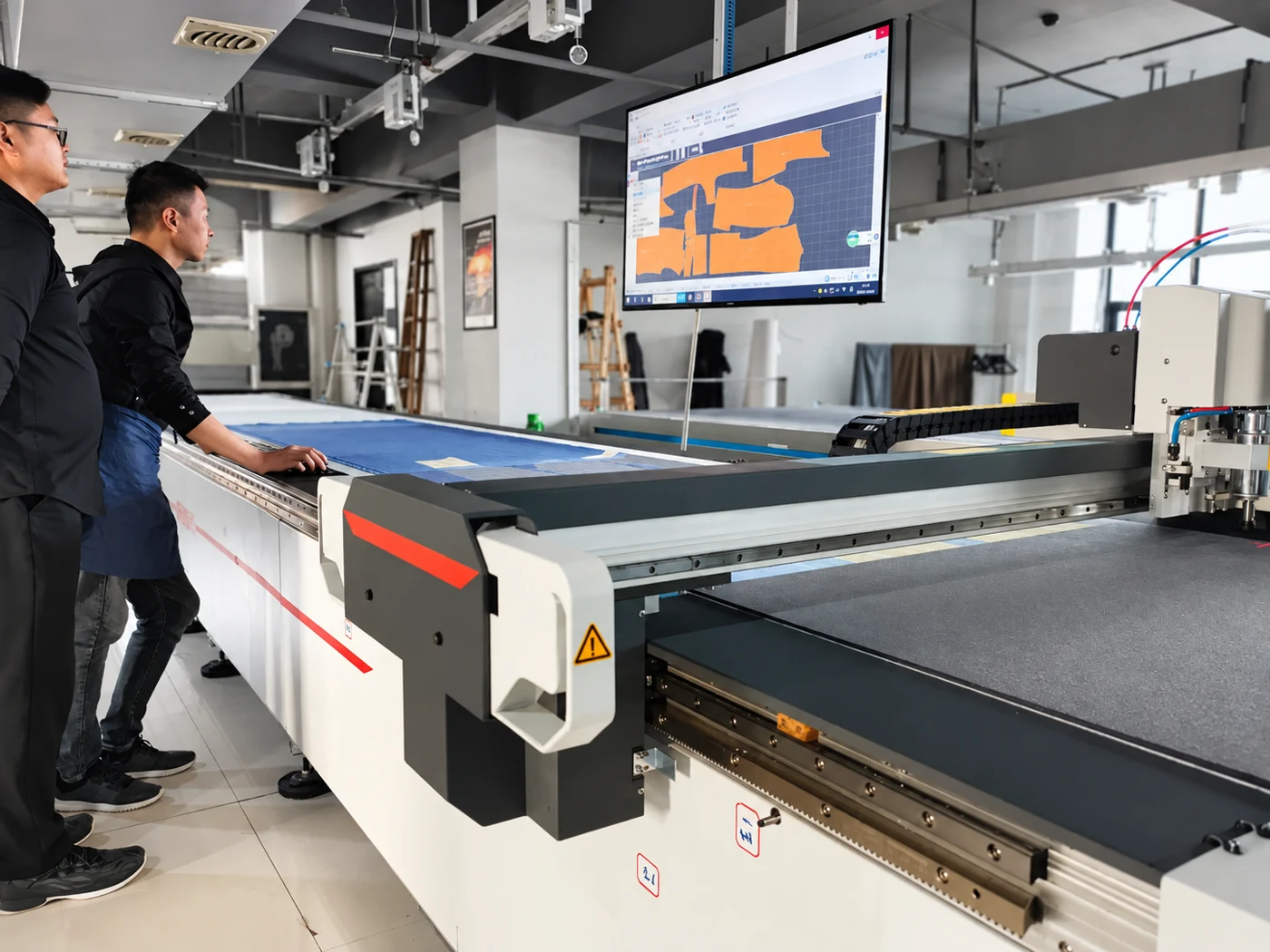
Your garment file follows the order through material selection, pattern development, cutting, sewing, decoration and final inspection. Technical decisions stay connected to the approved sample.

Record composition, weight, roll identity and incoming defects before the cloth enters cutting.
Keep the approved points of measurement, grade rules and shrinkage allowance under one revision.
Connect construction, reinforcement and reflective layout to the accepted sample and bill of materials.
Approve logo placement, inspect the lot and issue cartons by site, role, size and purchase order.
Compare the same garment specification, protective scope and delivery basis before comparing unit prices.
| What matters | Multiple-source route | Washedloom programme |
|---|---|---|
| Production route | Confirm the factory, subcontracted steps and technical owner. | One coordinated order brief across material, construction, inspection and packing. |
| Role-to-garment map | Reconcile the ranges offered by each source. | One approved role, hazard and garment allocation sheet for the whole programme. |
| Specification ownership | Agree access to patterns, materials and approved changes. | Your fabric, tape, grading and trim references retained under the programme number. |
| Class & material control | Check each supplier’s model and material changes. | Approve the same layout and bill of materials; review any replacement before release. |
| Adding another site | Confirm whether a different range needs a new approval. | Use the retained specification and submit a new site/size allocation. |
| Lead-time plan | Include sourcing, development and freight in the calendar. | Sample planning: 5 business days; bulk: 15–20 days after approval and material readiness. |
| Price comparison | Separate garment price, sourcing fees and delivery scope. | Compare fabric, labour, branding, testing, packing and freight on one cost schedule. |
| Minimum order | Review minimums by style, colour and material. | Production starts at 50 pieces per SKU; specialised fabric minimums are confirmed with the brief. |
Set the fit, material, protective layout and inspection criteria before sampling starts.
| Acceptance criterion | Agreed pass rule |
|---|---|
| Dimensions & fit | Approve the size chart and measurement points before cutting. Planning tolerance: ±0.5 in / 1.3 cm unless your tech pack specifies another limit. |
| Colour | Agree ΔE ≤1.5 against the physical reference, with instrument, formula, illuminant and observer recorded. Fluorescent colour requirements are checked separately under the relevant standard. |
| After-wash | Specify cycles, detergent, temperature and drying. ISO 6330 at 60°C can be a domestic-care planning brief; use an industrial procedure where that matches the laundry route. Recheck appearance and required protective properties. |
| Hi-vis layout & components | Measure background and reflective area against the required standard/type/class, including the smallest offered size. Verify the selected tape and care limits. |
| Batch inspection | Use ISO 2859-1 General Inspection Level II with no critical defects accepted, Major AQL 2.5 and Minor AQL 4.0. Record lot size, sample size and acceptance numbers. |
| Documentation | Retain material/lot identity, applicable garment and component records, specified lab results, incoming fabric inspection and the PO-linked packing list. |
A practical programme for teams that need consistent garments, documented specifications and clear site allocations.
Coordinate work shirts, coveralls and high-visibility styles across projects, keeping each crew on the approved role list.
Develop field and plant ranges against the specified flash-fire, visibility and electrostatic requirements.
Plan practical sizing and visibility layouts for field work and traffic exposure, with task-specific protection reviewed separately.
Prepare turnaround allocations by job, shift, size and site, with one agreed material and construction file.
Build a private-label range with controlled materials, care labels, branding and repeat-order references.
Seven steps connect the first crew issue to every later delivery.
Combine sites, roles, hazards, required standards, garment families and quantities.
Assign each role its visibility, thermal or electrostatic requirement before material selection.
Approve measurements, movement, fabric, tape, branding and care results. Keep the signed reference.
Retain the graded chart, layout, bill of materials, marking and approved revision.
Check construction, dimensions, material identity, required layout and the agreed AQL 2.5 plan.
Reconcile applicable reports, inspection results and packing records. Label cartons by site and size.
Use the same approved revision, review availability and re-approve any changed material or construction.
Reduce repeated specification work and give each site a clear receiving reference.
Unclear role allocation
Garment families and requirements agreed for each team before the order is released.
Starting the specification again
Repeat-production planning for unchanged styles with available materials; confirm release and transit separately.
Different quote and freight bases
Compare the garment, decoration, testing, packing and delivery scope line by line.
Separate local specifications
New locations use the approved style revision with their own quantities and packing labels.
Role mapping, fit approval and traceable records are the practical tests of a multi-site workwear programme.
I need the crew list to show more than a vest colour. Roadway and night teams need the required garment type and class recorded against their roles, with the selected sizes checked against the same layout.
For sample approval, the useful file combines fit measurements, the tape reference, marking and required care evidence. A change in fabric or tape should come back for review before the next run.
At receiving, a site-labelled packing list and a matching product file let the supervisor check the right garments against the right purchase order. That is the purchasing standard I would use across projects.

A flash-fire brief starts with the exact garment application and required certification scope. I would ask for the model identity, material lot and applicable records before treating a uniform as suitable for that job.
My quote also needs a complete basis: fabric, construction, branding, inspection, packing and freight. I need sample, production and transport dates shown separately so a plant turnaround has a workable receiving plan.
For repeat orders, keep the approved reference and current revision together. Allocate cartons by field site or department, and make each report easy to trace to the order it supports.

Specifications, standards, order quantities and timing before you commit to production.

Yes. Create one programme number for the approved fabric, garment layout, graded size chart, tape, trims and logo placement. Each site submits its own roles, size quantities and delivery date. Pack cartons by location and issue a matching allocation list. New sites use the same approved revision; changed hazards or materials trigger a review before release.
Send the destination market, job descriptions, traffic conditions, day/night use and site assessment. For ANSI/ISEA 107, Type O covers off-road use and Class 1; Type R covers roadway use and Classes 2 or 3. The employer’s hazard assessment sets the required selection. EN ISO 20471 uses its own classification. We then develop the specified layout and check visible areas across the size range.
Retain the fabric article, tape grade, garment layout, marking, size grade and care limits under the style number. Check each incoming lot and finished run against that file. A flash-fire order also needs the relevant certified garment/model identity and records; a fabric certificate alone does not establish finished-garment certification. Replacement materials require approval before cutting.
Agree the document index in the quotation: material/lot identity, applicable garment and component conformity records, specified colourfastness and dimensional-change reports, inspection results and packing list. For the batch inspection plan, the reference is ISO 2859-1 General Inspection Level II, no critical defects accepted, Major AQL 2.5 / Minor AQL 4.0. Link the file to the PO and carton allocation.
Production starts at 50 pieces per SKU. Sampling can start from one garment and is planned at 5 business days after the brief and available materials are confirmed. Bulk production is planned at 15–20 days after final approval and material readiness. Freight is quoted separately for the destination; do not treat production days as delivered-to-site time. Specialised fabrics and testing can extend the schedule.
No. Certified structural firefighting turnout and arc-flash CAT-rated garments are outside this programme. Welding, flash fire and electrical arc are different hazards. State the exact protective standard, required rating and market in the brief so the garment scope and available evidence can be checked before a quotation is issued.
Share sites, roles, hazards, required standards, size quantities and the first receiving date. Get a practical starting specification and quotation response within 24 hours.